 AI image
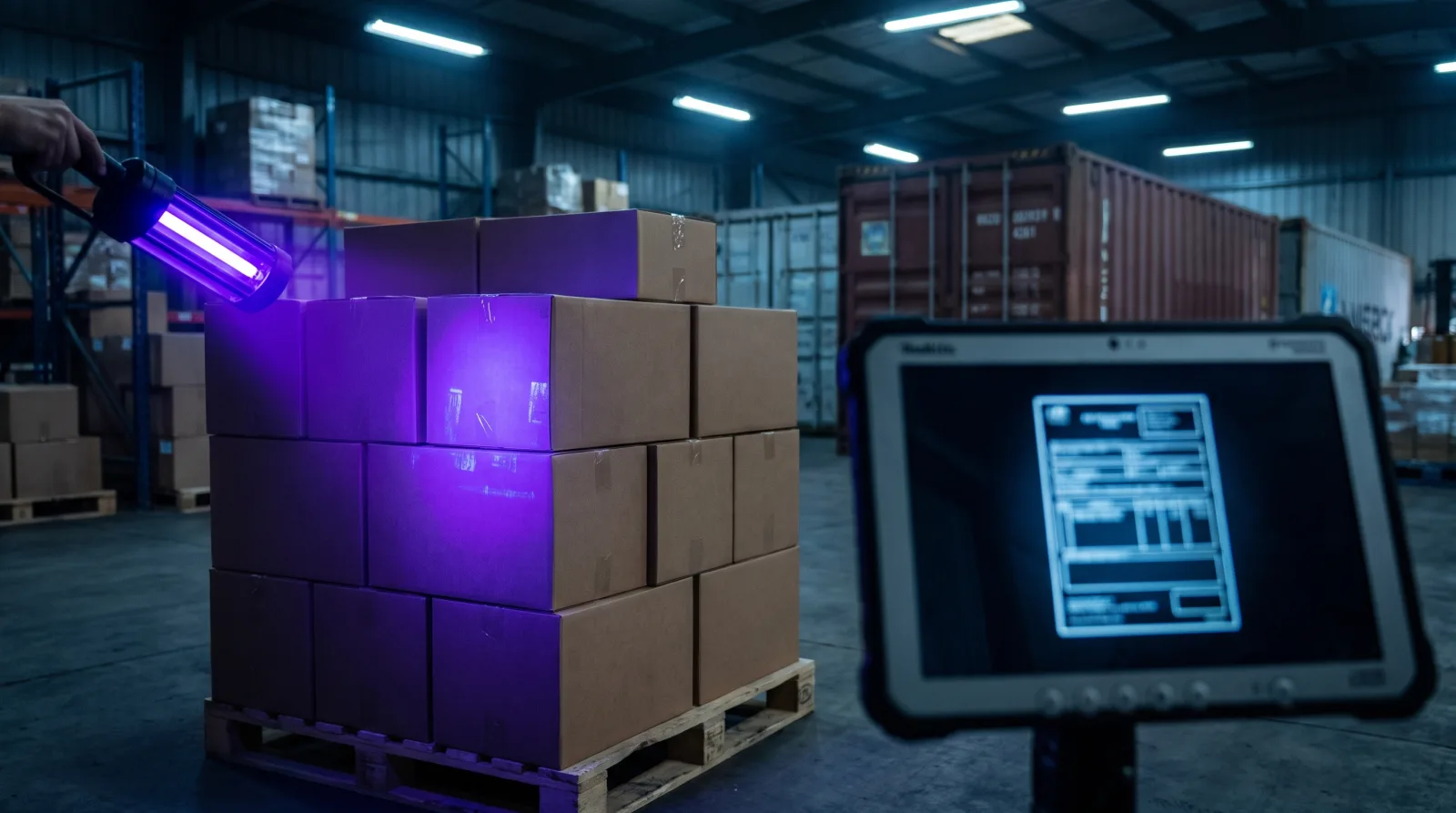
A UV inspection is an examination of the cargo and the trailer interior under ultraviolet light, in which some organic contamination, such as body fluids, fluoresces and becomes visible on packaging. A UV report shows where a trace is, not what it is: the lamp does not identify a substance or establish microbiological contamination. The OTSL warehouse in Milton Keynes produces such a report after a trailer breach, with white-light and UV photographs tied to pallet numbers and the goods classified as clean, for decontamination or for disposal.
What does a UV lamp reveal, and what does it not?
Under UV light certain organic substances and some chemicals fluoresce: a trace invisible on a carton in white light becomes a bright patch under ultraviolet. This makes it possible to point to the pallets and cartons that were in contact with contamination and to separate them from those standing in another part of the trailer. As a result, a rejection does not have to cover the whole load.
The lamp does not, however, say what is fluorescing. Some adhesives, cleaning agents, optical brighteners in paper and film residues fluoresce too. A UV report therefore does not establish the presence of a specific substance or microbiological contamination, and the assessment of whether food is fit for the market is made separately, in the context of Regulation (EC) 178/2002: a food business operator may not place on the market food whose safety it cannot be sure of. The report provides the basis for that assessment; it does not replace it.
How does an insurer read a UV report?
An insurer looks for two things: the extent of the loss and the justification of the decision. The extent is the list of pallets or cartons split into clean, for decontamination and for disposal, with photographs tied to unit numbers. The justification is the description of why a given pallet went into a given group: a UV trace on the outer case, a breached primary pack, contact with the trailer floor where people had been. A photograph without a pallet number and a reason is useless to a loss adjuster.
That is why every report from Milton Keynes contains the identification of the consignment and trailer, a description of the circumstances (when and where the breach was found, who reported it), white-light and UV photographs with locations marked, a unit list with classification and a recommendation for next steps. The decision to dispose of part of the goods rests with the owner and the insurer; the report exists to enable it, not to take it for them.
UV inspection step by step
- Identification. Trailer, seal, consignment note and shipment numbers; description of the breach circumstances and the time of receipt at the warehouse.
- White-light examination. Photographs of the trailer and load before unloading: pallet positions, signs of people having been inside, packaging damage.
- Unloading with numbering. Every pallet receives a number that appears in all its photographs; loose cartons are grouped and marked.
- UV examination. In a darkened zone each unit is lit with a UV lamp from several sides; fluorescing spots are photographed with the pallet number visible.
- Classification. Units are split into clean, for decontamination and for disposal, with the reason recorded for each of the last two groups.
- Report and recommendation. The document goes to the owner of the goods and the insurer; further action (UVC decontamination, disposal, release) waits for their decision.
Definitions
- UV inspection: examination of cargo and trailer under ultraviolet light to locate fluorescing traces on packaging.
- Fluorescence: the glow of a substance under UV radiation; applies to some organic contamination but also to adhesives and optical brighteners.
- UVC decontamination: irradiation of surfaces with UVC light to reduce micro-organisms; a separate stage covered in another OTSL article.
- Regulation (EC) 178/2002: the EU general food law, which prohibits placing unsafe food on the market and puts responsibility on the food business operator.
- Clandestine entrants: unauthorised people hidden in a vehicle; their discovery in a trailer is the most common trigger for a UV cargo inspection in the UK.
- Extent of loss: the list of units affected by the incident with classification and reason; the basis for settlement with the insurer.
Checklist before ordering a UV inspection
- Trailer, seal and consignment note numbers plus the packing list of the shipment.
- Incident description: where and when the breach was found, who reported it, whether authorities attended.
- Type of goods and packaging: food, sealed or open primary packs, chilled goods.
- Insurer details and the person on the owner's side who will receive the report.
- Whether the inspection is to be followed by UVC decontamination, release or a wait for a decision.
- Shelf life of the goods if the decision has to be quick.
When is a UV report not enough?
A UV report does not apply as stand-alone proof of food safety: it shows the location of a trace, not its composition, so where primary packs were opened or the goods had direct contact with contamination, the fitness assessment is made by the owner of the goods under food law, if necessary with laboratory testing. It also does not cover goods that were outside the breached zone of the trailer, unless the insurer requires the whole load to be examined. The scope of the inspection depends on the circumstances of the incident and on what the policy demands.
The OTSL role
The OTSL warehouse in Milton Keynes carries out cargo inspections after a trailer breach with a report for the customer and the insurer, while unloading and storage pending a decision take place under secure transloading. If the goods are covered by cargo insurance, the report is the document for notifying the claim. UVC decontamination and what follows are described in our article on UV inspection and UVC decontamination, the full inspection procedure in the cargo inspection process and report, and the food assessment in food safety after a trailer breach.