 AI image
Croatia is an EU market, so road transport from Poland runs with no customs clearance and no wait at the border. We route loads along the southern corridor through Hungary or through Slovenia, depending on the delivery point and traffic at the crossings. We handle full FTL loads and LTL groupage, with one forwarder in charge from loading to unloading. Below we explain how the routes run, when to choose FTL and when groupage, how the tourist season and the port of Rijeka affect schedules, and what the rate is made of.
Road corridors from Poland to Croatia
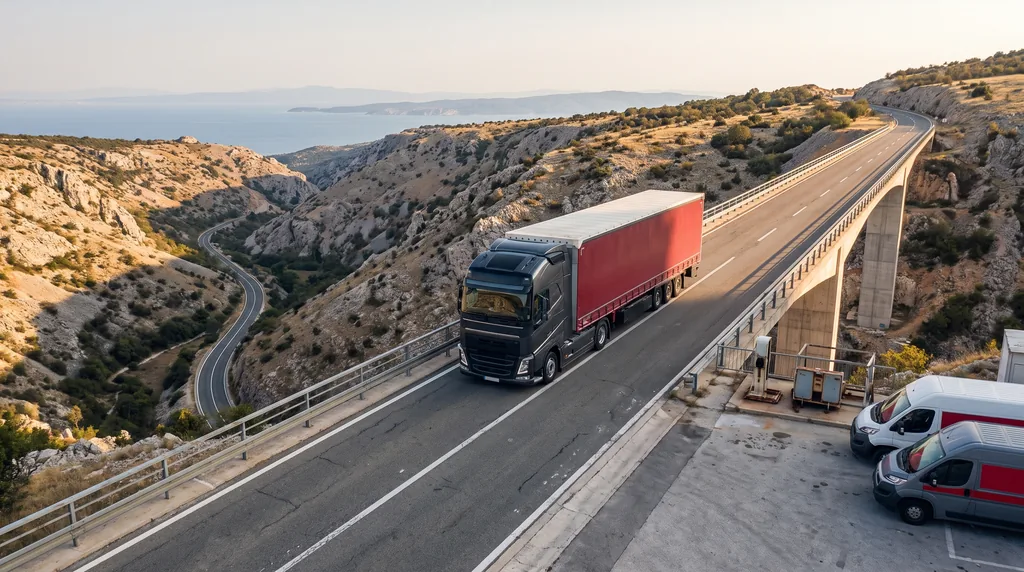
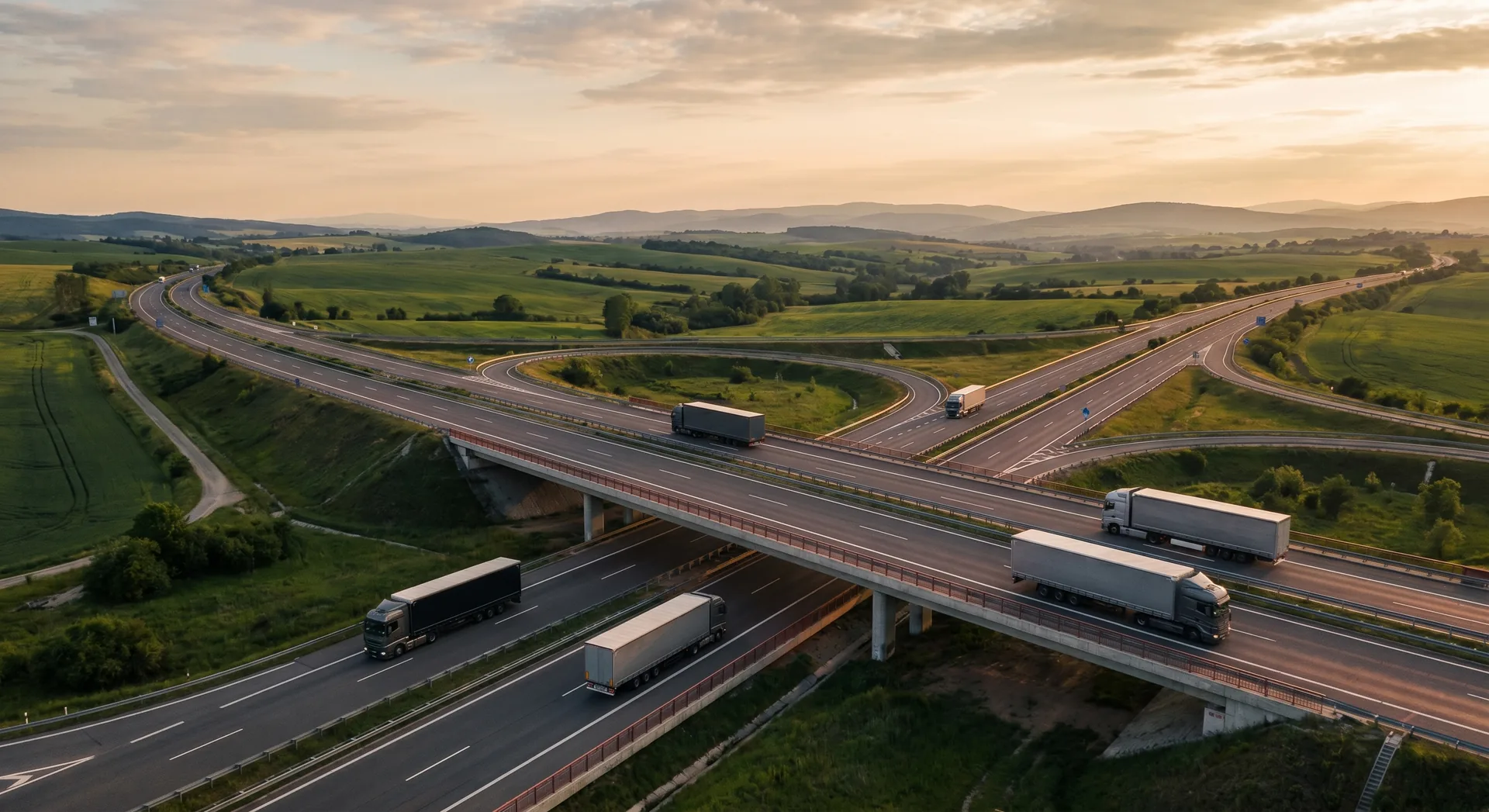
Croatia lies south of Poland, where Central Europe meets the Balkans. In practice we run loads on one of two route variants, chosen for the specific order:
- Via Hungary, towards eastern and central Croatia: the natural choice for deliveries around Zagreb, Osijek and eastern Slavonia.
- Via Slovenia, towards the Adriatic coast: a shorter approach to Rijeka, Zadar and Split when access to the port and the coast matters.
The whole route runs inside the EU and the Schengen area, so there is no customs clearance and no border check to lengthen the trip. Transit time depends on the lane, the cargo type, the consignee delivery windows and driving bans along the way; the forwarder confirms a realistic date at quotation, without fixing a number blindly.
FTL or LTL groupage to Croatia
The choice between a full load and groupage drives both cost and delivery time:
- FTL, full truck load. The truck carries only your cargo, with no reloading on the way. The choice for larger batches, sensitive goods and cases where the shortest time and full control over the shipment matter most.
- LTL, groupage. You pay for the space the cargo actually takes, because we consolidate it with other shipments on the same lane. The choice for single pallets and smaller batches, where the cost per pallet matters more than the shortest transit.
On regular lanes we agree terms for the whole flow of shipments rather than for a single truck, which simplifies planning and billing. If you are unsure which option pays off, the forwarder advises based on weight, dimensions and deadline.
Tourist season and the port of Rijeka
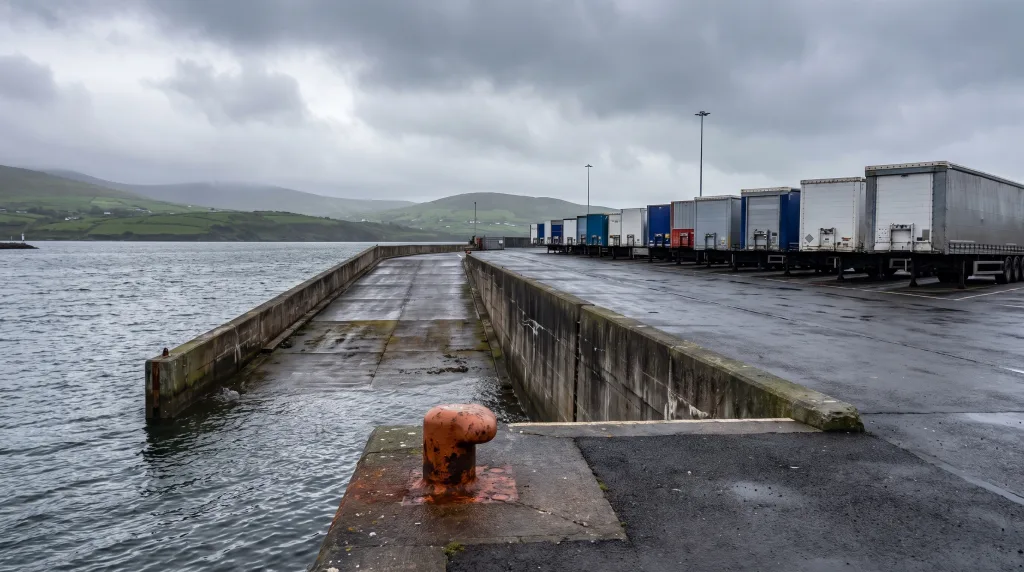
Croatia has clear seasonality. In summer tourist and food traffic rises along the coast, and roads and crossings around the Adriatic can get congested; we then plan delivery dates with a buffer so the truck does not get stuck at the peak of the season. For the rest of the year the market is driven by industry and the port of Rijeka, one of the more important sea gateways in this part of Europe. Freight coming off Rijeka we tie into onward road distribution across the country and the region, so a container or pallet does not wait on the quay for no reason.
Island and coastal deliveries
Some consignees sit on Adriatic islands and in coastal towns with limited access. We plan such deliveries in advance: we check ferry availability, consignee time windows and truck restrictions in tourist towns. Where access is difficult we pick the right vehicle and agree how unloading will work, so the truck does not leave the ramp empty-handed.
Driving bans and scheduling
On routes through Hungary, Slovenia and Croatia, weekend and holiday driving bans apply to trucks, with extra restrictions in tourist areas during the season. A badly timed arrival means a lost day even though the truck stands a few dozen kilometres from the ramp. That is why we set delivery windows around these bans when the order is taken, not on departure day.
What we carry to Croatia
- FTL, full truck loads on regular export and import lanes.
- LTL groupage from a single pallet, consolidated on the same lane.
- ADR, dangerous goods with full documentation and trained drivers.
- Reefer, temperature-controlled loads, important for food traffic in the summer season.
- Oversized, machinery and structures, with permits where required.
How long and how much transport to Croatia costs
Transit time depends on the lane, the chosen corridor, the cargo type and the consignee delivery windows, and along the way on driving bans and seasonal traffic. The rate is built mainly from freight and, for groupage, the cost of consolidation; for special loads, permits or reefer handling are added. Because Croatia is in the EU, there are no customs clearance costs here. We break the details down in the quote so it is clear what you pay for, and the forwarder confirms a realistic date on request.
What OTSL organises on the Croatian lane
- One forwarder in charge. The same person handles loading, the route and delivery, and answers questions without passing you on.
- Corridor and vehicle choice for the specific delivery, including difficult access along the coast and to the islands.
- Groupage consolidation on the southern lane, to lower the cost per pallet.
- Linking freight from the port of Rijeka with onward road distribution.
- Support in transit. While loads are on the road we stay reachable, weekends included.
How to book transport to Croatia
For a quote we need a cargo description, dimensions, weight, loading and delivery points and the expected date. On that basis the forwarder proposes a mode, FTL or groupage, points to the corridor and confirms a realistic date. You send the enquiry through the form, and one contact takes it from there.
See also
- Transport to the Balkans: Croatia, Slovenia, Bulgaria, Greece
- FTL or LTL: when to use a full load and when groupage
- FTL rate: what the price is made of
- Groupage and part loads across Europe
- HGV driving bans in Europe
- Groupage LTL
- Temperature-controlled reefer transport
- ADR transport, dangerous goods
- Oversized and out-of-gauge loads
- Express vans when every hour counts
- Other destinations across Europe
- Ask about transport to Croatia