 AI image
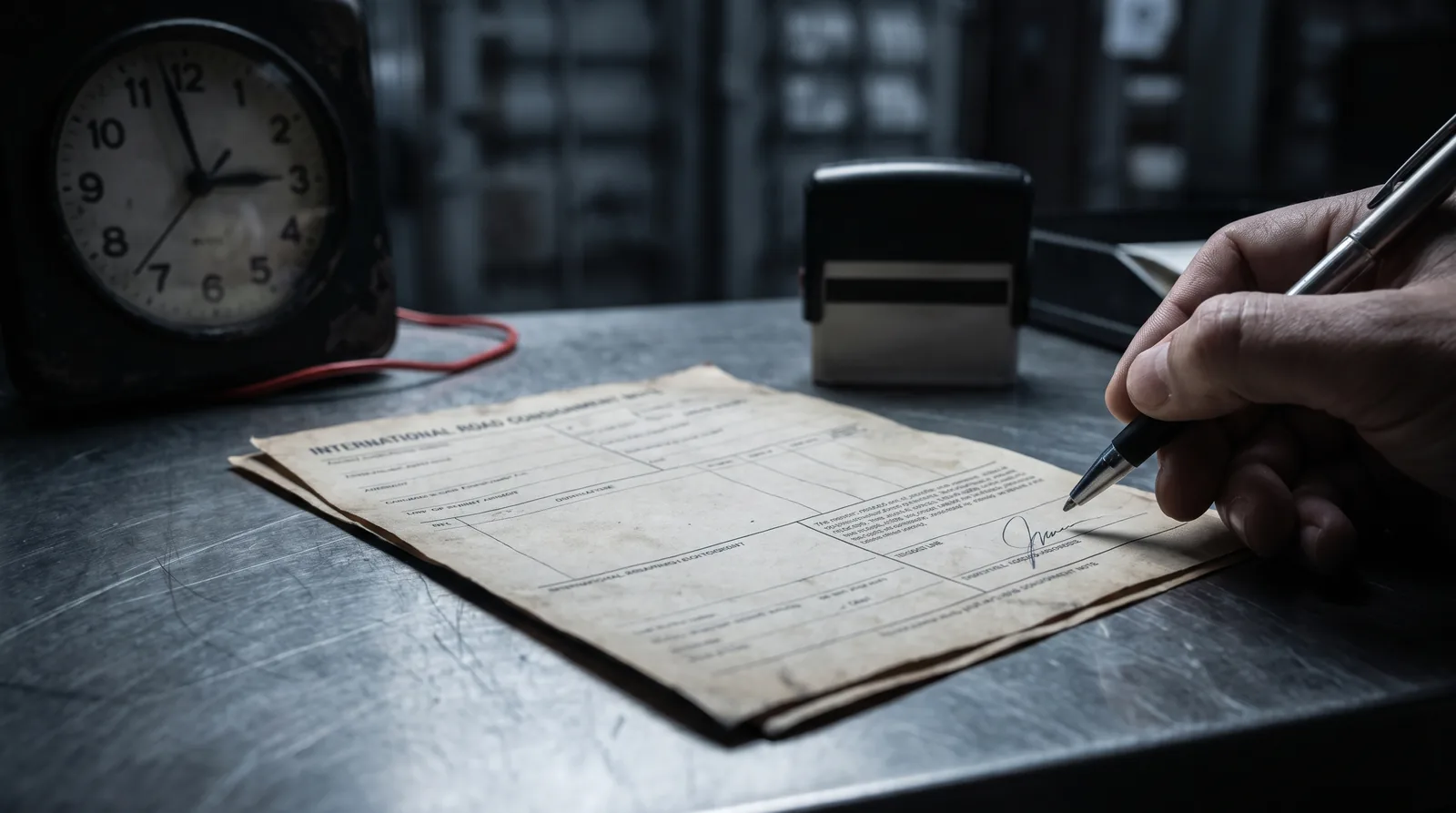
Under the CMR Convention, visible damage must be noted to the carrier no later than at the time of delivery; hidden damage within 7 days of delivery (excluding Sundays and public holidays). If you do not, the Convention presumes the goods arrived in the condition described on the consignment note. The burden of proof then shifts onto you.
Visible at delivery, hidden within 7 days: two different clocks
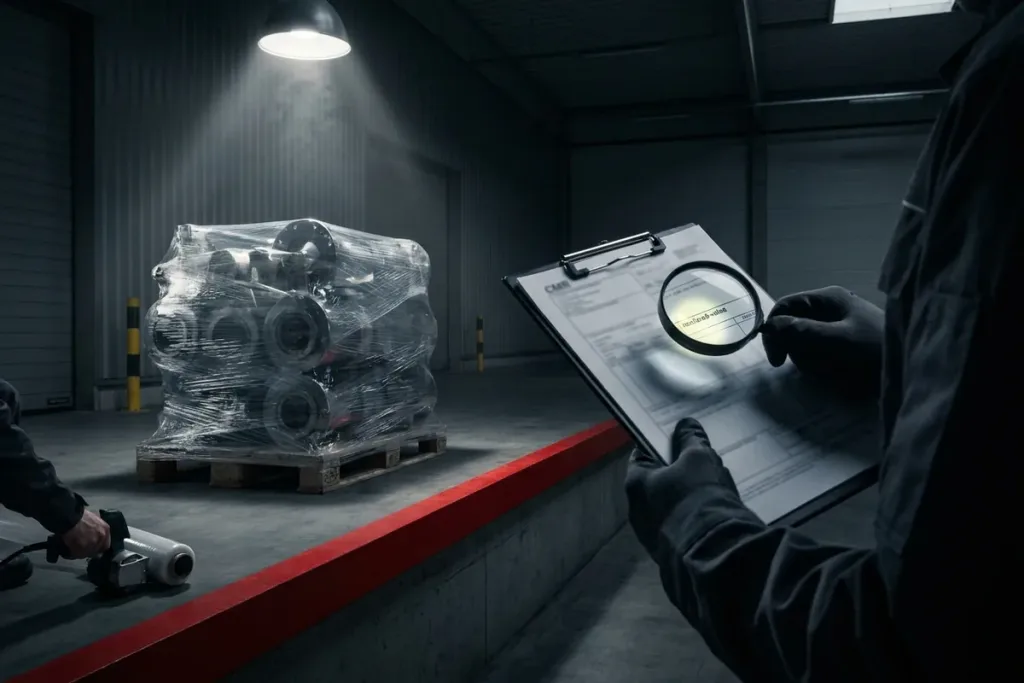
The CMR Convention splits damage into two categories, each with its own deadline. Visible damage, meaning anything apparent to the naked eye during unloading (a crushed pallet, a soaked carton, dented shrink wrap), must be reserved immediately at delivery by writing the reservation onto the CMR consignment note. Hidden damage, not detectable through the packaging, may be notified within 7 days of delivery, with Sundays and public holidays excluded from that count. That is a short window. In practice it closes before anyone in the company has finished unwrapping the pallets.
Preclusion: what you actually lose after the deadline
Silence at delivery is not neutral. If you accept the goods without reservation, the CMR Convention triggers a presumption that the consignment was in the condition stated on the note. This does not mean the claim vanishes instantly. It means the burden of proof reverses: now you must prove the damage happened in transit, not later in your own warehouse. Without a reservation on the CMR and without photos from the moment of receipt, that proof is usually impossible to produce. There is also a second clock: CMR claims are, as a rule, time-barred after one year (or three years in cases of wilful misconduct or gross negligence). (source: unece.org) The carrier's liability is capped anyway, calculated in SDR units per kilogram of damaged or missing weight, so you often cannot recover the full cargo value regardless. All the more reason not to lose your one solid piece of evidence.
How to document condition at delivery
The rule is simple: the evidence is created at the moment of unloading, or not at all. Before the driver leaves, you inspect the shipment and write the specific reservation (what, how much, what kind of damage) onto the CMR consignment note, not on a loose sheet. You take photos: the whole trailer, the seal number, the damaged spot close up and in the context of the pallet, the label with the shipment number. A vague "goods damaged" is not enough. If you suspect hidden damage, unpack and check within those 7 days; do not leave the pallets in a corner for later. It is worth linking this to cargo insurance, because a policy runs in parallel to the CMR regime and can rescue you where the carrier's cap is too low. For more on the common traps, see our supply chain risks knowledge base.
How does OTSL prevent this?
We run transport and customs under a single-responsibility model, so when something happens on the route you get one number and one contact 24/7, not a chain of subcontractors passing the blame. We make sure reservations land on the CMR at the moment of delivery, not the day after, and we keep the damage record so the claim has a foundation in evidence. We work only with vetted carriers holding real liability cover, and for sensitive freight we arrange the scope of cargo insurance in advance. A claim is no time for improvisation. It is a procedure we start with you from the first minute at the ramp.
Step by step
- Delivery inspection. Check the external condition of pallets and cartons as soon as the vehicle arrives.
- Consignment note entry. Record any obvious damage immediately on the CMR consignment note.
- Unpacking the shipment. Inspect the contents of the cargo for concealed issues promptly after receipt.
- Written notification. Send a formal written reservation to the carrier within 7 days of delivery.
- Evidence collection. Take photos of damaged items and retain original packaging for verification.
Definitions
- CMR (Convention relative au contrat de transport international de marchandises par route): International convention governing the legal framework for road freight transport.
- Visible damage: Loss or damage to goods that is apparent to the naked eye upon delivery or unloading.
- Hidden damage: Damage to the consignment content that cannot be detected from the outside at delivery due to packaging.
- CMR consignment note: Official document confirming the contract of carriage and the condition of the accepted goods.
When does this rule not apply?
This 7-day notification rule does not apply if the damage was caused intentionally or through gross negligence by the carrier.
The OTSL role
OTSL supports businesses in arranging international road transport and ensures proper consignment documentation. We also provide guidance regarding pallets and cargo securing in transport to help avoid potential disputes.