 AI image
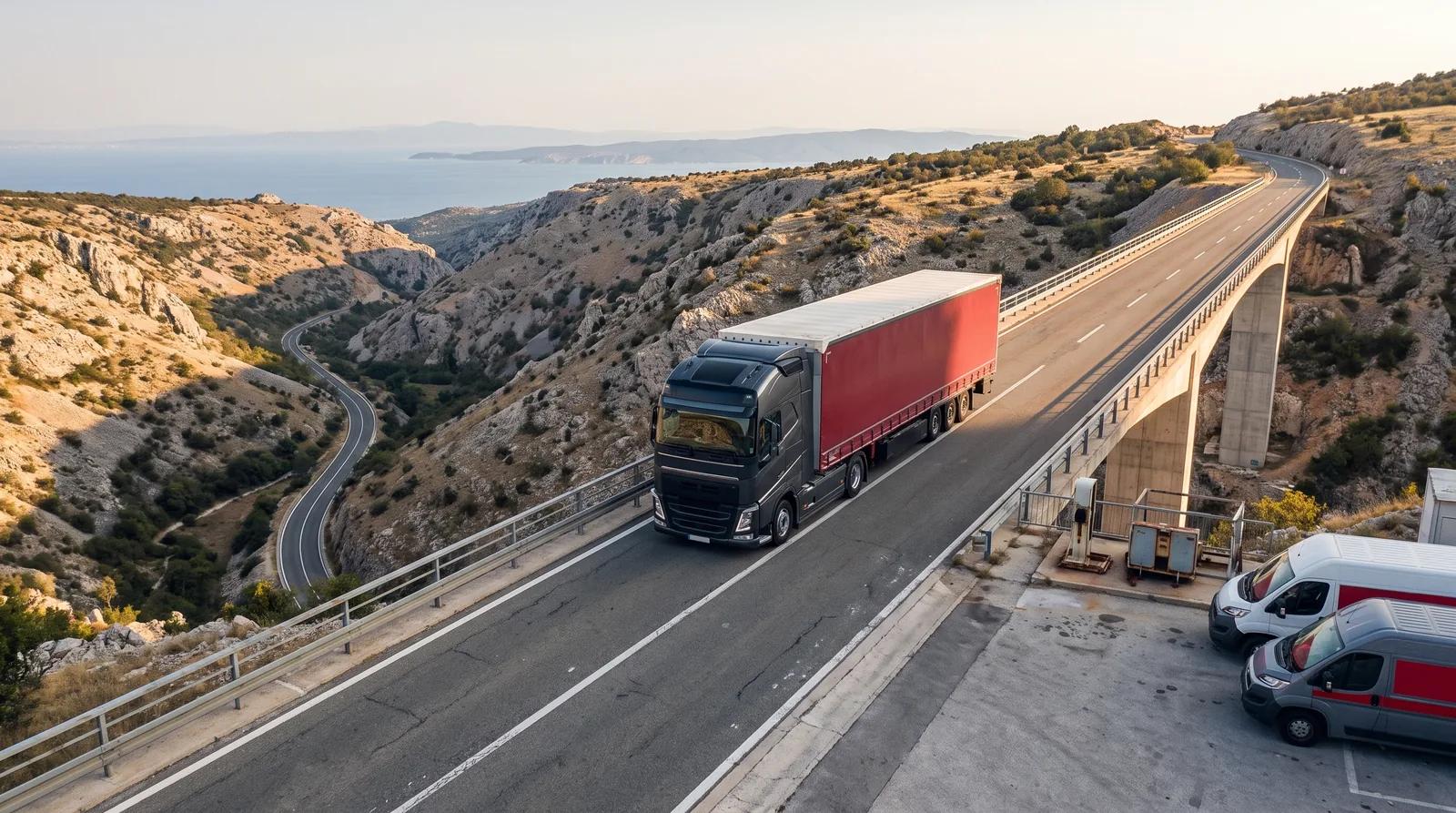
Transport to the Balkans runs from Poland along corridors through Czechia and Austria or through Slovakia and Hungary. Croatia and Slovenia are relatively close, reachable entirely on EU roads. Bulgaria and Greece are further: the shortest variant cuts through Serbia, a non-EU country, while the fully EU route runs through Romania. Greece is also served by ferries from Italy.
Croatia and Slovenia: the near Balkans
To Slovenia and Croatia trucks usually run through Austria or Hungary. Both countries are in the EU and in Schengen, so borders do not stop the goods. The calendar can: in summer Croatia hits its tourist peak, the roads to the coast clog up, and several transit countries apply seasonal weekend driving bans for trucks. Plan a delivery to Croatia for a holiday Friday and you are booking a risk. We build these routes so the truck clears the bottlenecks before the bans kick in.
Bulgaria and Greece: the far Balkans and the transit decision
Transport to Bulgaria and on to Greece requires a decision the sat-nav does not show. The shortest road leads through Serbia, which is outside the EU: entering and leaving means customs transit and possible queues at the crossings. The fully EU route runs through Hungary and Romania: longer in kilometres, but with no clearances and no border surprises. The choice depends on the cargo, the deadline and whether the shorter distance is worth the extra risk.
Greece: by land or by ferry from Italy
The second way to Greece is to drop down through Italy and take a ferry across the Adriatic. The trailer sails, the driver rests, and the route bypasses the whole Balkan transit. This variant wins when the loading is in the west, or when sailing dates line up well with the unloading window. Crossings are reserved by our ferry booking desk.
Road charges: a mosaic of systems
- Some countries on the route charge electronic tolls per kilometre, some sell time-based vignettes, and Croatia collects tolls at motorway gates.
- Each system means a separate on-board unit or registration: missing one means a fine or a standstill.
- A forwarder must price these costs upfront, otherwise the "cheap" route gets expensive after the fact.
Whichever variant runs, the load is managed by our road transport team: one dispatcher, one responsibility, from loading in Poland to unloading in the Balkans.
See also
- Transport to Croatia: destination page
- Transport to Romania and Hungary: corridors and e-tolls
- Transport to Cyprus and Malta: how freight to the EU islands works
How can delays be avoided when transporting goods to Croatia in summer?
Delays can be avoided by timing the schedule so that the vehicle passes potential bottlenecks along holiday routes before weekend driving bans for trucks take effect.
Step by step
- Route selection. You evaluate transit times alongside options for intra-EU routes and non-EU country transit.
- Schedule planning. You check weekend driving bans and plan around summer holiday traffic near tourist regions.
- Vehicle preparation. You assign appropriate fleet capacity and verify route technical requirements.
- Loading and securing. You secure the cargo in accordance with road transport safety standards.
- Delivery completion. You track progress along the corridor and hand over the goods to the recipient in the Balkans.
Definitions
- EU (European Union): A community of states connected by a single market and the absence of internal customs barriers.
- Schengen Area: A zone with no internal border controls, facilitating continuous movement for heavy goods vehicles.
- Transport corridor: A designated main route for goods movement connecting key logistical nodes across Europe.
- Transit country: A state through whose territory goods are carried to reach their final destination.
The OTSL role
For efficient journeys towards the Balkan region, we organise reliable road transport (FTL) and schedule routes to bypass seasonal traffic congestion. If you are assessing different transport options, read our guide on express vans and time-critical transport in Europe to choose the right strategy for your schedule.