 AI image
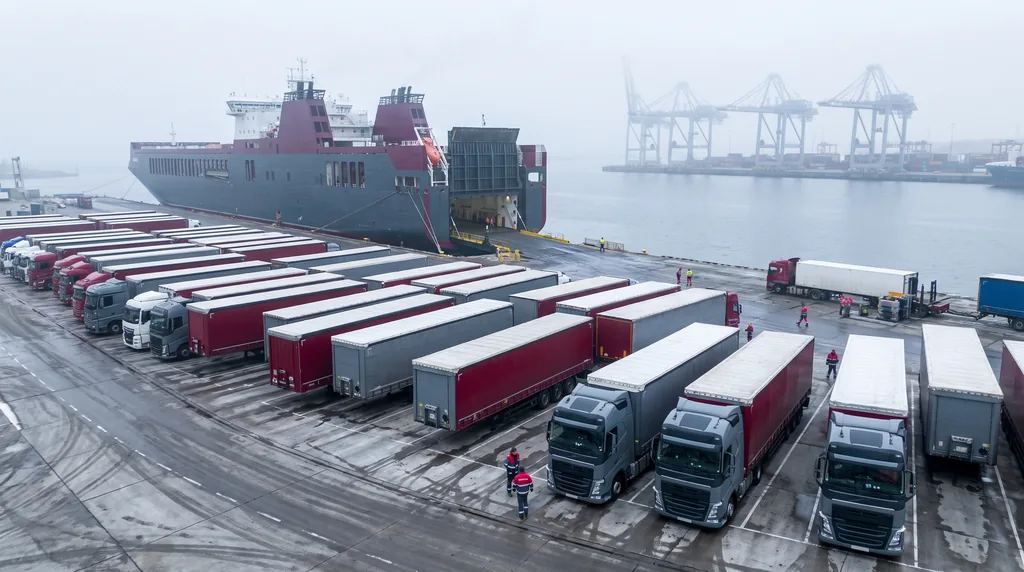
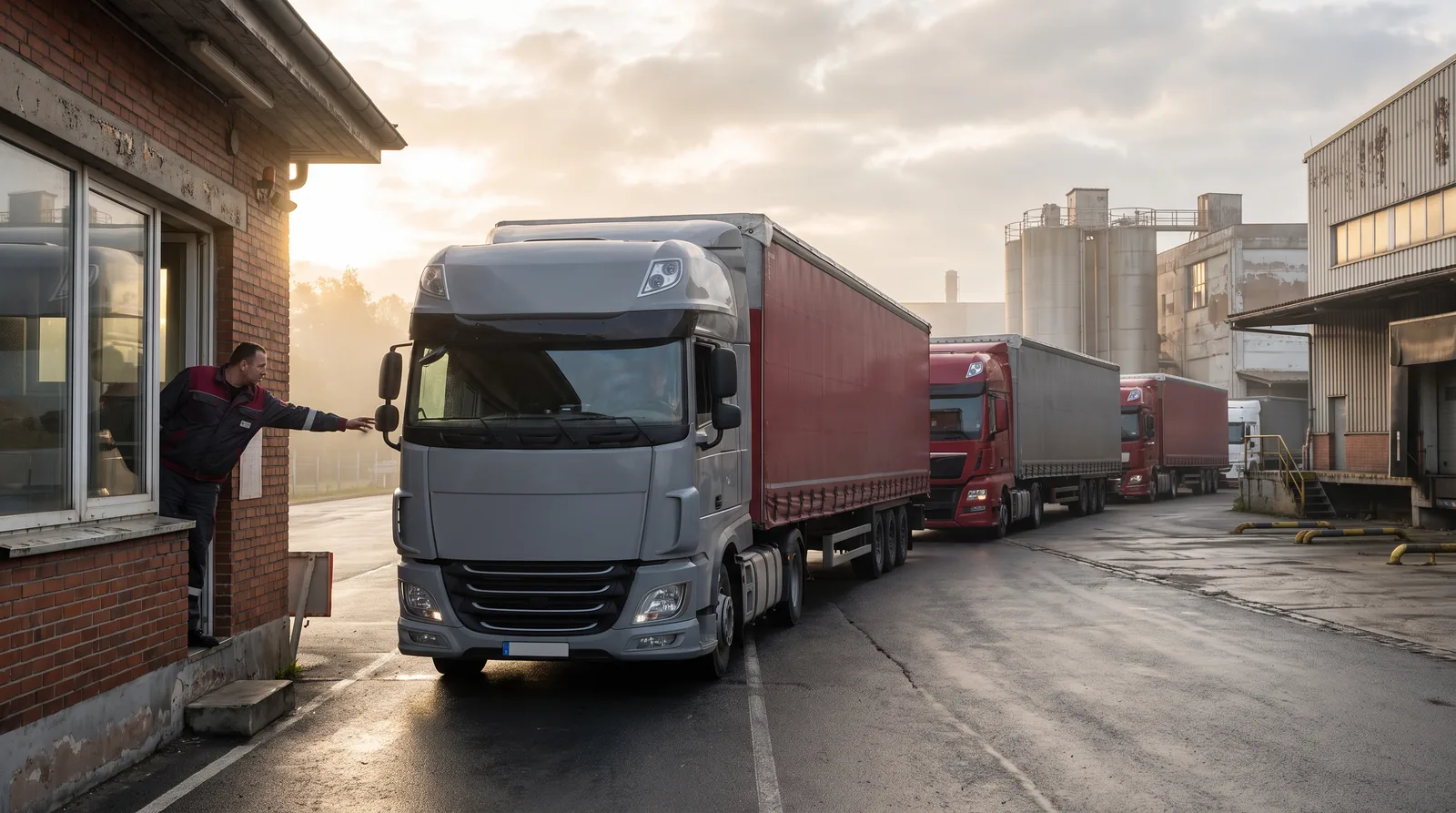
Automotive plants in Poland, Czechia, Slovakia and Germany accept deliveries only in booked unloading windows, reserved in the receiver's systems. Being late means the back of the queue at best, escalation and a supplier report at worst. That is why the route is planned backwards from the window, with a time buffer and driver details submitted before arrival.
Booking: the gate opens through a system
Plants and supplier parks run booking through carrier portals or yard management systems. A reservation needs the order or delivery data, the number and type of load carriers, the vehicle plates and the driver details. A missing item surfaces at the gate, and a plant gate has no maybe mode: either the data matches, or the truck stands.
Late: back of the queue or escalation
- A truck after its slot goes to the back of the queue or waits for the next free window, sometimes until the next shift.
- The delivery may be set critical, with status reports at short intervals.
- Repeated lateness lands in the supplier rating and comes back at the next negotiations.
The mechanics of windows and what the receiver sees on their side are also covered in slot deliveries in automotive.
Buffers: planning backwards from the window
We calculate the route backwards from the unloading window, with reserve for borders, traffic, inspections and weather. The buffer is spent at a car park near the plant, not on a heroic motorway finish. In Germany the plan must also absorb the Sunday and public holiday driving bans for heavy trucks: a vehicle with a Monday morning slot needs that ban built into the schedule before it leaves the loading point.
Too early is also a problem
JIT production keeps buffers small, so some plants do not admit trucks before the slot: a full trailer has nowhere to stand. The difference between delivering on time and delivering in sequence is covered in JIT and JIS in freight practice.
Four countries, one discipline
The rules in Poland, Czechia, Slovakia and Germany all point the same way: the booking systems and the language of the messages differ, the logic does not. Everywhere the winning supplier is the one whose trucks report inside the windows and whose problems are flagged before the planner sees them.
The forwarder role
We handle the booking, keep the data complete and plan the buffers for the regular flows described under automotive logistics. And when the carrier moving your parts stops answering, we launch emergency transport takeover before the window is lost.
What should you do if you need to swap the driver 2 hours before the unloading slot?
If you need to change the tractor unit or driver en route, the time window for editing data in the portal is critical. Automotive plants close the option for self-service registration changes in the system exactly 2 hours before the designated slot. After this cutoff, any change requires direct notification to the plant dispatcher and manual override of the booking. The standard tolerance window for late arrivals at the gate is just 15 minutes – once exceeded, the system automatically cancels entry and places the haulage booking on pending status.
When a factory operates on a Just-In-Sequence basis and buffer stock levels drop below 80%, any delay beyond the tolerance triggers an emergency line-stop procedure. A full articulated lorry carrying 33 pallets must be offloaded and checked within 45 minutes of passing through the security gate. If an emergency vehicle swap occurs, you must provide the dispatcher with the following details:
- Passport or national ID number of the new driver,
- New registration numbers for both tractor and trailer,
- Exact GPS position of the vehicle 60 minutes prior to the booked slot.
These strict data modification rules and slot penalties do not apply to bulk raw material deliveries arriving via tipper lorries, nor to light commercial vehicles under 3.5 tonnes total weight, which utilise separate entry gates and fast-track clearance lanes.
Step by step
- Slot booking. You enter the order details and container types into the receiver's portal.
- Driver registration. You submit the vehicle registration numbers and driver details prior to arrival.
- Route planning. You set the schedule working backwards from the unloading window with a safety buffer.
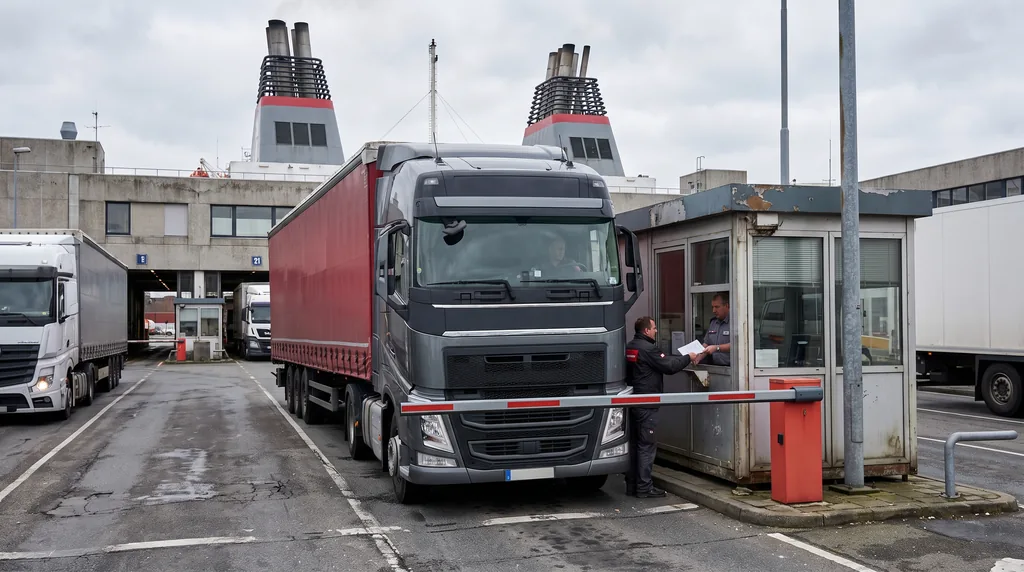
- Gate check-in. The driver reports to the plant gate within the assigned time window.
- Unloading and empty return. The goods are handed over and returnable packaging is collected if required.
Definitions
- Unloading window: A specific time period allocated by a plant for receiving and unloading goods.
- Delivery booking: The process of registering a scheduled vehicle arrival in the receiver's IT system.
- YMS (Yard Management System): Software used to manage vehicle movement and slot allocation on plant grounds.
- KLT (Kleinladungsträger): Standardised small plastic container widely used across automotive supply chains.
- Gitterbox: A metal wire mesh pallet cage used for transporting heavier automotive parts.
When does this rule not apply?
Strict slot booking does not apply to emergency critical freight deliveries meant to prevent immediate production halts, unless individual plant safety policies strictly demand prior phone clearance at the gate.
The OTSL role
OTSL coordinates shipments for the automotive sector, focusing on precise timing according to factory schedules. We offer reliable road transport and full control over delivery timing, as detailed in our guide on automotive transport delivery slots.