 AI image
Transport to Malta combines a road leg with a sea crossing, because Malta is an island south of Sicily with no land link to the rest of the continent. The load runs by road through Italy to one of the southern ports, then boards a ferry or a RoRo unit. Malta is part of the European Union, so commercial transport moves without customs clearance, but the rhythm of the delivery is set by the crossing schedule, not by the road route alone. We handle full loads (FTL) and part loads (LTL), with a single forwarder running the whole job. Below we explain how we plan the crossing, how long the transit really takes, what cargo we carry and what to keep in mind on a first shipment to the island.
Why Malta is island logistics, not an ordinary road run
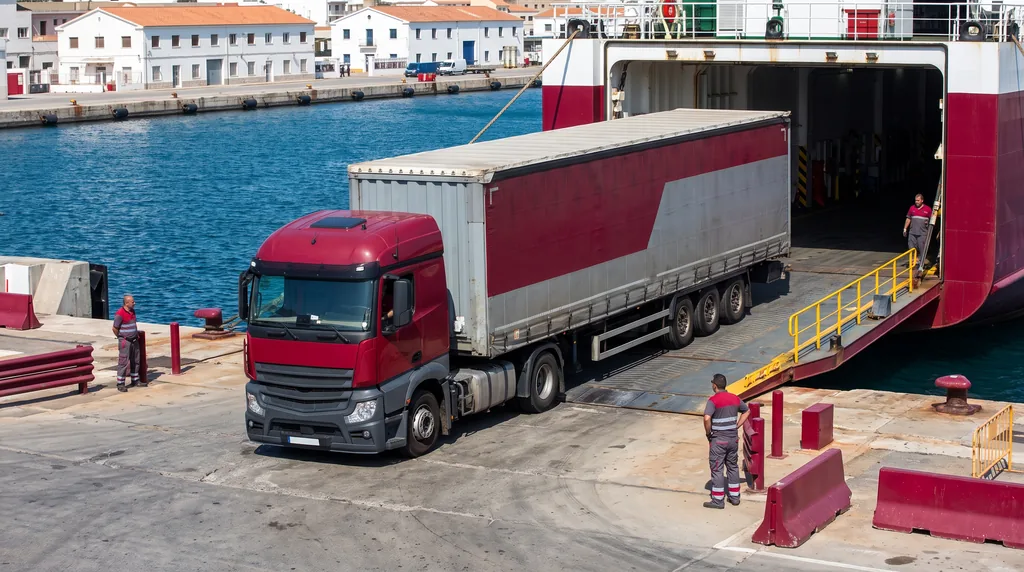
You cannot drive to Malta. Every load finishes its road leg at a port in southern Italy and continues by sea. That changes the whole way we plan: what matters is not only the driving time, but the ferry booking and matching the arrival time at the port to the crossing schedule. A truck that reaches the port after the vessel has sailed waits for the next one, and crossings on this route do not run every hour. So we plan the delivery date well ahead and treat the sea leg as an equal part of the route, not an add-on tacked on at the end.
Because Malta is in the European Union and its customs union, moving goods from Poland or another member state needs no customs clearance and no border declarations. The paperwork typical of non-EU destinations disappears, but the sea coordination does not. It is the crossing that decides whether the delivery reaches the island inside the promised window.
How we ship to Malta step by step
A job starts with a description of the goods, dimensions, weight and the loading and delivery points on the island. On that basis the forwarder selects the transport option and the crossing, then confirms the quote and a realistic date. The sequence looks like this:
- Road leg through Italy. The rig runs from the loading point to one of the southern ports served by crossings to Malta.
- Crossing booking. Space on the ferry or RoRo unit is reserved ahead of time, matching the arrival at the port to the schedule.
- Sea crossing. The trailer sails to the island, usually without transloading the goods, so the cargo stays in the same trailer.
- Delivery on the island. After leaving the vessel the load reaches the address in the Valletta area or in the industrial zones.
One forwarder runs the whole route, so from loading to delivery you speak with a single person, not a chain of subcontractors. The client gets status updates without chasing, and on a first shipment we walk them through the specifics of the crossing.
How long transport to Malta takes
Transit to Malta is longer than for purely overland destinations, because on top of the driving time there is the run to the port in southern Italy and the sea crossing itself. The delivery time depends on the length of the road leg, the schedule and availability of crossings and the receiver time windows on the island. The key is matching the port arrival to a departing vessel: a well planned crossing means a smooth transit, a badly timed window means a day of waiting at the port. The forwarder confirms the real date at the quote stage, once a specific crossing is chosen, not as a rough guess up front.
What is specific about the Malta direction
Malta is a small island market where loads concentrate around Valletta and the adjacent conurbation and in the industrial zones of the island. The scale of the market and the need for a sea crossing mean that good organisation matters: the right choice of crossing, a booked slot and a realistic delivery window. The peak season on the Mediterranean can tighten crossings and stretch the wait, so for deliveries during the peak we plan with a buffer. As an EU market, transport here involves no customs clearance, but it does involve the discipline of maritime schedules, which has to be built in from the first day of planning.
What cargo we carry to Malta
- FTL, full truck loads: tilts and rigs on regular lanes, sailing to the island in full.
- LTL and groupage: part loads from a single pallet, consolidated on the same direction.
- ADR: dangerous goods with full documentation and trained drivers, taking account of the requirements for carriage on the ferry.
- Reefer: temperature-controlled loads, where the cold chain has to hold during the crossing as well.
- Out of gauge: machinery and structures, with permits where required and a vessel suited to the dimensions.
What to watch out for when shipping to Malta
- Planning the crossing too late means no space on the nearest vessel and a delivery pushed to the next sailing.
- Missing the fit between port arrival and schedule costs a day, even though the truck stands a few hundred metres from the quay.
- No buffer in the peak season on the Mediterranean can stretch the wait for a crossing.
- Demanding cargo such as reefer or ADR needs a crossing suited to its nature, which we settle before departure.
Why OTSL on the Malta direction
- One lead forwarder. The same person watches loading, the crossing and delivery, and answers questions without passing you on.
- The crossing planned from the start. We treat the sea leg as an equal part of the route, so bookings and the date are set ahead of time.
- Different cargo types. FTL, groupage, reefer, ADR and out of gauge on one direction, with the right vessel selected.
- Support in transit. While the load is on the road and during the crossing we stay reachable, including outside standard hours.
The primary contact channel is the form. Describe the goods, dimensions, weight and the loading and delivery points on the island, and the forwarder will select the crossing and confirm the date.
See also
- Transport to Cyprus and Malta, freight to EU islands
- Groupage and part loads across Europe
- What a freight ferry booking includes
- Trade fair transport to Italy
- Groupage and part loads
- Express vans when every hour counts
- Temperature-controlled transport
- ADR transport of dangerous goods
- Out of gauge and special loads
- Ferry crossing booking
- All OTSL destinations
- Contact form