 AI image
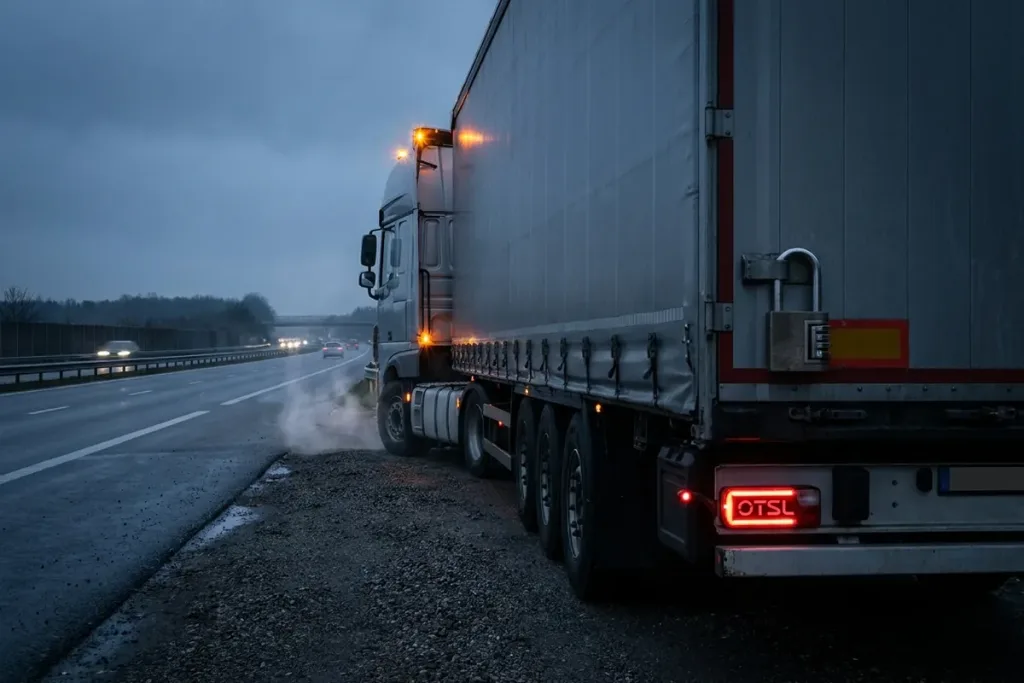
A cancelled truck costs more the later you cancel. Cancel well in advance and the carrier will usually resell the vehicle to another freight, so the matter ends free of charge or close to it. Once the truck is already rolling towards the loading site, you are looking at the positioning cost, a blocked vehicle day and the lost freight. The settlement rules come from the transport order, so read the cancellation clauses before signing, not after the call about a load that „fell through".
Why a cancelled truck costs money when nothing moved
Accepting an order means reserving a specific vehicle and driver for a specific day. From that moment the carrier declines other freights for that window, plans the approach run and the driver's working time. When the load falls through, time cannot be rewound: the truck stands where it was told to be, the calendar is empty and the fixed costs keep running. Then there is the positioning. A vehicle that ran a few hundred kilometres towards a loading burned fuel and used up driving time on a leg nobody paid for. What a vehicle day is made of shows clearly in our analysis of FTL rate components.
The timing of the cancellation decides the cost
| When you cancel | Typical market outcome |
|---|---|
| Well in advance, before positioning | Often free of charge or a token fee, if the carrier manages to resell the vehicle |
| On the loading day, truck still at base | A claim for part of the freight for the blocked window and the work turned away |
| Truck en route or at the loading site | Positioning costs plus part of the freight, because the vehicle's day is lost in full |
| Truck loaded, goods going back to the warehouse | A claim reaching the full freight plus unloading and return costs |
Thresholds and amounts are contractual, but the logic is the same everywhere: the less time there is to find replacement freight, the more of the vehicle's day is lost and the higher the claim.
How does the market settle cancellations: three mechanisms?
- A percentage of the freight. Orders often provide for compensation calculated as a share of the agreed carriage charge, growing with how late the cancellation came.
- A daily vehicle rate. Alternatively, the blocked vehicle day is settled at a rate stated in the order or customary for the equipment type.
- Actual documented costs. The approach run, tolls, crossings, driver time: items the carrier genuinely incurred and can evidence.
In a dispute, the ceiling is always the contract and the general rules of damages. It helps when the order picks one mechanism up front, because then there is nothing left to argue about.
What belongs in the transport order
- A free cancellation deadline: until when the vehicle can be called off without consequences.
- The compensation formula after that deadline: percentage of freight, daily rate or documented costs.
- Symmetry of obligations: matching consequences when it is the carrier that fails to show. One-sided penalties aimed only at the shipper should raise an eyebrow.
- The form of cancellation: in writing or via the exchange messenger, with the hour from which it takes effect. A phone call saying „we are not shipping after all" is hard to prove later.
The other side of the coin: when the carrier cancels the truck
Cancellation cuts both ways. A carrier that pulls out at the last minute exposes you to a replacement vehicle at a higher rate, a late delivery and penalties from the consignee. There is a worse variant too: the „confirmed" truck never existed, because the order drifted down a chain of subcontracts or landed with a fraudster. How to recognise that scenario is described in our piece on the fake carrier from the freight exchange. Cancellations should also be distinguished from obstacles nobody caused, such as a cancelled ferry crossing, which follow different rules; we cover them in storm and a cancelled crossing.
Why a serious forwarder confirms the truck only after verification
A vehicle promised one minute after the enquiry looks great in the inbox and much worse at the ramp. Before we confirm a truck, we check that the carrier exists, holds a valid policy and licence, runs the right equipment and that its vehicle can physically make the loading. Only then do we commit to a date with the client. That one day of caution eliminates most of the scenarios in which a „confirmed" truck vanishes the evening before loading, leaving the client with goods on the ramp and penalties from the consignee.
How does to limit the risk on both side?
- Book against reality: confirm the goods are actually ready with production and the consignee before ordering the truck.
- Cancel the moment you know: every hour of delay narrows the carrier's room to resell the vehicle and raises the claim.
- Negotiate the cancellation clauses before signing, not during the first dispute.
- Work with partners who verify vehicles instead of promising the fastest confirmation on the market.
The OTSL role
We confirm a vehicle only after verifying the carrier and the feasibility of the date, and we keep cancellation clauses symmetrical and unambiguous. When a load falls through, we hunt for replacement freight for the vehicle before anyone issues a debit note: recovered freight beats even the best documented claim. Contact us if you want to know what a cancelled truck really costs in your lanes, or browse our knowledge base.
Step by step
- Check contract terms. Review the transport agreement clauses regarding cancellation fees before taking action.
- Notify the carrier. Inform the transport provider as early as possible to minimise positioning expenses.
- Verify vehicle location. Check whether the truck has already started rolling towards the loading site.
- Assess actual costs. Review the carrier settlement based on actual distance driven and reserved time.
- Confirm cancellation. Send a written confirmation to finalize the order cancellation and settle obligations.
Definitions
- Cancelled truck: A situation where the shipper cancels an announced transport before the goods are loaded.
- Failed loading: The inability to dispatch notified goods due to production delays or incomplete paperwork.
- Positioning cost: The expense incurred by the carrier when moving the vehicle to the loading location.
- Blocked vehicle day: A period during which a truck cannot take other jobs due to prior reservation.
- Lost freight: The revenue the carrier forfeits by rejecting alternative orders for that timeframe.
When does this rule not apply?
This rule does not apply if the order cancellation is caused by force majeure events or if the carrier fails to provide the vehicle at the agreed time.
Sources
UNECE, road transport and the CMR Convention (unece.org)
EUR-Lex, European Union law (eur-lex.europa.eu)