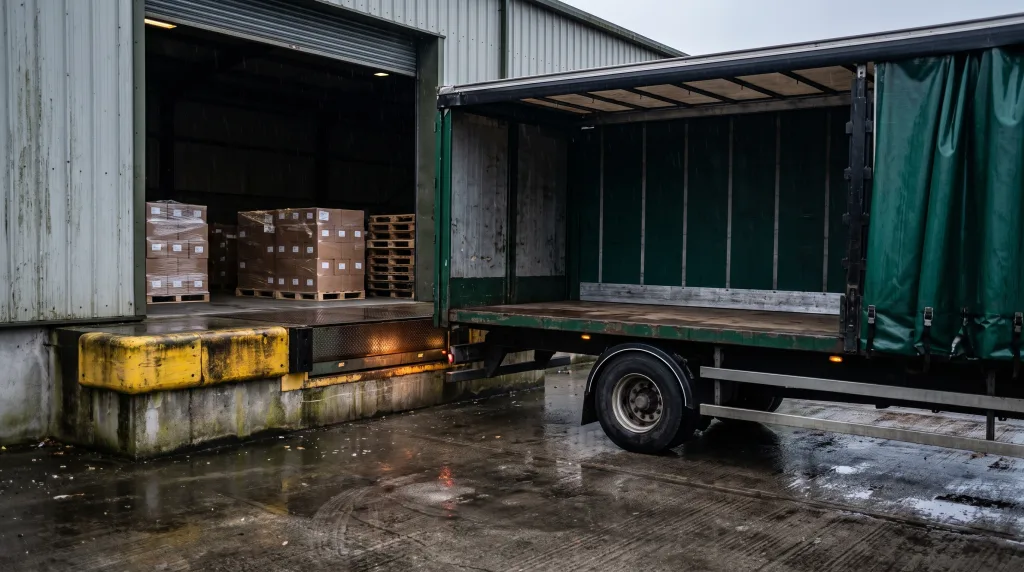
 AI image
Double brokering is the resale of your transport order to another company without your knowledge or consent. The load passes through a chain of middlemen, each taking a margin, and the truck that arrives belongs to a carrier nobody vetted. Three things protect you: a no-subcontracting clause, carrier checks before loading, and a forwarder with its own proven network.
Subcontracting versus the chain: where the line runs
Subcontracting itself is legal and common. The CMR Convention explicitly allows a carrier to use a subcontractor and makes the carrier answerable for that subcontractor's acts and omissions as if they were its own. A forwarder passing a load to a vetted carrier from its own network is a normal working model: you know the forwarder, the forwarder knows the carrier, your requirements travel down unchanged, and liability stays continuous and insured.
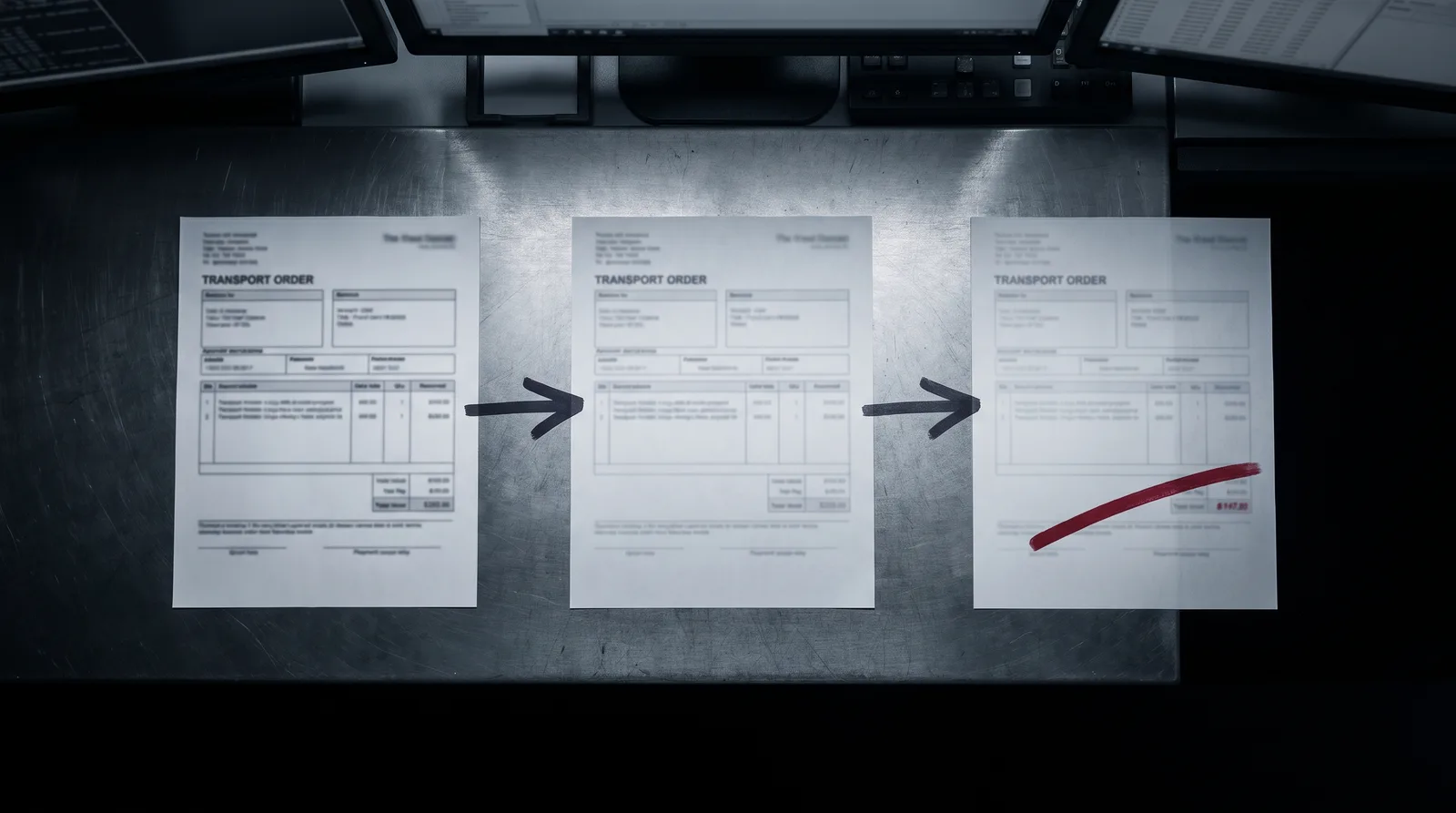
The trouble starts when the order takes on a life of its own. Company A accepts the freight and resells it to company B, which posts it on a freight exchange, where company C picks it up. Every link cuts a margin, so the job ends up with whoever accepted the lowest rate. Nobody along the way checked their licence, insurance or track record. You know nothing until a truck from a company you have never heard of backs onto your ramp, or until something goes wrong.
Two flavours of double brokering
The quiet flavour: resale for margin
The middleman takes your order purely to resell it cheaper. No trucks, no drivers, just a laptop, a phone and access to a freight exchange. If everything goes well, you never find out. If it goes badly, you discover that your requirements on load securing, temperature or neutral documents stopped at the first link and nobody further down ever saw them.
The fraudulent flavour: the freight money vanishes
The nastier variant looks like this: a fraudster accepts the order, resells the haul to a real carrier, collects the freight charge from you and disappears without paying the carrier. The carrier is left out of pocket and sometimes holds the goods as a bargaining chip. The extreme scenario is a planted carrier that collects the load and never arrives at delivery. We explain how that mechanism works and how to spot it in our article on the fake carrier from the freight exchange.
Healthy subcontracting versus double brokering
| Criterion | Healthy subcontracting | Double brokering |
|---|---|---|
| Your consent | Given, in the order or framework contract | None, it happens behind your back |
| Number of links | One, known by name | Two or more, the later ones unknown |
| Who actually drives | Known before loading: company, vehicle, driver | Unknown until the truck appears |
| Actual carrier's liability insurance | Verified: scope, sum, exclusions | Nobody has seen it |
| Liability | Continuous, with your contractor | Diluted, everyone points to the next link |
| Rate reaching the hauler | Market level | Cut by several margins |
Where liability and margin disappear
When damage occurs, the chain shows its teeth. You claim against company A, which points to B, and B blames C, with whom nobody has a signed contract. Company A's liability policy may not respond, because many policies require subcontractors to be vetted or the insured to perform the carriage itself. Meanwhile the reservation and claim deadlines under the CMR Convention keep running, and you are still trying to establish who actually moved your goods.
The margin disappears quietly. The rate you pay could have bought a solid carrier with valid insurance and a well-maintained truck. After two or three broker margins are skimmed off, the job goes to whoever has the lowest costs. In road transport, the lowest costs rarely come from nowhere: something gets saved on insurance, maintenance or the driver's working time.
Order clauses that protect you
- a ban on subcontracting the carriage without your written consent, backed by a contractual penalty,
- a ban on posting the order on a freight exchange,
- an obligation to provide the vehicle registration numbers and driver details before loading,
- the right to refuse loading if a different vehicle turns up than the one notified,
- a requirement for a valid liability policy of the actual hauler, covering the cargo type and route.
Clauses only work if someone enforces them. The warehouse must know which truck is entitled to collect the goods, with one simple instruction: a registration number that does not match the notification means a call to the forwarder instead of loading.
How does OTSL vet carriers?
Before a carrier gets a load from us, we check the Community licence issued under Regulation (EC) No 1072/2009, the liability policy with its scope and exclusions, the company documents and references from previous jobs. We hand over vehicle and driver details before loading, and we describe the whole process on our page about carrier vetting and insurance checks.
That is the difference between a forwarder with its own network and a forwarder with a laptop. We know who is driving because we have worked with these companies for years and see their performance on our own lanes. A laptop forwarder knows as much as the listing on the exchange says. If you want to know who really moves your goods, get in touch.
Step by step
- Insert prohibition. Include a clear no-subcontracting clause in your transport order before issuing it.
- Vetting partner. Verify the licences, permits and insurance coverage of the logistics provider before booking.
- Loading site check. Match truck registration numbers and driver details with order documentation upon arrival.
- Transit monitoring. Track the movement of your cargo and keep direct contact with the responsible party.
- Document audit. Review the consignment note after delivery to confirm the identity of the actual carrier.
Definitions
- Double brokering: The unauthorised resale of a transport order to another company without the shipper's knowledge or consent.
- CMR Convention (Convention relative au contrat de transport international de marchandises par route): An international treaty governing road freight transport, including liability for subcontractors.
- Chain of middlemen: A situation where a transport order passes through multiple brokers or carriers, each taking a margin.
- Subcontracting: The legal transfer of a transport job to a subcontractor in accordance with applicable terms and law.
- No-subcontracting clause: A contractual term prohibiting the carrier from transferring the order to third parties without written approval.
When does this rule not apply?
The restriction on subcontracting does not apply when the transport contract explicitly permits the use of subcontractors or when the shipper gives prior consent.
The OTSL role
We manage direct road transport using vetted partners and leverage operational standards such as pallet stacking rules to maintain full control over cargo movement.