 AI image
Importing a combine harvester (German: Mähdrescher) from the United Kingdom into the European Union requires arranging road transport for two separate items. A combine harvester with a typical weight range of 10–20 t usually requires disassembly for transport, and its header always travels separately on its own trolley. Customs declarations are processed under CN tariff heading 8433 51.
Why does transporting an auction combine harvester from the UK require two loads?
Purchasing agricultural machinery at a UK auction involves managing specific transport challenges before the unit can enter European roads. Due to overall dimensions and safety regulations, a combine harvester cannot be transported over long distances with the cutting unit attached. The header must be removed from the main body and mounted on its dedicated transport trolley, creating two distinct freight components.
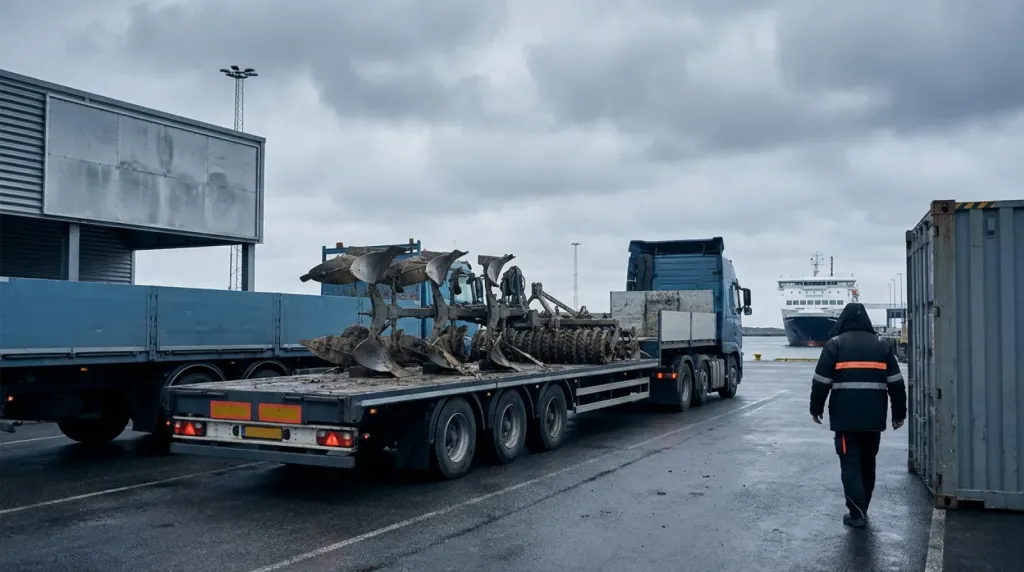
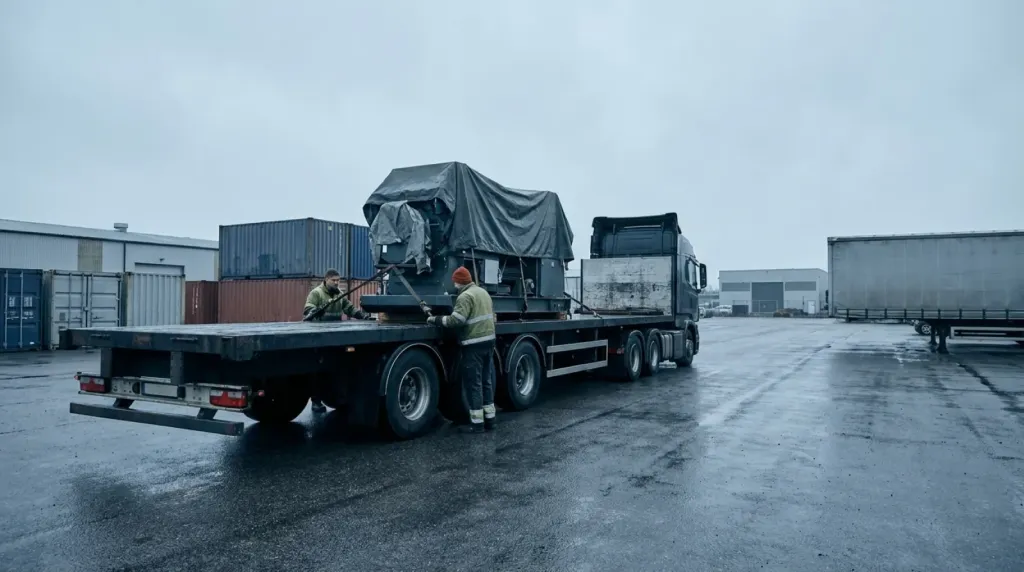
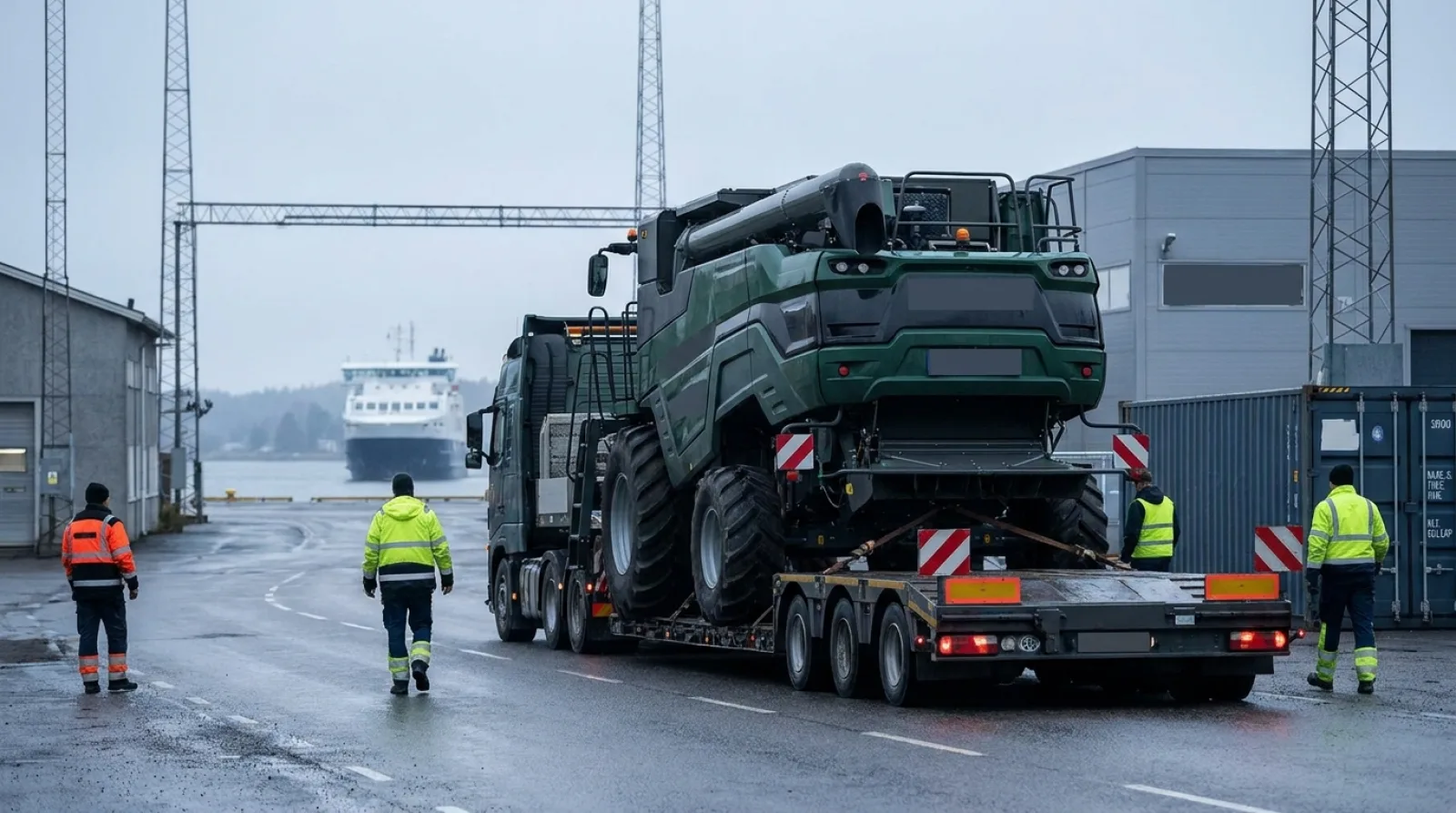
Transporting both items requires careful space planning on heavy haulage trailers. The main body of the combine harvester typically falls within the weight range of 10–20 t, which necessitates low-loader trailers suited for high and heavy machinery. The header trolley constitutes the second load, which must be accounted for in customs declarations, freight bookings, and loading schedules.
How to classify a combine harvester for customs clearance when entering the EU?
Following the UK's departure from the EU customs union, all shipments moving between Great Britain and Member States require full customs clearance. The commodity code for a combine harvester under the Combined Nomenclature is CN tariff heading 8433 51. Declaring the correct tariff code ensures proper customs processing and accurate calculation of applicable import duties or taxes.
When preparing trade documentation, both the main harvester body and the header trolley must be documented properly. Auction invoices should explicitly state the machine details, serial numbers, and accessories. Ensuring consistency between commercial invoices, transport documents, and customs declarations prevents administrative delays at port terminals and border check points.
Organising combine harvester transport step by step
- Review auction documentation. Verify the pickup terms set out in the seller's conditions and ensure the invoice contains CN tariff heading 8433 51 alongside accurate machine details.
- Confirm machinery disassembly status. Check with the auction site that the header has been detached from the combine body and mounted on its trolley prior to collection.
- Arrange suitable trailer capacity. Secure low-loader transport capable of carrying a 10–20 t body and allocate space for the secondary header trolley load.
- Prepare import and export declarations. Complete export filings in the UK and import declarations in the EU using valid EORI numbers and correct tariff codes.
- Execute cross-border road haulage. Transport the two loads from the UK auction facility through the designated port terminal to the final destination.
- Complete destination offloading. Unload both the main unit and the header trolley safely at the receiving facility in line with site safety procedures.
Definitions
- CN tariff heading: A numeric code within the Combined Nomenclature used to classify goods for international trade and customs clearance within the European Union.
- Header: The front cutting attachment of a combine harvester that must be detached and carried on a separate trolley during road transport.
- EORI number: Economic Operators Registration and Identification number required for businesses undertaking customs activities in the UK and EU.
- Low-loader trailer: A specialized semi-trailer with a lowered deck designed to haul heavy or tall agricultural and construction machinery.
Checklist for picking up a combine harvester from a UK auction
- Verification of the header trolley's mechanical condition for road transit.
- Review of collection requirements specified in the auction site terms and conditions.
- Confirmation that CN tariff heading 8433 51 is applied across commercial documents.
- Active EORI registration status for both the importing and exporting entities.
- Confirmation that transport planning accounts for two distinct loads.
When do these transport rules not apply?
The outlined transport and customs rules do not apply to movement taking place entirely within the European Single Market where no customs frontier exists. These procedures also do not apply when machinery travels under a transit procedure without entering free circulation. Furthermore, trailer requirements depend on the specific physical dimensions of the machine, unless local traffic laws permit short-distance agricultural moves on public roads. See also: Transporting and Importing a Wheeled Excavator from the UK and Transporting and Importing a Backhoe Loader from the UK and Transporting and Importing a Crusher from the UK: Customs Rules.
The OTSL role
OTSL Sp. z o.o., operating from Kielce in Poland and supported by warehouse operations in Milton Keynes, England, manages international transport and customs coordination for machinery. Our service offerings include machinery transport and comprehensive customs clearance services. We assist importers acquiring equipment at UK auctions by coordinating the required two-load freight setup. Learn more about trade fair logistics in our article on Agrotech in Kielce: moving farm machinery to the fair or visit our out of gauge service page.