 AI image
This service is for companies that ship goods through a subcontractor and do not want to hand their load to a random truck from a freight exchange. Every carrier that touches your load is checked before the vehicle arrives: valid carrier liability insurance (OCP) with a sum matched to the cargo value, licences and permits, track record, and a vehicle that matches the order. This is the first line of defence against carrier fraud and cargo theft.
What it covers
- Checking the transport licence and road-haulage permits.
- Verifying the OCP policy: validity, insured sum and scope, and whether the sum is matched to the cargo value.
- Reviewing policy exclusions and deductibles that could block a payout.
- Assessing company history, years in business, and consistency of contact data against public registers.
- Confirming at pick-up that the vehicle, trailer and driver details match the order.
- Establishing the actual haulier, so an undisclosed sub-contracting chain is ruled out.
- Matching vehicle type and equipment (ADR, reefer, load securing) to the cargo.
- Collecting and archiving order documentation and confirmations in case of a dispute.
How we do it
We do not buy jobs blind on an exchange from the first bidder with the lowest rate. We work from our own pool of proven carriers, and every new party is vetted before we let it near a load. We check transport documents, the OCP policy at source, and the consistency of registration data, because the most common fraud pattern is impersonating an existing, honest company.
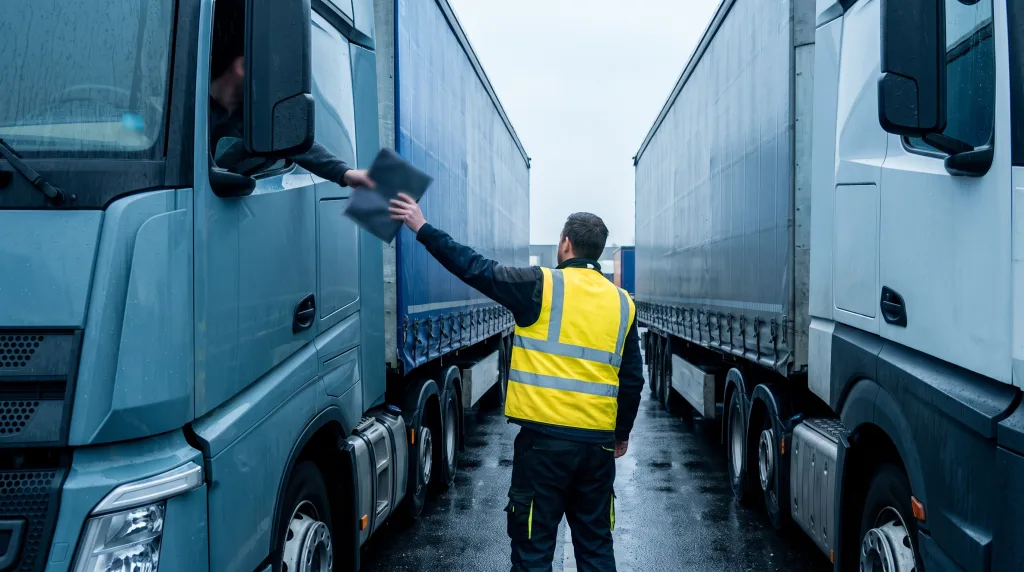
Before pick-up we confirm the driver's identity and that the vehicle matches the order, and we keep communication on stable channels rather than a single-trip phone number. We keep the full documentation on file, so that if a claim arises it is clear who is liable for what. This moves the decision to admit a carrier to the stage before loading, when the risk can still be turned away at no cost.
Limits of the service (what to be aware of)
Vetting lowers the risk but does not remove it. Carrier liability under the CMR Convention is capped (the 8.33 SDR per kilogram of gross weight limit) and has exclusions, so for high-value, lightweight goods an OCP payout may not cover the real loss. We do not replace cargo insurance, which protects the value of the goods regardless of the carrier's fault. We also do not run criminal investigations or debt recovery after a theft. If a client insists on an unknown carrier of their own or demands a truck without vetting purely on price, they are buying the risk: stolen goods rarely come back, and the dispute over liability can drag on for months once a fictitious carrier has vanished with the load.
See also
- The fake carrier: how a fraudster steals your freight
- Why we do not buy loads on freight exchanges, the OTSL model
- Carrier liability is not enough: why CMR will not cover a high-value, lightweight load
- When transport insurance will not pay: carrier liability exclusions and deductibles
- Three insurances in transport: carrier liability, forwarder liability and cargo
- The carrier did not show up: what to do step by step