 AI image
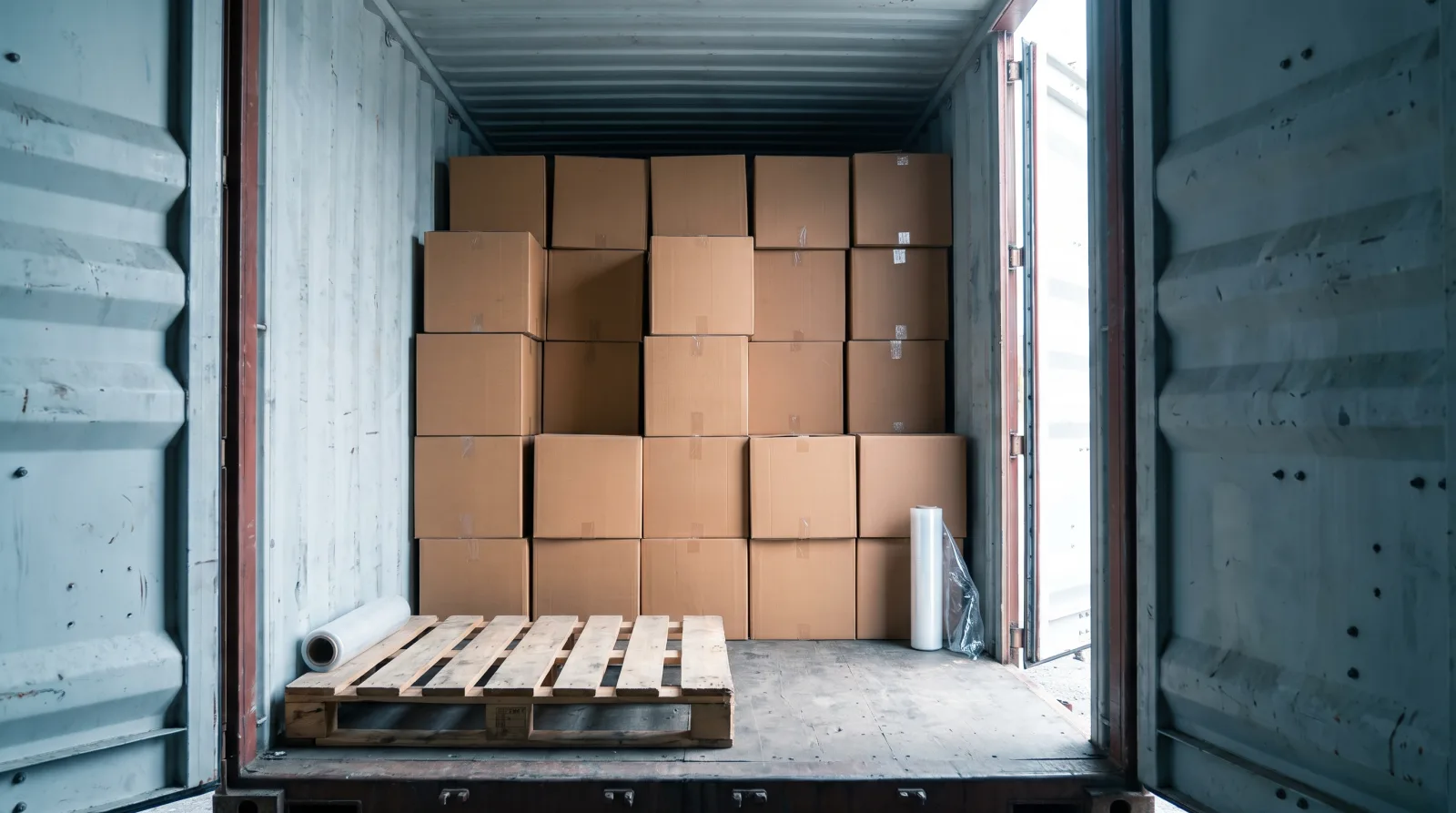
A loose-loaded (floor-loaded) container has no pallets inside: cartons sit directly on the container floor, often stacked to the roof, and must be hand-unloaded and then built onto pallets. The OTSL warehouse in Milton Keynes carries out the hand unload, counts cartons against the packing list and palletises to the requirements of the final consignee: a retailer, a regional distribution centre or Amazon. We do not quote an unloading time without knowing the load, because it depends on the number of cartons, their weight and how many SKUs have to be separated.
Why does a loose-loaded container need different planning from a palletised one?
A palletised container is unloaded by forklift, pallet by pallet, at a predictable pace. A loose-loaded container is unloaded by people: every carton passes through someone's hands and has to be placed on the right pallet, and if the container holds dozens of SKUs mixed in layers, sorting takes longer than carrying. That is why we do not promise a fixed time for floor-loaded devanning: we need the carton count, unit weight, number of SKUs and whether the cartons carry a barcode or SKU marking.
Shippers in Asia choose loose loading because more goods fit in the container than on pallets. The saving on ocean freight comes back as manual labour at the receiving end. If you represent a forwarder or a 3PL operator, tell your customer in advance that the cost of unloading and pallets will appear in England, not at the port of loading.
How is palletisation for a UK consignee done?
Pallets are built to the final consignee's requirements, not to our own preference. Retailers and their regional distribution centres (RDCs) as well as Amazon each set limits on height, weight, wrapping and label position, all written into the supplier manual of that consignee. Before we start building pallets we need that standard in writing, or the name of the consignee so that we can check the requirements ourselves.
Before pallet building, the carton count is compared with the packing list and discrepancies are photographed. After palletisation the goods can go straight to the consignee by cross-dock, stay in short-term storage or move to labelling and Amazon FBA (Fulfilment by Amazon) preparation. Placing the container on the ramp in Milton Keynes and collection of the empty are arranged individually within the job.
Hand unloading a loose-loaded container step by step
- Load data. You send the packing list with carton count, weight and number of SKUs, plus the pallet standard of the final consignee. The work plan and the number of people at the container depend on this.
- Placement and opening. The container is placed on the ramp in the agreed window; the seal is checked and photographed, and so is the state of the load when the doors open.
- Hand unload and sorting. Cartons are carried out and placed by SKU or by consignee; damaged cartons go onto a separate pallet for the report.
- Count against the packing list. The carton count per line is compared with the document before pallets are wrapped, because a correction after wrapping means unwrapping.
- Pallet build to standard. Height, weight, layer pattern, stretch film and label position follow the consignee manual; finished pallets are photographed.
- Disposition. Cross-dock to the consignee, short-term storage or labelling for Amazon FBA, according to your instruction.
Definitions
- Loose-loaded (floor-loaded) container: a container in which cartons sit directly on the floor without pallets and must be unloaded by hand.
- Palletisation: building cartons onto pallets and securing them with film to the consignee's requirements.
- SKU (Stock Keeping Unit): a single product line; the number of SKUs in a container drives the sorting effort.
- RDC (Regional Distribution Centre): a retailer's regional warehouse that receives supplier deliveries and distributes them to stores.
- Packing list: the shipper's document with carton count, weight and contents; the reference for the count at unloading.
- Cross-dock: transfer of goods from the inbound vehicle to the delivery vehicle without storage.
Checklist before a loose-loaded container arrives
- Packing list with carton count, unit weight and number of SKUs.
- Pallet standard of the final consignee: pallet type, height, weight, wrapping, label.
- Whether cartons carry a readable barcode or SKU marking.
- Agreed window for container placement and the date for empty return.
- Disposition after palletisation: cross-dock, storage, labelling, Amazon FBA.
- Contact for the person who decides on damaged or missing cartons.
When is palletisation in Milton Keynes not needed?
Hand unloading and palletisation do not apply to a container that has arrived on pallets already matching the consignee standard; a forklift transfer is enough. Nor is there a reason to build pallets in MK when the final consignee accepts loose-loaded containers and has the people for it, unless they want the goods separated by SKU or split into several drops to different locations. Time and cost depend on the load, so the quote follows the packing list rather than preceding it.
The OTSL role
The OTSL warehouse in Milton Keynes performs the hand unload, count and palletisation as part of its secure transloading service, and for Amazon-bound goods also labelling and slot booking under Amazon UK delivery. How the food-grade warehouse works on repacking is described in our article on repacking services in the UK; Amazon pallet rules in Amazon UK pallet requirements, and retailer gate standards in deliveries to UK retail RDCs.