 AI image
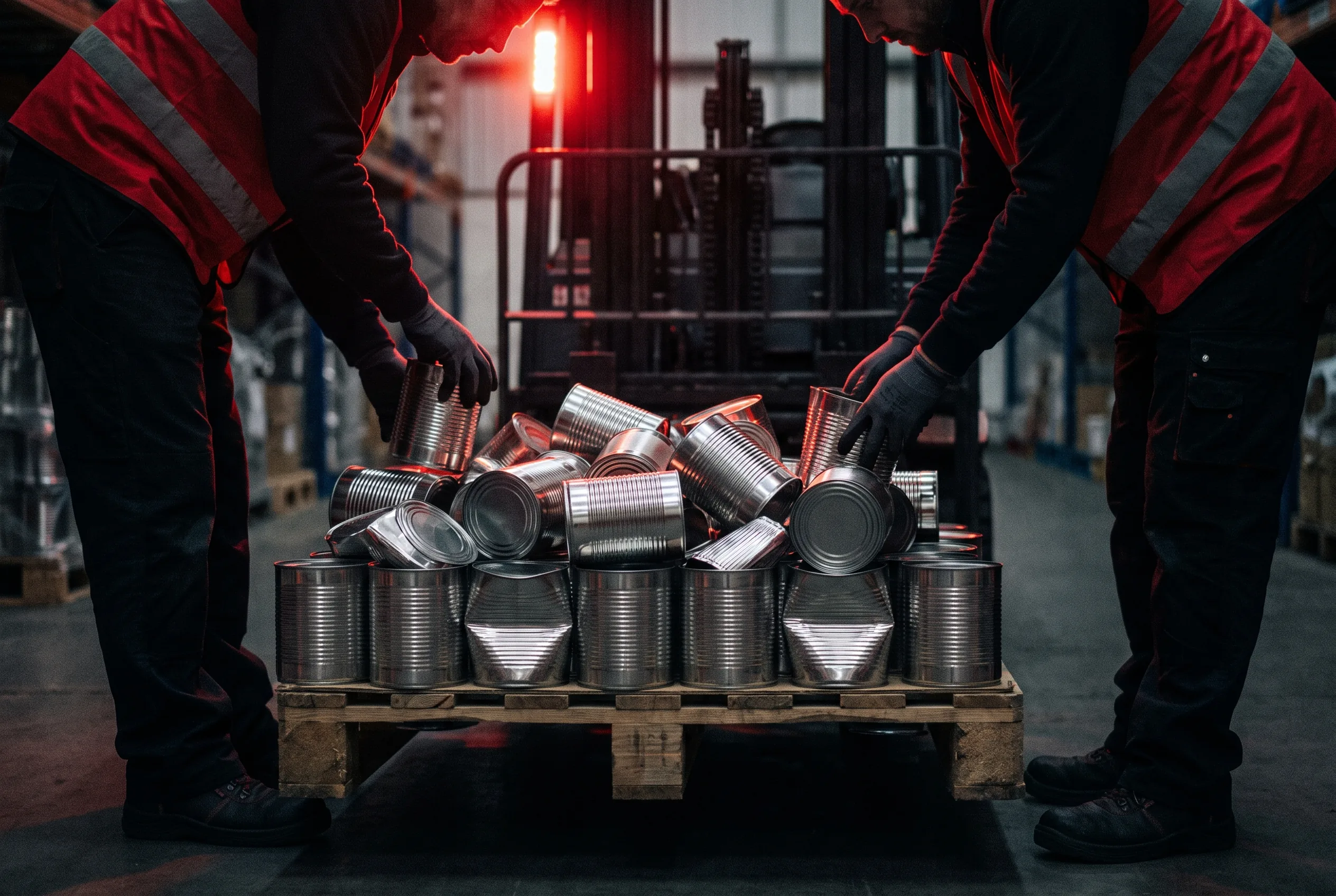
A trailer of canned vegetables, 26 UK pallets stacked in a double configuration, partially collapsed after an emergency braking event and was refused at a supermarket regional distribution centre. Our team rebuilt the collapsed stacks, removed the damaged outer cases and recovered 22 of the 26 pallets. The refused delivery went back out the same day.
Situation
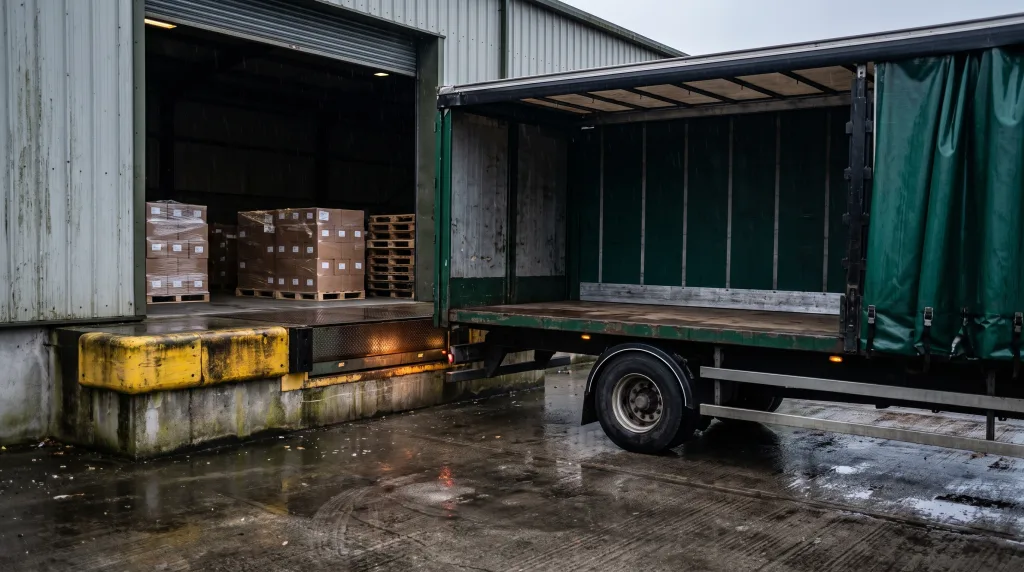
Double-stacking is popular for canned goods because it doubles what one trailer carries. The catch is physics: tins concentrate a lot of mass in a small footprint, and the upper pallet rides on nothing firmer than the cartons below it. When this trailer braked hard, several twin stacks folded into each other. The RDC turned the vehicle away on safety grounds, which meant a full trailer of food with a booking lost and nowhere to go.
What did we do?
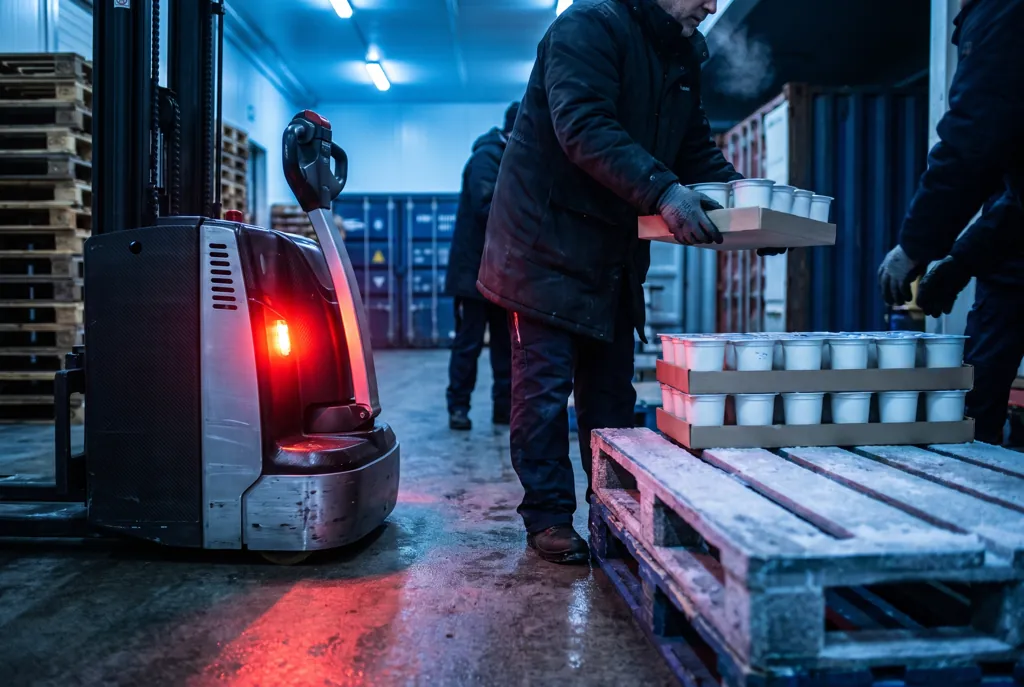
First a pallet-by-pallet inspection, sorting the load into three groups: fully recoverable, needing a rebuild, and units too crushed to save. The collapsed double stacks were broken down completely. Cartons with compressed or split cases were removed, sound cartons were restacked in the correct pattern, and each rebuilt pallet was wrapped again.
Reloading mattered as much as restacking. We put the trailer back together with even weight across the floor and stable pairings for the double stacks, so the load would arrive in the same state it left us. The whole operation was photographed and reported for the insurer.
Outcome
22 of 26 pallets were recovered and the delivery resumed the same day. The loss was limited to a small number of crushed cases instead of a full trailer write-off, and the sender had the paperwork to show exactly what was lost and why.
What does this mean for shippers?
A refused RDC delivery is not the end of the load, it is the start of a clock. The difference between losing a few cases and losing the trailer is how quickly the rework starts. Our approach to shifted loads is described in the article on pallet re-stow and load rearrangement. If your double-stacked load has just been turned away, use the contact form and we will take it in, 24/7.
How can you prevent stacked canned goods from shifting during emergency braking?
Inertial forces act on canned goods with a power directly proportional to their weight. When an individual pallet weight exceeds 750 kg, the localized pressure on the lower cardboard carton causes structural fatigue. To prevent the upper tier from crushing the lower standard UK pallets, you must use corrugated cardboard divider sheets with a minimum thickness of 3 mm and stretch wrap with a thickness of at least 23 microns, applied with a pre-stretch ratio of at least 150%. Placing anti-slip mats with a friction coefficient of at least 0.6 µ beneath the bottom pallet reduces the risk of column displacement under deceleration forces up to 0.8 g.
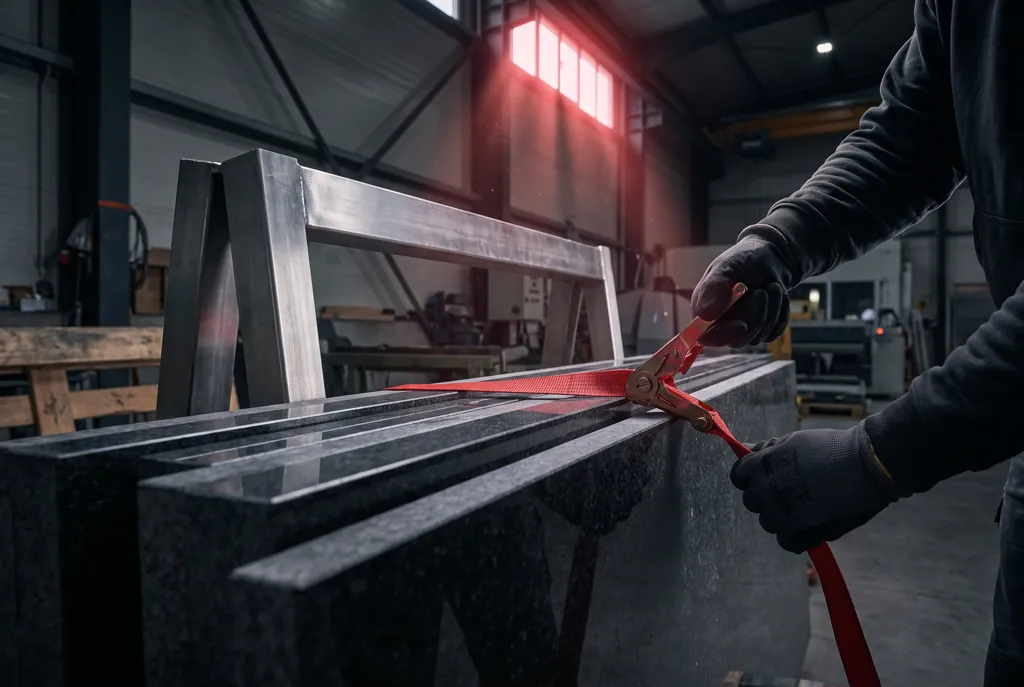
Securing the load with lashing straps requires strict geometric precision. To stabilize double-stacked pallets on a standard curtainside trailer, you must apply a minimum of 12 lashing straps rated at LC 2000 daN, maintaining a lashing angle greater than 60 degrees and using heavy-duty plastic edge protectors at least 1.2 metres in length. These edge boards distribute strap tension across the top cartons, preventing edge collapse.
- These strict stacking rules DO NOT apply if the individual pallet weight is below 350 kg and the cans are secured in rigid plastic crates featuring interlocking rims.
- The restriction also does not apply to single-tier pallet loads under 1.0 metre in total height with a solid timber base.
Keep in mind that on UK routes, where vehicles may wait for GVMS processing or port clearance at Dover for more than 12 hours, constant road vibration causes load settling. Cardboard degradation happens over time, making it essential to re-check strap tension after driving the first 50 kilometres.
Step by step
- Load inspection. A pallet-by-pallet check assesses physical damage and layer alignment inside the trailer.
- Sorting goods. Cargo is classified into fully recoverable stock, restackable units, and damaged items.
- Removing damaged packaging. Crushed outer cases are removed to restore overall stack firmness.
- Rebuilding stacks. Intact cans are re-arranged onto clean pallets and secured tightly.
- Redelivery. The refreshed consignment is dispatched to the customer once a new booking is granted.
Definitions
- RDC (Regional Distribution Centre): A major hub used by supermarket chains to receive and consolidate vendor deliveries.
- Double-stacking: Loading one pallet directly on top of another to double the trailer load volume.
- Booking (Avisation): A dedicated time slot granted by the receiving warehouse for unloading the trailer.
- UK pallet: Standard pallet format measuring 1200x1000 mm used predominantly across UK supply chains.
- Outer case: Secondary cardboard packaging holding individual tins together to provide structural integrity to the pallet layer.
The OTSL role
If your vehicle is refused at a hub due to collapsed stock, OTSL provides full operational assistance to salvage the delivery. We manage road transport (FTL) and undertake tasks like rebuilding damaged pallets in a UK warehouse to ensure cargo meets strict delivery standards. See also: Energy drinks stacked high: rebuilding a leaning can load.