 AI image
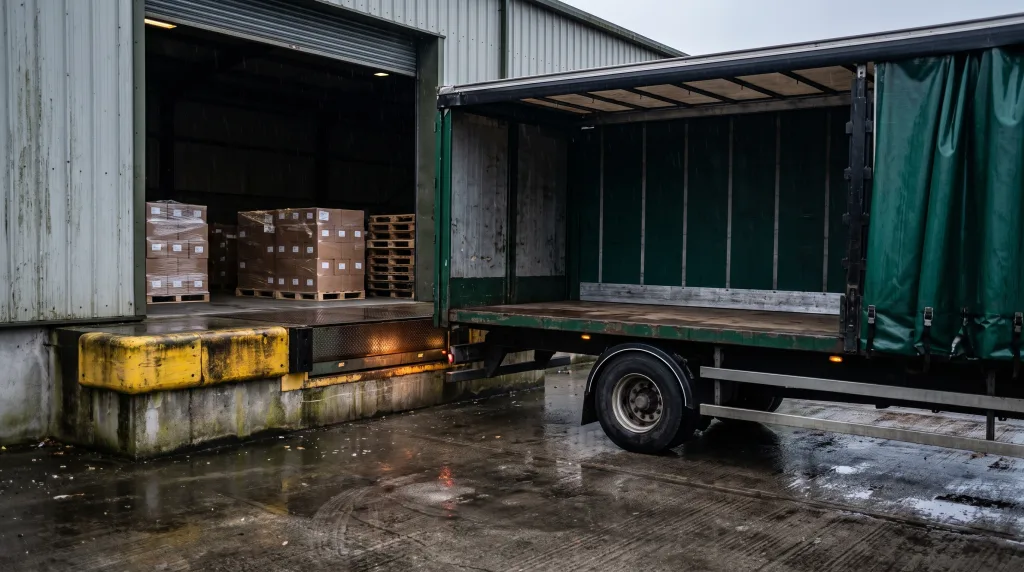
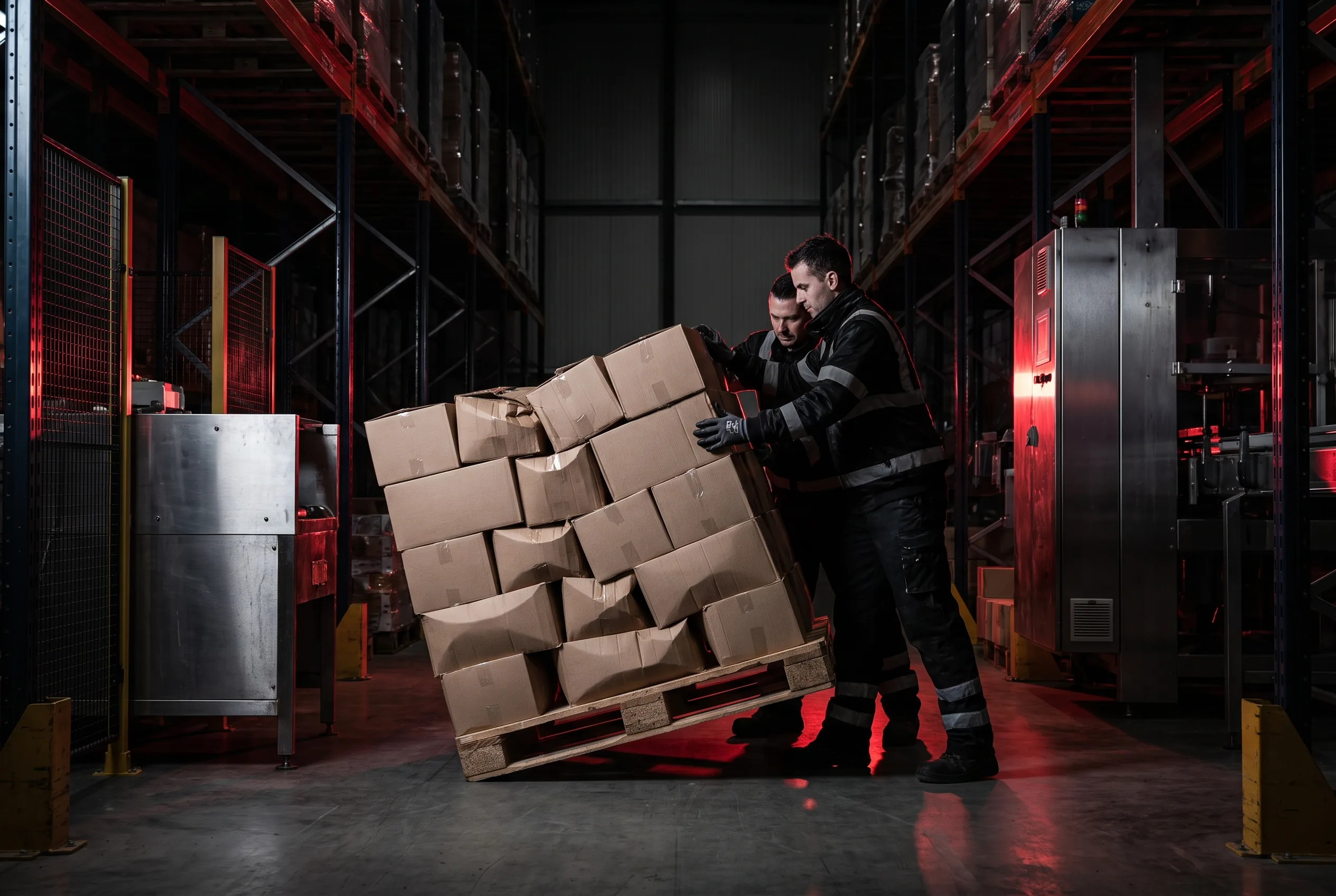
A curtain-sider carrying 33 pallets of packaged biscuits reached a distribution centre with several stacks leaning, wrap torn and cartons pressed against neighbouring pallets. Biscuits are the opposite problem to water: almost no weight, so the stacks go high, and a tall light stack destroys its own product the moment it leans. We rebuilt 26 pallets fully and 4 partially, and all 33 pallets continued to the supermarket network.
Situation
Light cartons stacked tall have very little resistance to sideways force. When the trailer braked hard, stacks tipped into each other, and the weight of leaning columns pressed into cartons that were never designed to carry load at an angle. The goods-in team saw unstable pallets and stopped the unload. The risk here was less about danger to people than about product: a biscuit carton can look sealed and correct while everything inside it is broken.
What did we do?
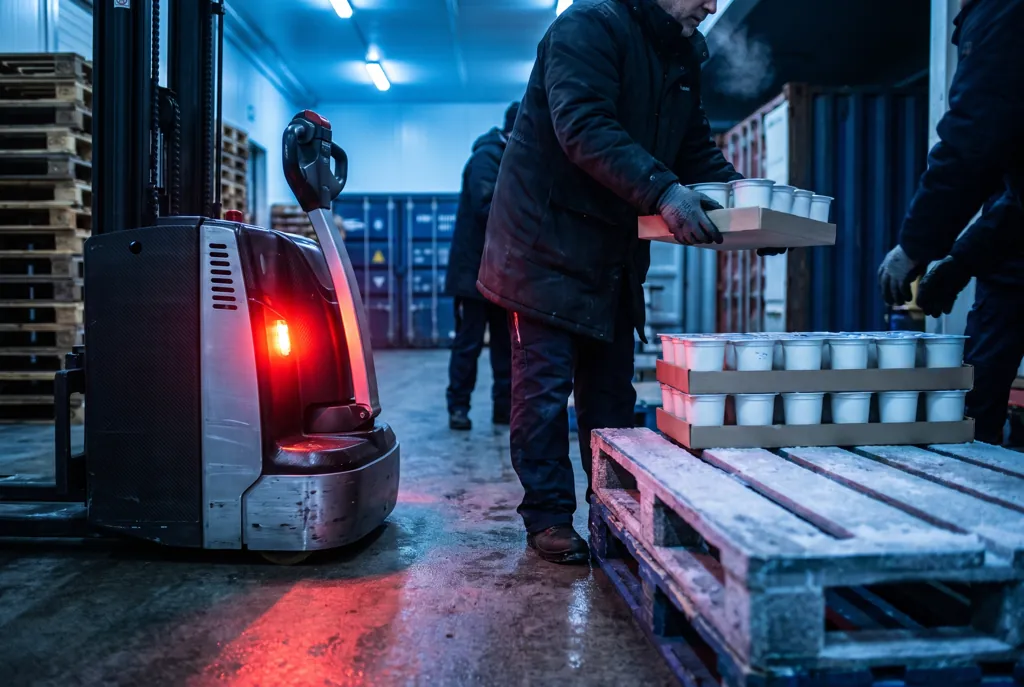
The inspection separated loose cartons and mapped the rebuild: which pallets needed full restacking, which partial, which none. As stacks came down, cartons were checked individually. Anything crushed, creased or burst was pulled, because a crushed carton of biscuits is unsellable no matter how tidy the outside looks. Sound cartons went back into correct patterns, secured with new wrap, on fresh bases where needed.
The trailer was reloaded with restored spacing so that forklifts could work each position safely, and the operation was fully photographed and reported.
Outcome
All 33 pallets were recovered and delivered, with losses confined to individual crushed cartons. The delivery continued the same day, documented end to end.
What does this mean for shippers?
With fragile dry goods, the visible damage is not the real damage. The value of a disciplined rework is the carton-level check that keeps crushed product from reaching a shelf and triggering returns later. The service behind this case is described in pallet re-stow and load rearrangement. Fragile load leaning in a trailer? Use the contact form, we work around the clock.
How do you secure tall, lightweight pallets against tilting during transit?
When you stack cartons with a gross weight under 150 kg on a pallet exceeding a height of 180 cm, standard stretch wrapping with a thickness of 17 µm fails to provide adequate structural rigidity. Centrifugal forces during cornering stretch thin film, causing layer displacement of more than 5 cm, which triggers a complete loss of vertical alignment. To prevent this, you must use a stretch film with a minimum thickness of 23 µm and a pre-stretch ratio of up to 200%. Ensure that the bottom three layers and the top two layers are wrapped with an overlap of at least 50% of the film width.
Frictional resistance at the trailer floor is equally critical. Standard plywood trailer flooring offers a friction coefficient of roughly 0.3 µ, which allows light pallet bases to slide easily under lateral g-forces. Placing anti-slip mats with a minimum friction rating of 0.6 µ under every pallet restricts transverse movement. Furthermore, binding adjacent pallets together in pairs using strapping bands at a height of 150 cm alters the centre of gravity and increases tilt resistance by 35%.
- Fit solid cardboard edge protectors with a minimum wall thickness of 4 mm along the full height of the load.
- Fill void spaces between pallet rows using dunnage bags inflated to an operating pressure of 0.2 bar.
- Allow approximately 3 hours of manual labour for every 10 damaged pallets requiring restacking at the distribution centre.
Note that these containment rules do not apply when transporting cargo packed in rigid plastic crates or on pallets where total weight exceeds 600 kg. In those scenarios, vertical compressive forces dominate over lateral shearing forces. Consequently, securing requires top-over lashing straps rated to a lashing capacity (LC) of at least 400 daN directly over the pallets, rather than relying on pallet film stabilization.
Step by step
- Halt unloading. Assess pallet stability inside the trailer and stop handling compromised cargo.
- Secure the zone. Cordon off leaning carton columns to prevent further collapse.
- Inspect damage. Check inside individual boxes to detect hidden product breakage.
- Rebuild pallets. Re-stack cartons onto fresh pallets ensuring proper layer interlocking.
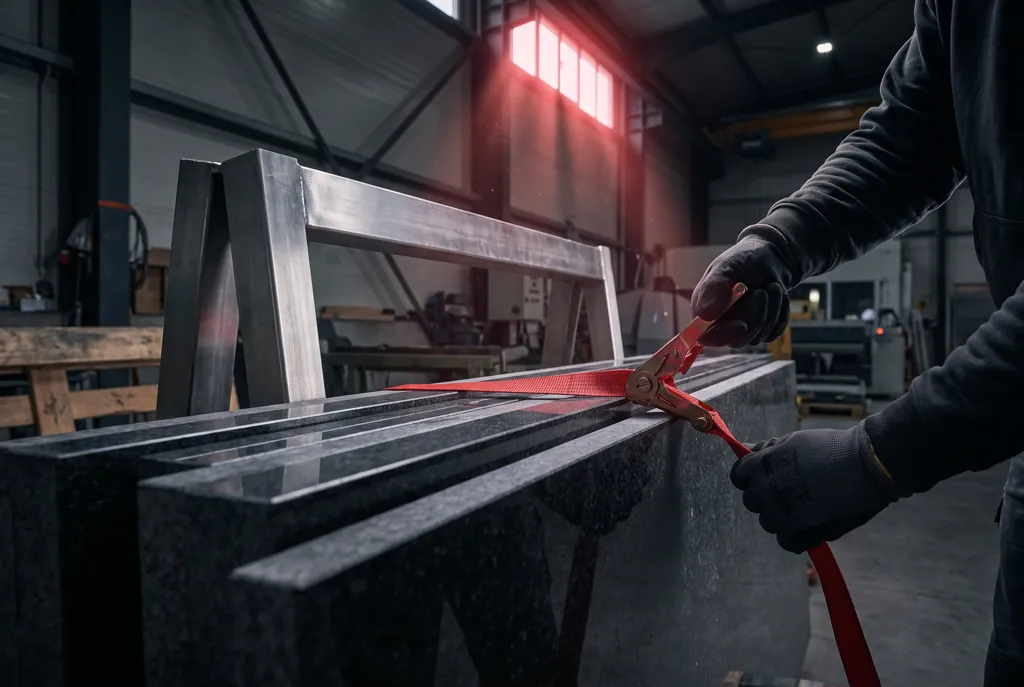
- Wrap and stabilize. Apply stretch film tightly around rebuilt pallets to restore structural integrity.
Definitions
- Curtain-sider: a trailer with flexible sliding side curtains allowing easy side loading and unloading.
- Distribution centre: a logistics facility designed for receiving, storing, and distributing goods to retail networks.
- Pallet stack: a vertical column of boxes or packages arranged in layers on a single transport pallet.
- Sideways force: lateral kinetic force acting on cargo during braking, acceleration, or cornering.
When does this rule not apply?
This rule does not apply when lightweight carton stacks are stabilized with rigid layer pads and edge protectors across their full height, unless sideways forces exceed the crushing resistance of the packaging itself.
The OTSL role
We handle critical cargo emergencies by providing reliable road transport options and swift recovery solutions through our specialized Milton Keynes cross-dock warehouse facility.