 AI image
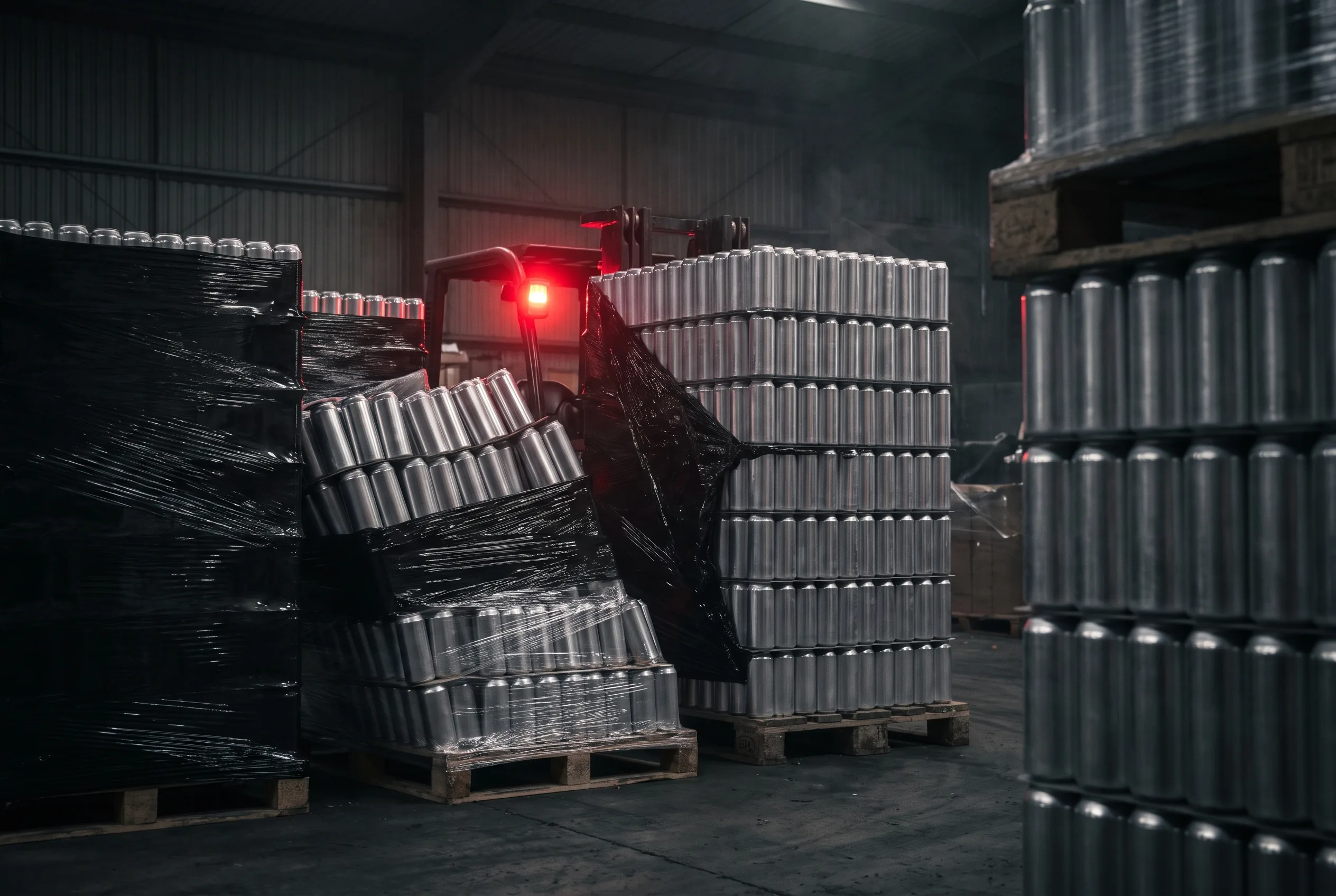
A curtain-sider with 26 pallets of energy drink cans in retail cartons arrived at a distribution centre with six pallets leaning and stretch wrap torn after sudden braking. Tall beverage stacks are efficient right up until the wrap fails, then they go quickly. We rebuilt 18 pallets fully and 5 partially, and 23 pallets of the load carried on into the supermarket supply chain.
Situation
Canned drinks are stacked high to make the most of the trailer cube, which puts a heavy load on a narrow base and moves the centre of gravity up. The stretch wrap is doing most of the structural work. One emergency stop tore that wrap on several pallets, cartons slid out of line, and stacks began leaning on their neighbours. The receiving warehouse stopped the unload: a falling column of cans is a genuine injury risk, and every leaning stack was pressing on the next one.
What did we do?
Inspection first, mapping which of the 26 pallets were structurally gone and which just looked untidy. The failed stacks were dismantled carton by carton. Cans and multipacks from damaged cartons were assessed, dented stock was set aside for a decision against the retailer standard rather than quietly repacked, and sound cartons were rebuilt into correct patterns on fresh bases where needed. New industrial wrap finished each pallet.
Then the trailer floor was reset: even spacing, stable alignment, forklift access to every position. Photographic documentation and restack records went to the logistics provider.
Outcome
23 of 26 pallets were recovered and delivered. The unload proceeded safely, the losses stayed limited to genuinely damaged stock, and the sender had evidence of exactly what was removed and why.
What does this mean for shippers?
High-stacked beverage pallets fail fast but recover well, because cans that have not been crushed or breached survive a shift better than glass. What decides the outcome is disciplined sorting: nothing marginal goes back in. The wider service is described in pallet re-stow and load rearrangement. Leaning drinks load? Describe it in the contact form, we answer 24/7.
How can you prevent high beverage pallets from tilting during emergency braking?
Inertial forces during sudden deceleration at 0.8 g exert a lateral pressure of up to 600 kg on the upper layers of a 2.2-metre-high stack. To counteract this shear force, you must use industrial stretch film with a minimum thickness of 23 microns and a pre-stretch capacity of 250%. Additionally, you need to place anti-slip rubber mats with a minimum friction factor of 0.6 μ beneath all 26 pallets on the trailer floor. Stacking cartons straight in single columns without interlocking patterns reduces overall stack stability by 30%, causing sharp cardboard edges to tear through the film layer faster.
Proper load securing also requires binding adjacent pallets with lashing straps tensioned to at least 500 daN across each lashing point. When an individual pallet unit weighs over 750 kg, shrink wrap alone cannot withstand dynamic forces during sudden cornering. Key strapping guidelines to implement include:
- Applying a minimum of 5 wrap turns around the wooden pallet base and 3 turns around the top tier.
- Ensuring a film overlap of at least 50% of the roll width on every rotation around the cargo.
- Using at least 2 lashing straps per row across the curtain-sider width.
Note the exact operational limit of this securing framework. These rules do not apply when shipping goods in hard-walled box trailers or reefer units where lateral clearance between the cargo and side walls is under 5 centimetres and full-height shoring bars are deployed. Under these conditions, the rigid walls absorb the transverse load forces, rendering extra lashing straps redundant before entering UK port health or Border Force inspection areas.
Step by step
- Inspect the cargo. You assess the tilt of leaning pallets and identify torn packaging inside the trailer space.
- Halt unloading operations. You secure the area to protect warehouse workers from falling beverage columns.
- Clear damaged stretch wrap. You carefully strip away torn film while holding leaning stacks in place.
- Rebuild pallet columns. You manually restack cartons onto sound pallets to restore a stable vertical structure.
- Rewrap and verify stability. You apply fresh stretch wrap tightly around rebuilt pallets and inspect them before dispatch.
Definitions
- Curtain-sider: A trailer equipped with flexible side curtains that allow easy side loading and unloading.
- Stretch wrap: A highly stretchable plastic film wrapped around items to secure them on a pallet.
- Centre of gravity: The point where the weight of the load is concentrated, affecting vehicle stability when raised.
- Distribution centre: A logistics warehouse designed to receive, process, and consolidate goods for retail delivery.
- Energy drink cans: Aluminium beverage containers that form heavy, high-density stacks when packed into outer cartons.
When does this rule not apply?
This cargo restacking procedure does not apply if structural instability presents an immediate physical hazard to personnel or if fluid spills breach hygiene standards, unless strict containment and decontamination procedures are implemented.
The OTSL role
When cargo shifts during transit, OTSL delivers prompt operational support to secure your supply chain. We manage pallet reconditioning and restacking at our facilities and seamlessly integrate this service with ongoing road transport (FTL) across the UK and Europe. See also: One-tonne bags of plastic granules: realigning a leaning load.