 AI image
Delivering to a sanctioned party or moving restricted goods is the liability of every link in the chain, including the forwarder and carrier, not only the client who booked it. You can be liable even when you did not know but could have checked. That is why party and cargo screening happens before a job is accepted, not after.
Why this is not "the client's problem"
EU, UK (OFSI) and US (OFAC) sanctions operate largely on strict liability. What matters is not whether you meant to breach the rules. What matters is whether your company took part in a transaction with a restricted party or in moving controlled goods. A forwarder that arranges transport to a sanctioned consignee is part of that transaction. Staying silent about the risk protects no one: it protects only until the first inspection. At that point the detained load, frozen funds and investigation reach every participant, not just the cargo owner.
Party screening: who and what we check
Before accepting a booking we screen the shipper, consignee and connected parties (payer, notify party, end user) against EU, OFSI and OFAC lists. Watch the ownership trap: a party that is not itself listed may be owned 50 percent or more by a sanctioned person, which makes it restricted even though its name appears on no list. We also check the country of final destination and warning signals: an intermediary with no real operation, an unusual route, a last-minute request to change the consignee, payment from a third country.
Dual-use goods: when ordinary cargo becomes a problem
Dual-use means civilian goods with possible military application: electronics, measuring equipment, chemicals, machine components, certain technologies. Moving such cargo to a restricted country generally requires an export licence, even if the client treats it as an ordinary shipment. (source: eur-lex.europa.eu) A missing licence is not a formality to fix later: it is grounds to stop the goods at the border. On sensitive lanes we read the goods description against control codes and ask about end use before the vehicle moves. We cover this type of risk further in our knowledge base on supply chain risk.
How does OTSL prevent this?
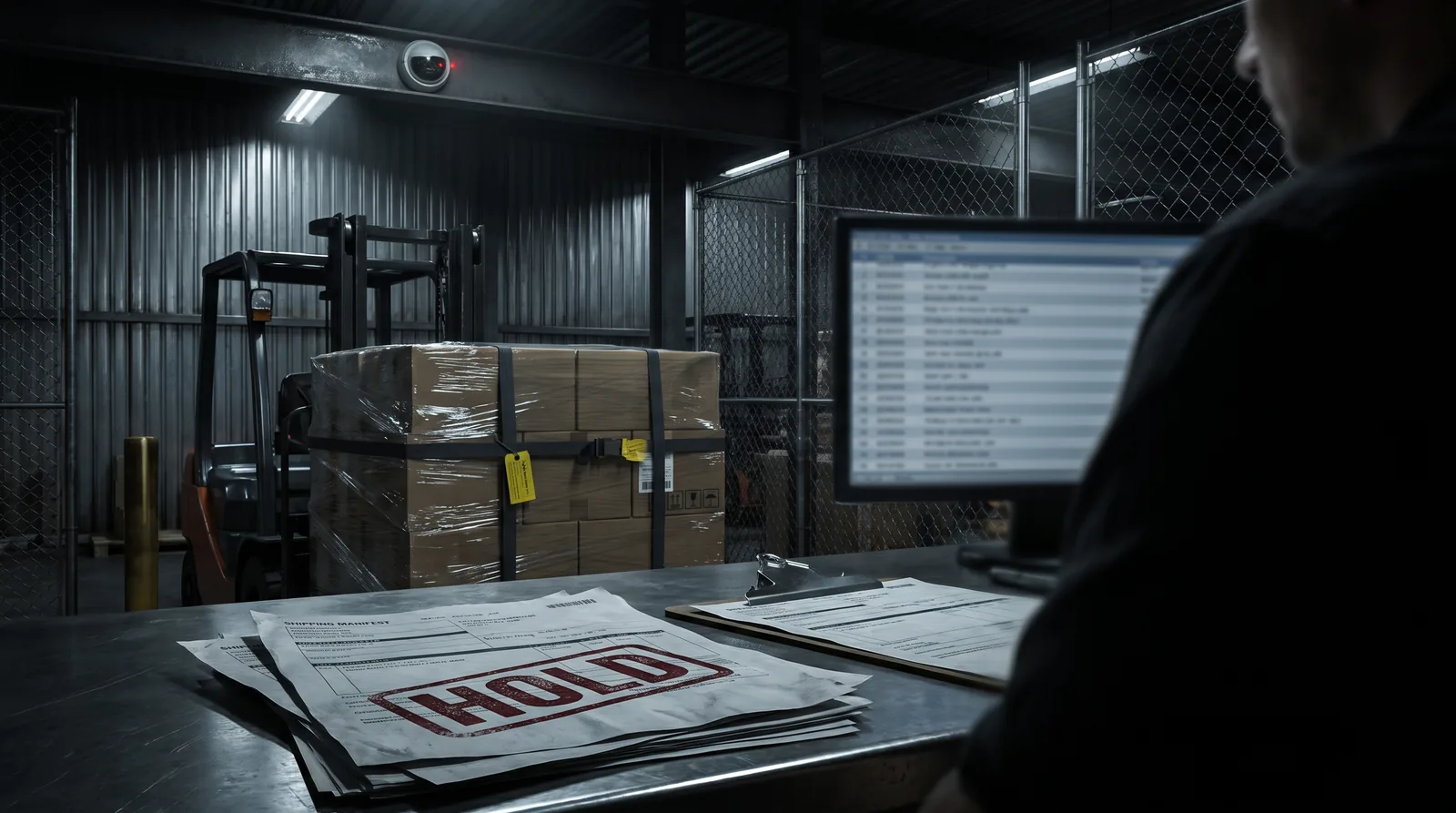
At OTSL, screening is built into the booking procedure, not an option on request. We verify parties and destination against current lists, check ownership structure for parties from sensitive countries, and assess cargo on risky lanes for dual-use exposure. We do it as one team: transport, customs clearance and customs advisory see the same job, so nothing falls between the forwarder and the agency. If something raises doubt, we hold and clarify it before anyone signs the CMR (the Convention on the contract for international carriage of goods by road). We settle this case by case for each sensitive relationship, because the cost of a mistake sits with everyone, not only the shipper.
Step by step
- Check consignor and consignee. You verify all trading parties against sanctions databases before booking.
- Classify the cargo. You inspect the goods status to ensure no trade restrictions apply.
- Review the transit route. You check that the shipment path does not cross restricted zones.
- Archive verification logs. You record screening results to maintain an audit trail for authorities.
- Proceed or decline. You reject non-compliant jobs immediately or move forward with compliant cargo.
Definitions
- OFSI (Office of Financial Sanctions Implementation): The UK body responsible for implementing and enforcing financial sanctions.
- OFAC (Office of Foreign Assets Control): The US agency administering and enforcing economic and trade sanctions.
- Strict liability: A legal principle holding a party accountable for a rule breach regardless of fault or intent.
- Party and cargo screening: The process of checking transaction participants and goods against sanction databases.
- Sanctions list: An official register of individuals, entities and organisations subject to legal restrictions.
When does this rule not apply?
This rule does not apply when the transaction holds a valid licence or exemption granted by the relevant sanctions authority prior to transit.
The OTSL role
At OTSL, we screen parties and shipments prior to dispatch so your road transport remains fully compliant. Careful operational checks are just as crucial here as in timed logistics discussed in our guide on JIT and JIS in practice.