 AI image
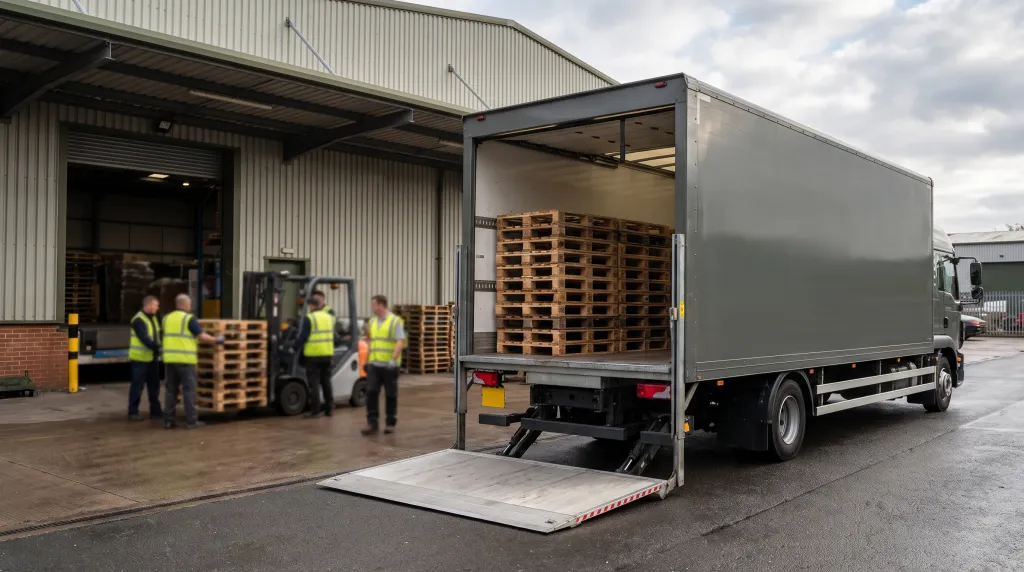
A standard tilt trailer gives about 13.6 m of length, 2.45 to 2.48 m of width and up to about 2.75 m of height, enough for 33 euro pallets. A mega raises the ceiling to about 3 m thanks to a lowered fifth wheel, and a curtainsider opens the whole side for fast loading. You pick the type by cargo height, loading method and weight.
The tilt: the universal standard
Most palletised freight in Europe travels on a standard tilt. The classic build has side boards and slats, so it contributes part of the securing itself, and goods can be loaded from the top, the side and the dock. Payload depends on the permitted weight of the whole vehicle combination, in practice up to around 24 tonnes. If the cargo fits the standard height and needs no temperature control, the tilt is usually the cheapest and most available option in road transport.
The mega: when every centimetre of height counts
A mega trailer runs behind a tractor with a lowered fifth wheel, which gives the interior about 3 m of height and roughly 100 cubic metres of volume. It suits tall or light but bulky cargo: packaging, production components, plastic goods. Mind the docks: the lower floor changes the approach angle and can be a problem at older ramps, so confirm the dock height before the truck arrives.
The curtainsider: loading speed
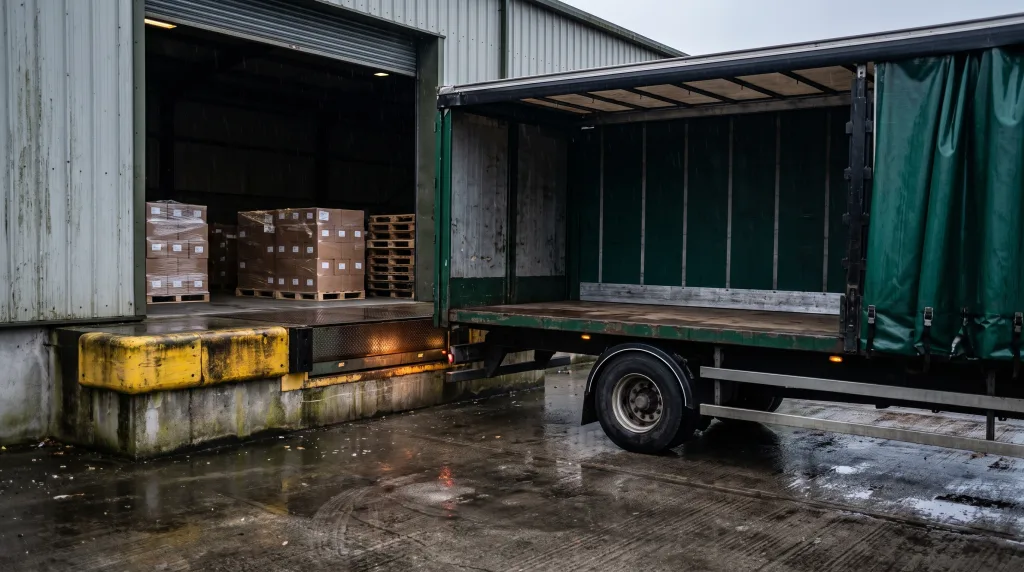
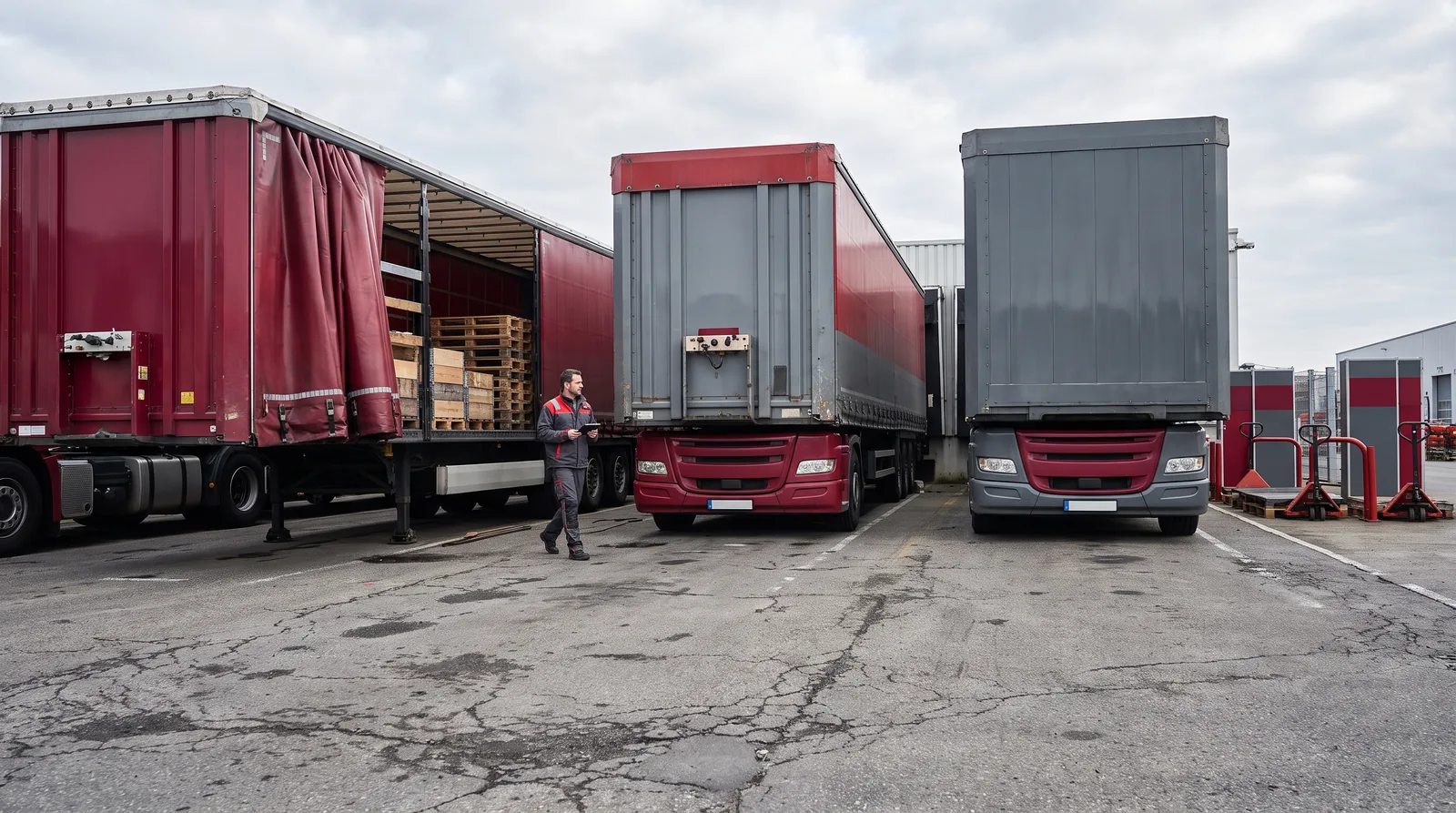
A curtainsider slides the curtain along the full length of the trailer, so the forklift loads from the side without dismantling tarpaulin, slats and posts. At high-turnover warehouses this cuts minutes off every loading stop. One caveat: the curtain itself is not a securing device. Cargo in a curtainsider is strapped and secured exactly as in any other trailer. The exception is a body certified to EN 12642 code XL, whose reinforced walls can take over part of the securing forces, provided the cargo is loaded tight against them, form-fit.
When no standard build is enough
Cargo taller or wider than the trailer envelope is a job for a flatbed and permits, which we run under out-of-gauge loads. Temperature-sensitive goods travel by reefer, described under temperature-controlled transport. And if your batch does not fill a trailer, instead of paying for empty metres look at groupage and our guide FTL or LTL.
What does a wrong trailer choice cost?
A truck that arrives and cannot take the goods means a lost production day, a failed-loading charge and a delivery date to rebuild. So every enquiry should state the cargo height including the pallet, the gross weight and the loading method. Three numbers that save one very expensive phone call.
Why does the internal height of a trailer not match the side loading aperture?
When you plan to transport cargo with a height of 2.70 m in a standard curtainsider, you must account for the upper side beam structure. The side aperture clearance is typically 8 to 12 cm lower than the internal clearance height of the trailer. If your unit load measures exactly 2.65 m in height and is loaded via forklift from ground level, the operator cannot slide it inside without raising the roof mechanism. For trailers certified to Code XL standard, the reinforced curtain structure retains up to 40% of the payload weight against lateral movement, provided side gaps between pallets do not exceed 15 cm.
When loading 33 euro-pallets with a total payload weight of 24000 kg, correct axle weight distribution dictates placing heavier units over the kingpin and above the triple axle tridem. You must apply at least 12 lashing straps rated at 500 daN STF to secure the cargo effectively against longitudinal movement. Tight packing without void spaces significantly reduces lashing requirements and protects side curtains from abrasion during cross-border haulage.
This rule does not apply when transporting unitized machinery or timber crates equipped with dedicated lashing points. In those operational scenarios, direct tie-down lashing to the chassis frame hooks is mandatory, and the side curtain structural rating cannot be counted towards load retention capacity.
Step by step
- Measure the cargo. Determine exact dimensions of the goods, focusing on height and total weight.
- Determine loading access. Check whether cargo requires top loading, side loading or dock loading.
- Select trailer type. Choose between a standard tilt, mega or curtainsider based on cargo size and access needs.
- Secure the payload. Apply suitable lashing straps, side slats or anti-slip mats appropriate for the trailer build.
- Book transport execution. Share complete load specifications with your forwarder to assign the correct vehicle.
Definitions
- Tilt trailer: Standard trailer with side boards and slats, allowing loading from top, side and loading dock.
- Mega trailer: High-cube trailer offering up to 3 metres of internal height thanks to a lowered fifth wheel coupling.
- Curtainsider: Trailer featuring sliding side curtains along the entire length for rapid side loading.
- Euro pallet (EPAL): Standard wooden pallet measuring 1200 by 800 mm widely used across European road freight.
- Fifth wheel: Coupling device on a tractor unit used to connect and support the semi-trailer.
The OTSL role
We help you choose the correct vehicle build for your freight needs through our reliable Road transport (FTL) solutions. Proper cargo preparation before loading is crucial, as detailed in our guide on Pallets, packaging and load securing in international transport.