 AI image
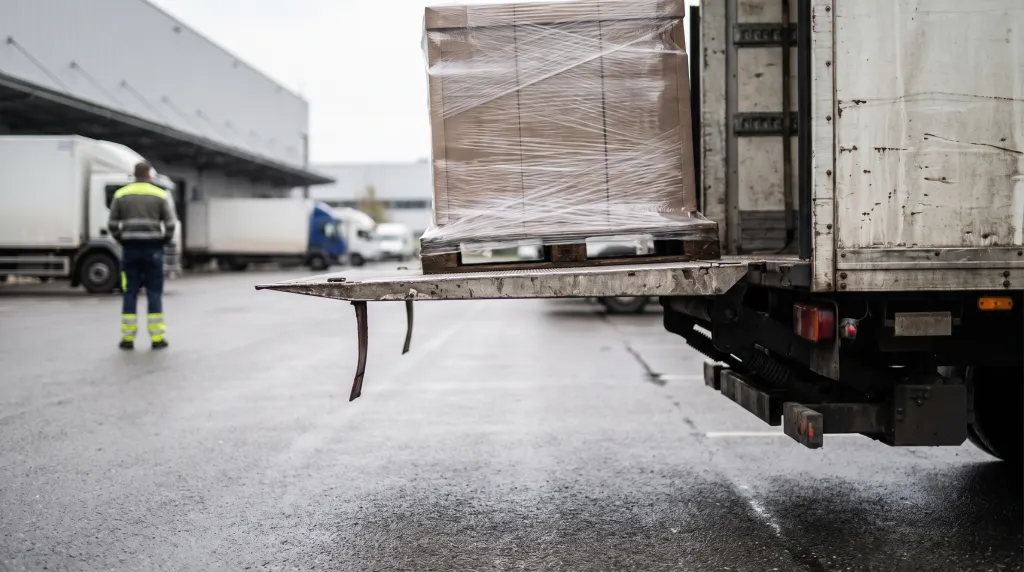
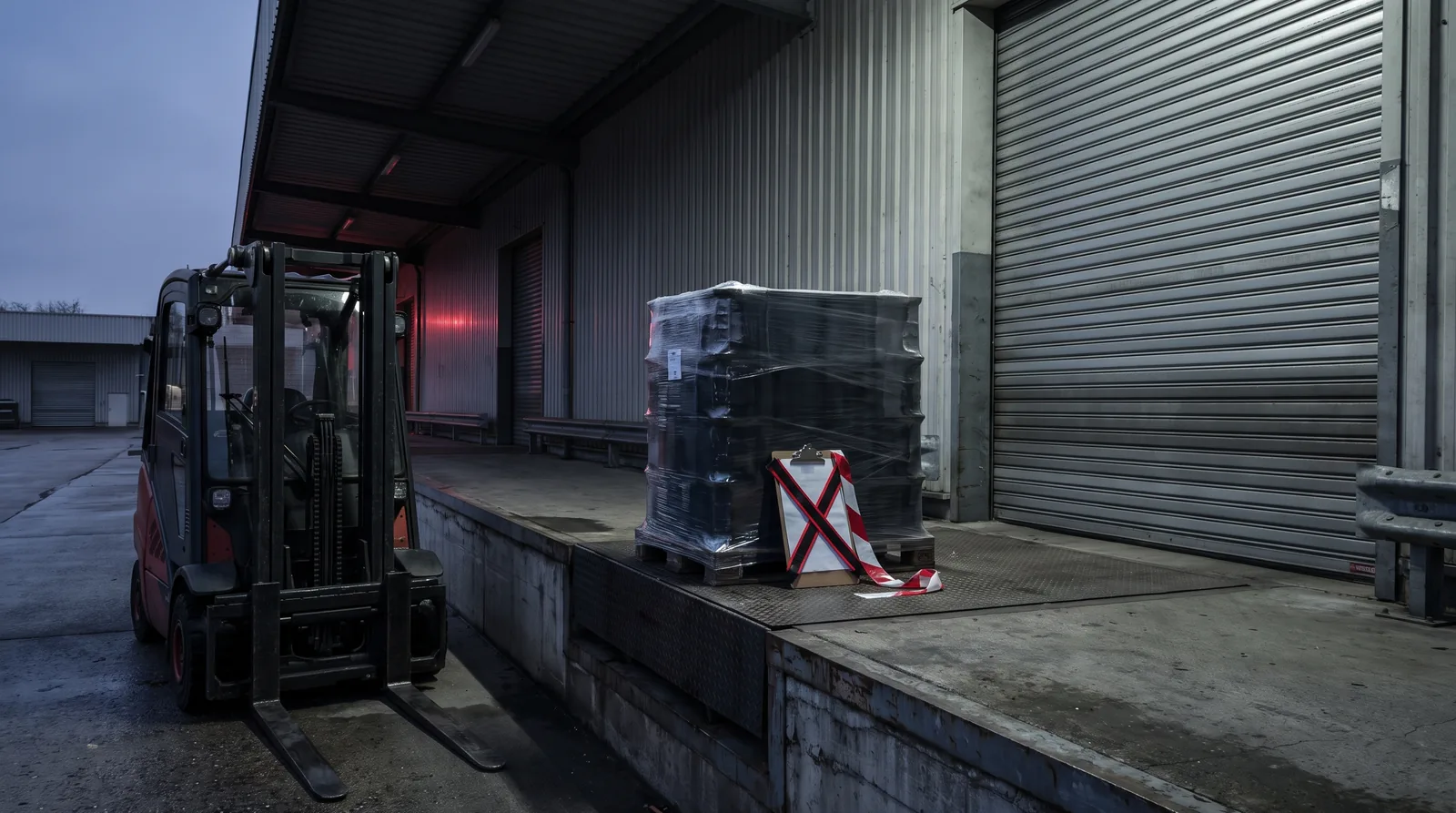
When the consignee refuses the goods, the carrier cannot simply leave the load at the ramp. Article 15 CMR requires the carrier to ask the sender for instructions: re-delivery to another consignee, temporary storage or return. Waiting, instruction and storage costs fall on the party entitled to the goods, so every hour of delay costs money.
Why does consignees refuse delivery?
A refusal at the ramp rarely comes out of nowhere. In day-to-day freight work the same scenarios keep returning:
- Damage or suspected damage. Crushed cartons, wet packaging, a broken seal. Some consignees send the whole vehicle away, although accepting the goods with a proper note on the consignment note is usually the better move. We explain how in our article on CMR reservations on delivery.
- Goods do not match the order. The wrong SKU turns up, or a different quantity than ordered, sometimes at the wrong site altogether. Quantity differences and how to record them are covered in shortage and overage at unloading.
- No space or no booking. The warehouse is full, the delivery slot has lapsed, and the booking system of a UK distribution centre makes no exceptions for a truck already sitting at the gate.
- A commercial dispute. Unpaid invoices, and sometimes a contract that has just been terminated. The consignee uses refusal as leverage against the supplier.
- Missing documents. A certificate or the customs paperwork has not arrived, so the consignee cannot book the goods into stock.
For the carrier the reason is secondary. What matters is the effect: the goods have arrived and there is nobody to hand them to. From that moment the trailer becomes the most expensive warehouse imaginable.
Article 15 CMR: the carrier asks the sender for instructions
The CMR Convention deals with this scenario directly. Under Article 15(1), if circumstances prevent delivery after the goods arrive at destination, the carrier asks the sender for instructions. As a rule the sender, as the carrier's contractual counterparty, decides what happens to the load; where, however, the right of disposal has been transferred to the consignee by an entry in the consignment note (Article 12(3) CMR), the procedure applies as if the consignee were the sender, and it is the consignee who gives the instructions (Article 15(3) CMR). Where the consignee refuses the goods, the sender may dispose of them without producing the first copy of the consignment note, which is quicker and simpler than the ordinary right of disposal under Article 12 CMR.
One important nuance: a refusal is not final. Article 15(2) allows the consignee to require delivery even after refusing, as long as the carrier has not received instructions to the contrary from the sender. A UK importer who turned the truck away in the morning and settled the dispute with the Polish supplier by the afternoon can still take the load, provided the sender's decision has not yet been carried out.
The second pillar is Article 16 CMR. The carrier is entitled to recover the cost of its request for instructions and the cost of carrying them out, unless those costs were caused by its own fault. The carrier may also unload the goods for account of the person entitled to them: carriage is then treated as at an end, and the carrier either keeps the goods in its own custody or entrusts them to a third party, for example a warehouse, in which case it answers only for the reasonable choice of that third party.
Four options and who pays for each
| Option | What happens to the goods | Who pays the carrier |
|---|---|---|
| Re-delivery to another consignee | The sender names a new delivery point and the carrier performs an additional leg | The sender: extra freight plus the cost of carrying out the instructions (Art. 16(1) CMR) |
| Temporary storage | The goods are unloaded and placed in storage; carriage is treated as ended (Art. 16(2) CMR) | Storage charges attach to the goods and are borne by the party entitled to them, in practice usually the sender |
| Return to the sender | The carrier takes the load back to the place of loading | The sender: return freight plus demurrage if the vehicle waited for a decision |
| Sale of the goods | Possible for perishable goods, where their condition warrants it, or where storage costs would be out of proportion to their value (Art. 16(3) CMR) | The costs chargeable against the goods are deducted from the proceeds; the balance goes to the person entitled |
Mind the distinction: the table shows who pays the carrier. Who ultimately bears these costs in the commercial relationship is a matter for the sales contract between seller and buyer, not for the CMR Convention. If the refusal was unjustified, the sender can claim the expenses back from the buyer, but it has to fund them first.
Costs grow by the hour
Time is the most expensive part of the whole exercise. Demurrage rates come from the contract of carriage or the transport order and accrue regardless of whether it was the sender or the consignee who caused the standstill; the only exception is waiting time caused by the carrier's own fault (Article 16(1) CMR). A blocked vehicle also means losing the next load, and on temperature-controlled runs the fridge unit keeps burning fuel while the cold chain sits at risk. A fresh booking slot at another delivery point, especially at a large UK distribution centre, can be days away.
That is why the first hour after a refusal belongs to the sender:
- get the refusal confirmed in writing: who refused, when and why, ideally with a note on the CMR consignment note,
- secure photographs of the goods and seals at the moment of refusal, before the vehicle leaves the ramp,
- decide between re-delivery, storage and return, and give the carrier that instruction in a form you can later prove,
- argue with the consignee in parallel, but do not make the carrier wait for the outcome of your negotiation.
One caveat: a consignee's refusal is not force majeure and releases nobody from the bill. Genuinely external events are a different category, covered in our article on force majeure under CMR.
Refusal versus commercial dispute: the carrier stays neutral
Neither the driver nor the forwarder is a judge in the dispute between seller and buyer. The carrier does not assess whether the consignee's complaint is justified or whether an invoice should have been paid. Its role is limited to performing the contract of carriage: report the obstacle, request instructions, document the condition of the goods and carry out the sender's decision. Attempts to drag the driver into the negotiation, for example keeping the truck at the gate as a bargaining chip, end in exactly one thing: a demurrage invoice. More scenarios where transport collides with trade are collected in our guide to transport risks.
The OTSL role
As an international freight forwarder we organise road transport across Europe, including the UK and Switzerland, and we operate our own warehouses in Kielce, Legnica and Milton Keynes in the UK. When a consignee refuses a load, the goods do not have to wait on the trailer: we unload into temporary storage, arrange re-delivery or return, and document every step for the later settlement. Contact us if your goods are stuck at a ramp right now, or browse our knowledge base.
Step by step
- Reporting the refusal. Inform the freight forwarder immediately when the consignee refuses acceptance at the ramp.
- Securing the cargo. Keep the goods loaded on the vehicle without unloading until official instructions are received.
- Requesting instructions. Ask the sender to provide written directions regarding the next actions for the shipment.
- Selecting an option. Agree on re-directing the goods to a new consignee, temporary storage, or returning to origin.
- Settling additional expenses. Forward the cost documentation to the party entitled to dispose of the goods for reimbursement.
Definitions
- CMR Convention (Convention on the Contract for the International Carriage of Goods by Road): An international agreement governing the rights and duties of parties in road freight transport.
- Obstacle to delivery: A situation where handover of goods at destination proves impossible due to refusal by the consignee.
- Consignment note: A transport document serving as proof of the carriage contract and receipt of goods by the carrier.
- Consignee: The party specified in the transport document entitled to take delivery of the cargo at destination.
- Sender: The party ordering the transport services who retains the primary right to issue instructions regarding the load.