 AI image
Handling symbols are graphic marks on packaging, defined in the ISO 780 standard, that instruct everyone who handles a package how to move, stand and protect it, without words. An umbrella means "keep dry", a wine glass means "fragile, handle with care", arrows mean "this way up". They are a message to people at the transfer point, not a safeguard in themselves: a symbol informs, but it does not replace securing or packaging.
Why mark a package at all
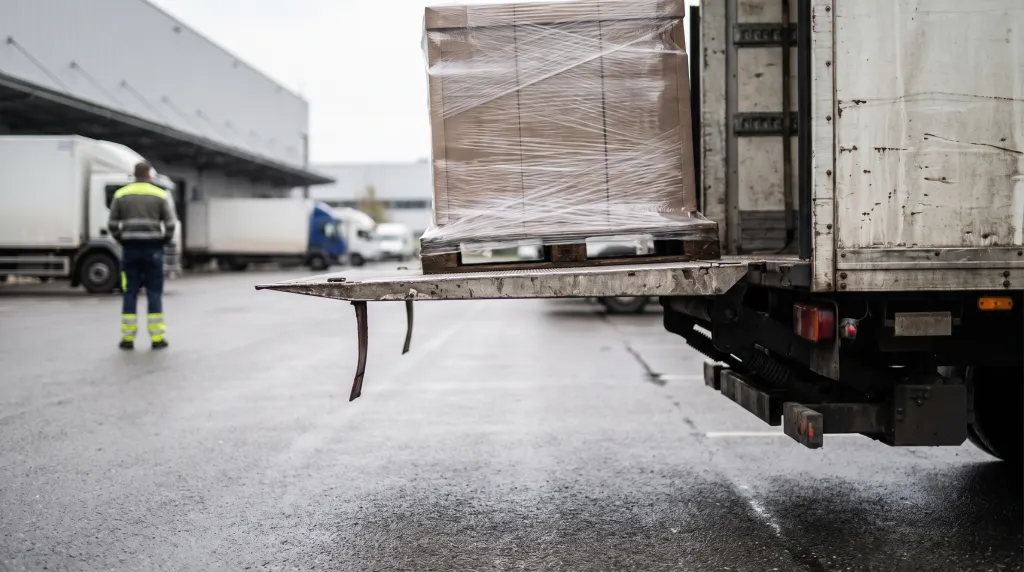
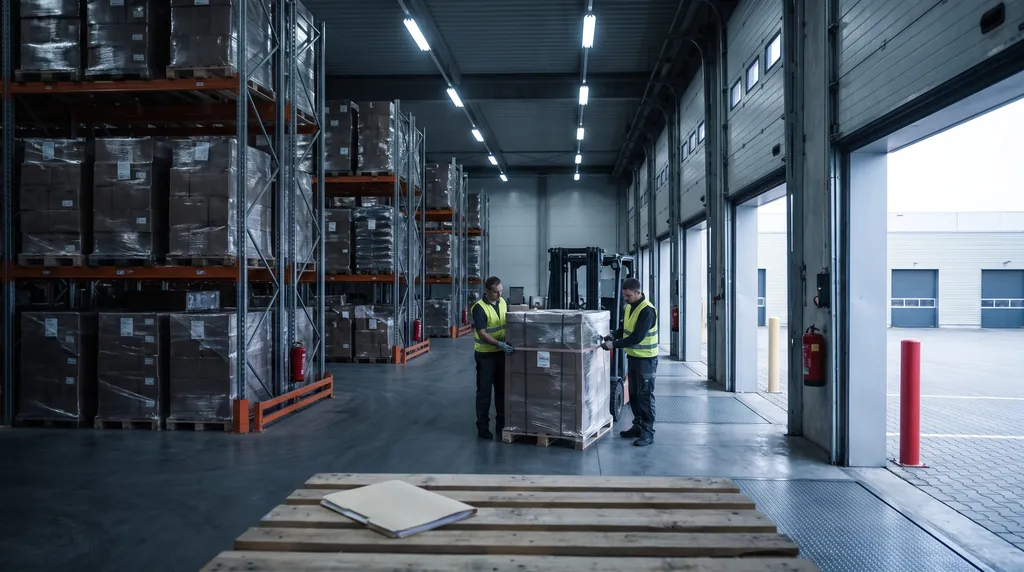
Your package passes through the hands of people who do not know what is inside. A warehouse worker stacks pallets, a driver adds boxes on a groupage load, a forklift operator lifts the freight on forks, and a terminal worker moves the package at three in the morning in poor light. None of them will read the invoice or the spec sheet. They see only what is printed on the box, and often only for a fraction of a second.
The stakes are real. A box of delicate electronics placed at the bottom of a stack, because nobody knew it must not be stacked, arrives crushed. A package with no "this way up" arrows, stood on its side, means spilled liquid or shifted contents. A crate without a "keep dry" mark, left on a wet dock, means damp and mouldy cargo. A handling symbol costs a fraction of a penny to print; its absence can cost the whole consignment.
The key ISO 780 symbols and what they really mean
The symbols are deliberately simple and black-and-white, so they print clearly on cardboard. Here are the ones you will meet most often, described in the language of someone shipping goods for the first time.
- Wine glass (fragile, handle with care). The contents break or damage easily. A signal not to throw, drop or handle roughly. What to do about a real breakage is covered in our piece on breakage of fragile cargo.
- Two up arrows (this way up). The package must stand upright, in the direction shown. Laying it on its side or upside down risks leaks, shifted contents or damage.
- Umbrella over drops (keep dry). Keep away from rain, water and moisture. The box stays under cover, not on a wet dock.
- Crossed-out sun or temperature symbol (keep away from heat). Do not expose to sun or heat sources. For temperature-sensitive goods.
- Hands cradling a package (hand here). Shows where to grip the load when carrying it.
- Crossed-out hooks (do not use hooks). No lifting with hooks, which would pierce the packaging or damage the goods.
- Centre of gravity mark (a cross in a circle). Shows where the balance point lies. Important for unevenly distributed weight, so the load does not tip on a forklift or in a sling.
- Crossed-out stacked boxes (do not stack). Nothing may be placed on top. Ignoring this mark is the most common cause of crushed packages at the bottom of a stack.
- Number in a stacking symbol (stacking limit by number). States how many identical packages may be stacked one on another. The figure says plainly: no higher.
- Thermometer with a range (temperature limits). Gives the permissible storage and transport temperatures.
Who does actually reads these mark?
A handling symbol works only if it reaches the right eyes at the right moment. In practice three groups read it. The warehouse worker decides whether your pallet can go at the bottom of a stack and how high to build it: the "do not stack" and "stacking limit" marks are for them. The forklift operator looks at the centre of gravity and at whether hooks are allowed. The driver at a groupage load, where other freight travels beside your pallet, decides what to put on what.
That is why placement matters. A symbol hidden on the underside of a box, or on one wall out of four, does nothing. Marks are printed clearly, in visible positions, ideally on at least two adjacent walls, so they show whichever way the package stands. What travels beside your pallet in a shared load is explained in our piece on LTL groupage.
A mark is not a safeguard: the key difference
This is the most common misunderstanding among people who rarely ship goods. Sticking on "fragile, handle with care" does not make the package survive a fall. A "this way up" arrow will not keep it upright on its own. A mark is a request to a human who may not notice it, may not understand it, or may simply have no way to honour it on a full truck.
Real cargo safety comes from proper packaging, filling void spaces, choosing the pallet and restraining the load on the trailer. How to prepare and wrap a pallet is covered in our piece on pallets and load securing, and who is responsible for correct restraint on the vehicle in the article on load securing and liability. If your consignment travels on a wooden pallet out of the EU, a separate phytosanitary requirement applies, described in our piece on the ISPM 15 standard for wooden pallets.
ADR and CLP are a separate world of marking
The ISO 780 handling symbols apply to ordinary goods and say how to handle a package. They are not to be confused with the marking of dangerous goods, which follows its own mandatory rules. ADR hazard labels (flame, skull, corrosive symbol) come from the ADR Agreement and are required by law, not by good practice. CLP pictograms on chemical packaging come from the EU CLP Regulation and warn of hazards to people and the environment.
The difference is fundamental: you use a handling symbol because you want the package to arrive intact; you use ADR and CLP marking because you must, and its absence or error is a regulatory breach stopped at a border check. If you ship dangerous goods, start with the article on ADR transport and dangerous goods, because here hard rules apply, not goodwill icons.
How to match the marks to your consignment
- Start from the nature of the goods. Fragile, moisture-sensitive, heat-sensitive, unevenly weighted: each of these has its own mark. Do not label everything just in case: too many symbols dilute the ones that truly matter.
- Place the marks visibly. On at least two adjacent walls, legibly, in contrast, away from tapes and labels that might cover them.
- Do not rely on the mark alone. "Do not stack" works better if you back it with a rigid pallet cap or corners that physically make it hard to put anything on top.
- Keep the two systems apart. If the goods are dangerous, ADR and CLP marking is mandatory and goes alongside the handling marks, not instead of them.
- Check the route. Shipping out of the EU on a wooden pallet is a separate ISPM 15 requirement; sea freight exposes goods to moisture more than road does.
The OTSL role
As an international freight forwarder we take in consignments every day from senders shipping for the first time, and we advise how to prepare and mark the packaging before the box goes onto the trailer. We run traffic between Poland, the United Kingdom, Switzerland and the rest of Europe, with warehouses in Kielce, Legnica and Milton Keynes, where we check and repack loads before they move on. Practical guidance sits in our tools section and the knowledge base, and you can discuss a specific consignment through the contact form.
Step by step
- Analyzing cargo properties. Identify whether the load is fragile, sensitive to moisture, or restricted in orientation.
- Selecting ISO 780 symbols. Choose the precise graphical marks matching the handling instructions required.
- Planning placement. Position the marks clearly on at least two opposite sides of the box.
- Applying the marks. Print or affix durable, legible handling labels onto the carton before shipping.
- Checking visibility. Ensure symbols are not covered by adhesive tape or shipping labels.
Definitions
- Handling symbols: Graphical marks placed on packaging that instruct handlers how to move and protect goods without using text.
- ISO 780 (International Organization for Standardization 780): An international standard that fixes the uniform design of graphical handling symbols used in transit.
- Transfer point: A location in the supply chain where goods are moved, sorted, or transferred between transport vehicles.
- Transport packaging: The outer casing protecting goods from physical damage and environmental factors during shipping.
When does this rule not apply?
The guidance provided by handling symbols does not apply if the packaging lacks structural integrity or if the goods inside are inadequately secured. A mark communicates proper handling, but it cannot prevent damage caused by improper internal packing.