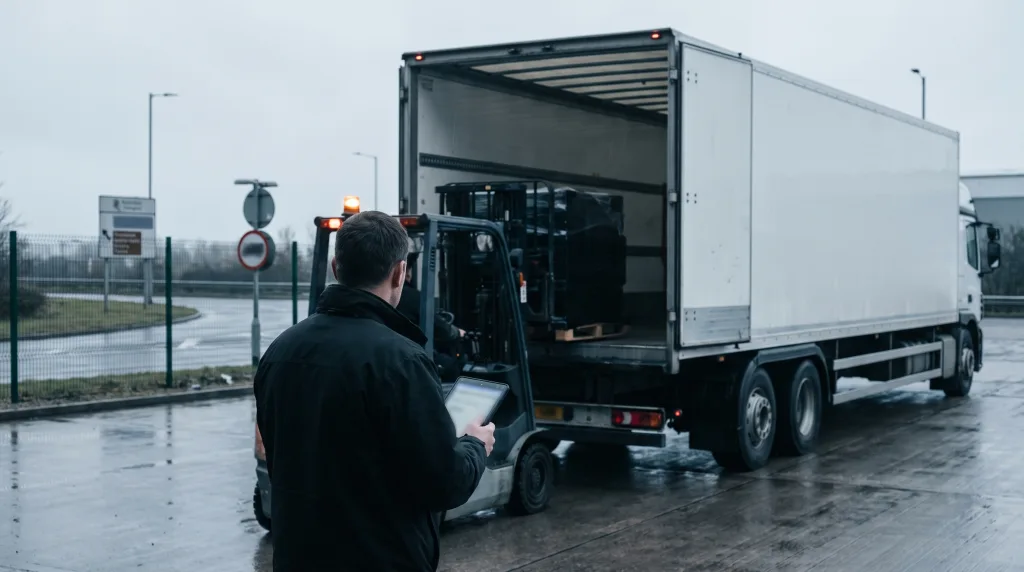
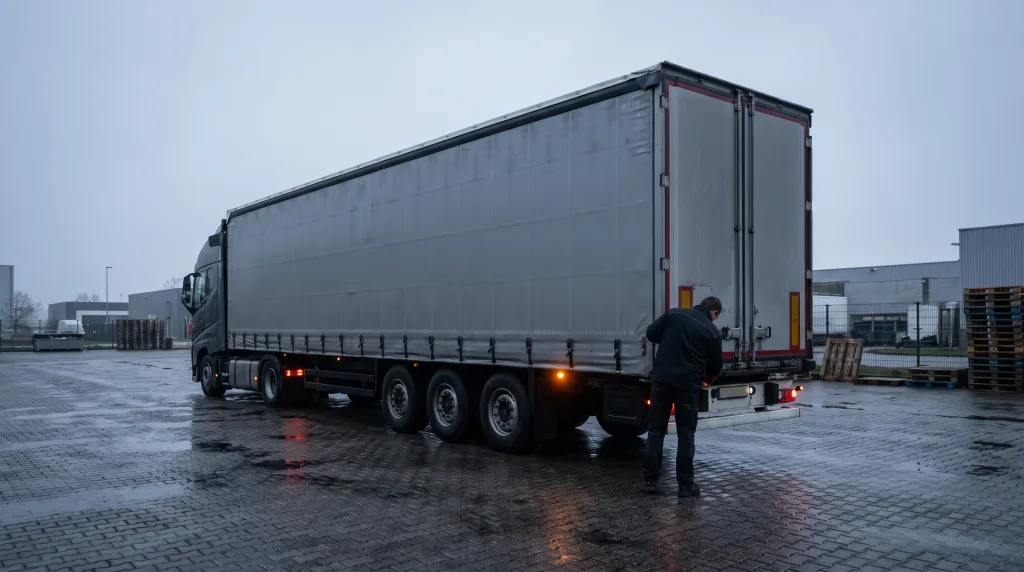
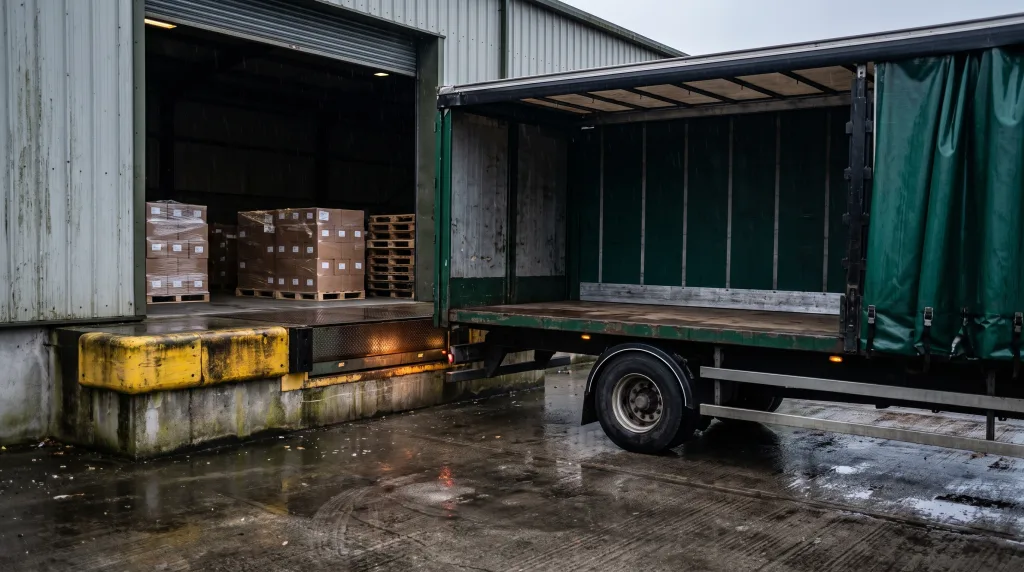
 AI image
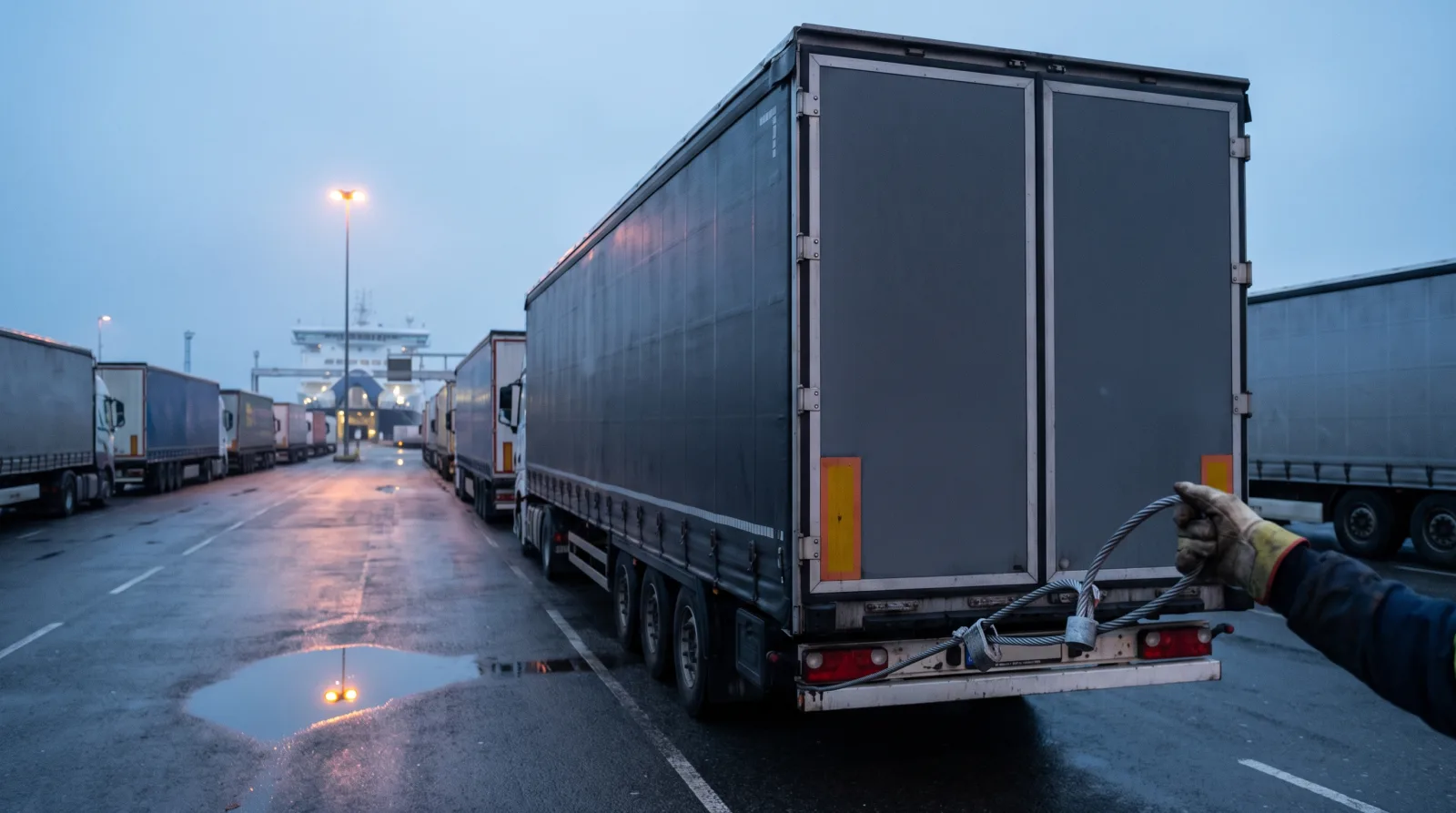
OTSL's standard crossing on the UK lane is Dunkirk–Dover. The ferry booking, the GMR in the GVMS system and the ELO/ENS safety declarations are prepared by the OTSL office; you supply the vehicle, trailer and driver details in advance. From a curtainsider we require a curtain without cuts, a working TIR cord, a seal with its number entered on the CMR (the Convention on the contract for international carriage of goods by road) consignment note, straps and securing suited to the load, and a trailer check before the port recorded on a checklist. Without a GMR the truck will not enter the port, and a last-minute trailer swap invalidates the GMR data.
Why must the trailer details be supplied in advance?
Because the GMR, the Goods Movement Reference from the UK GVMS system, is created only after the shipper has provided the GB import documents, and it carries the details of a specific vehicle and trailer. The OTSL office files the GMR together with the ferry booking and the ELO/ENS declarations, so the registration numbers of the tractor unit and trailer and the driver's details must be with us before the truck sets off towards Dunkirk. Without a GMR the truck will not enter the port. If you swap the trailer at the last minute, the GMR data no longer match and must be corrected before the driver reaches the terminal.
An EU haulier enters the United Kingdom under the EU–UK Trade and Cooperation Agreement. The driver must hold valid documents and entitlements, and the vehicle must have insurance valid in GB. You check that before putting the truck forward for the run; we check that the details match the order when the vehicle arrives.
What is the penalty for clandestine entrants and how do you protect yourself?
The UK civil penalty scheme for clandestine entrants, people without permission hidden in a vehicle, holds the owner, the hirer and the driver of the vehicle liable. We do not quote the amounts, because the Home Office sets them and publishes them on gov.uk. The penalty is reduced by a documented, effective vehicle security system and a check checklist: it is not enough to check the trailer, you must be able to show that you checked it, where and when. That is why the check before the port is recorded on our checklist rather than merely carried out.
The trailer check is not just protection against a penalty. A breached trailer means a load inspection at the OTSL warehouse in Milton Keynes and a report for the customer and the insurer, a working day nobody planned. A curtain without cuts, a working TIR cord and a seal with its number on the CMR are not "just in case" requirements; they are proof that the goods travelled closed from loading to unloading.
A curtainsider before the port at Dunkirk step by step
- Details in advance. You pass the OTSL office the registration numbers of tractor and trailer and the driver's details before the truck sets off; the booking and the GMR are built on them.
- Trailer before loading. You check the curtain for cuts and the TIR cord for function; a damaged curtain is not a trailer for GB.
- Securing and seal. After loading, straps and securing suited to the load, doors closed, seal fitted and its number entered on the CMR.
- Check before the port. At the last stop before Dunkirk the driver checks the curtain, cord, seal and trailer spaces and records it on the checklist with place and time.
- Entering the port. The driver holds the GMR and booking numbers from the OTSL office; vehicle and trailer details match what was declared.
- After the crossing. If the seal or curtain has been breached, you report it to the forwarder at once; the load goes for inspection at Milton Keynes and the report goes to the customer and the insurer.
Definitions
- Curtainsider: a trailer with side walls of tarpaulin that slide open like curtains, OTSL's standard trailer on the Poland–England route.
- GMR (Goods Movement Reference): the reference from the UK GVMS (Goods Vehicle Movement Service) linking customs declarations to a specific vehicle; without it the truck will not enter the port.
- ELO/ENS: pre-arrival safety and security declarations for goods entering GB (Entry Summary Declaration), prepared by the OTSL office together with the GMR.
- TIR cord: the customs cord threaded through the curtain eyelets which, once sealed, prevents opening the trailer without a trace.
- Clandestine entrant: a person without permission hidden in a vehicle entering GB; the UK civil penalty scheme holds the owner, hirer and driver liable.
- Trailer check checklist: the document on which the driver records the trailer check before the port with place and time; evidence of an effective security system.
Checklist for a curtainsider bound for GB
- Curtain without cuts or patches that could be opened without a trace.
- TIR cord complete, threaded through every eyelet, without chafing.
- Seal fitted after loading, number entered on the CMR and matching what the driver sees.
- Straps and securing suited to the load, checked before departure and at stops.
- Trailer check before the port recorded on the checklist: place, time, driver's signature.
- Registration numbers of tractor and trailer and the driver's details matching the booking and the GMR.
When are these requirements not enough or not applicable?
The requirements above cover a curtainsider on the standard Dunkirk–Dover crossing. They do not apply to trailers OTSL does not declare in a GMR, for example on runs within the EU, although we use seals and securing checks there too. The checklist alone is not enough if the check was done for form's sake: the UK civil penalty scheme reduces the penalty only for a documented and effective security system, not for a signature on a sheet. The range of penalties depends on Home Office decisions and publications on gov.uk, not on this article. If the trailer has been breached, the inspection at Milton Keynes takes place whether or not anything is missing, because the report for the customer and the insurer must describe the condition of the load. See also: Poland to Sweden haulage: Ystad, Trelleborg, Karlskrona or Öresund.
The OTSL role
The OTSL office makes the ferry booking, the GMR in GVMS and the ELO/ENS declarations, and when the vehicle arrives compares vehicle, trailer and driver details with the order; you are responsible for the trailer, the seal and the checklist before the port. Crossing reservations are described on the service page ferry booking, and the lane on transport to the United Kingdom. What the GMR looks like from the driver's side is covered in GVMS in practice at the GB border, seals in trailer seals and sealing protocol, and the procedure after a breached trailer in trailer inspection after clandestine entrants.