 AI image
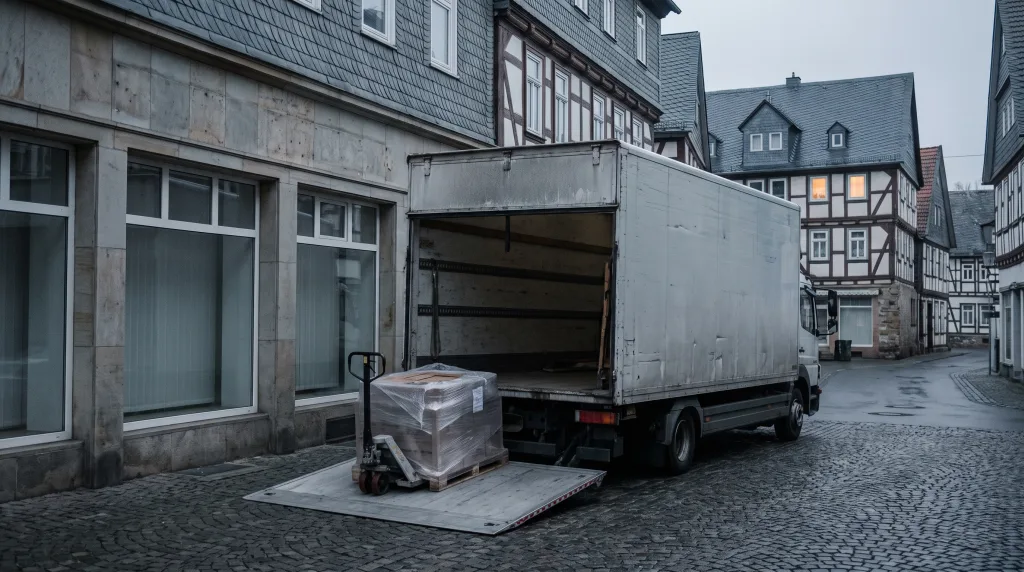
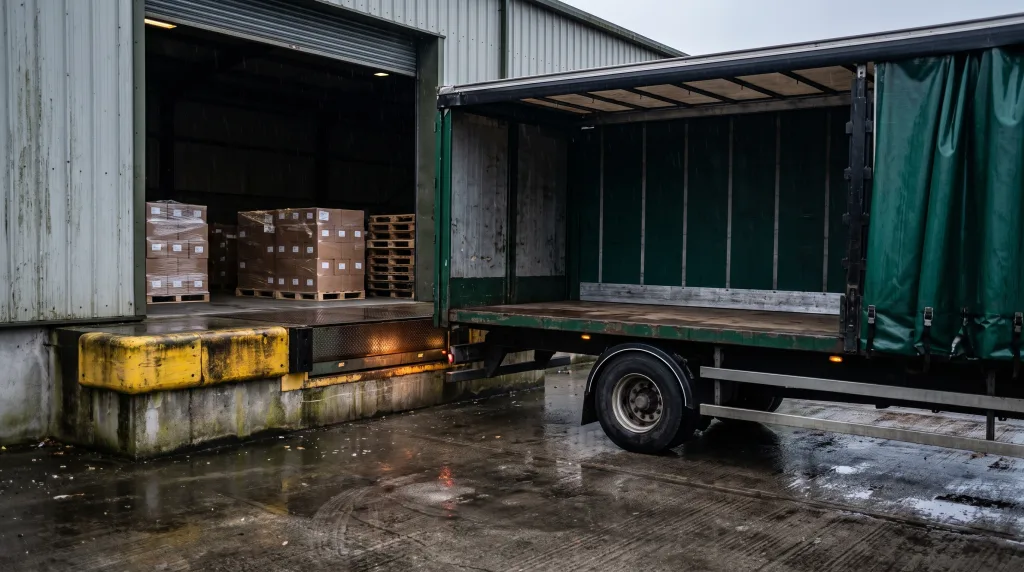
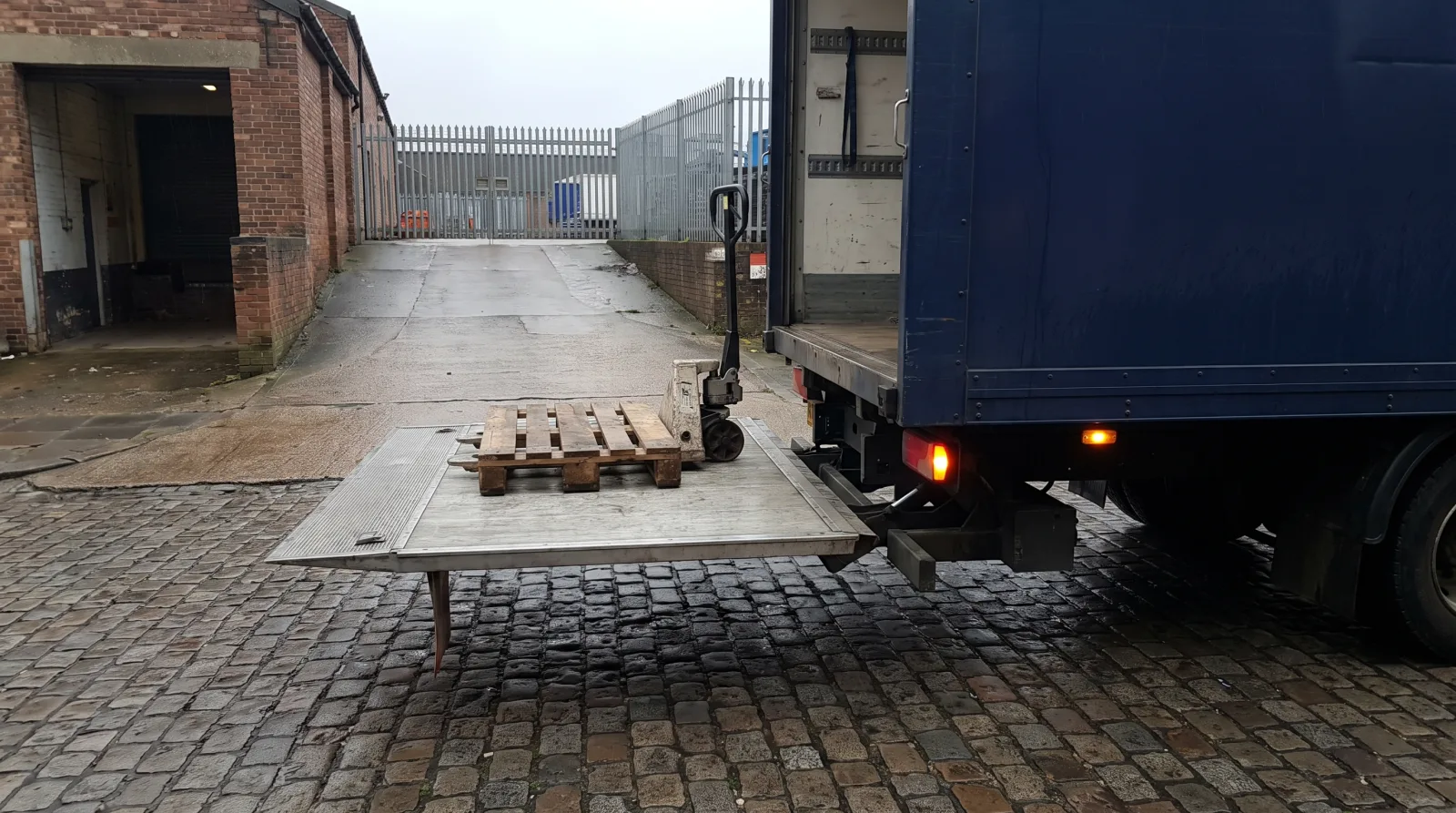
The tail lift on OTSL rigids takes up to 1.5 tonnes per cycle, and the pallet is moved from the platform to the drop point with a hand pallet truck. That needs hard, level ground from the truck to the drop point; gravel, lawn, a kerb without a ramp and a steep gradient rule out safe unloading. The driver has the right to refuse unloading when it endangers the driver, the load or third parties: poor ground, a slope, a damaged pallet or an exceeded lift capacity. The refusal is documented with a photo and a note on the CMR consignment note.
What decides whether a pallet can come down on the tail lift?
Three things: weight, ground and where the truck stands. Weight is simple: a single pallet heavier than 1.5 tonnes will not come down on the lift and needs a lorry-mounted crane or the consignee's forklift. Ground is harder, because a pallet truck has small, hard wheels that sink into gravel, dig into a lawn and stop at a kerb without a ramp. A steep gradient makes the loaded pallet truck pull the driver instead of rolling with him, and nobody holds 1.5 tonnes.
The parking spot must allow the lift platform to be lowered fully to road level and the pallet truck to roll off it. If the truck stands across a slope or the lift lands on a kerb, the platform is not flat and the pallet slides towards the lower edge. OTSL checks these conditions with the consignee before departure, not at the gate, because at the gate it is too late to change the vehicle.
When does the driver have the right to refuse unloading?
When unloading endangers the driver, the load or third parties. In practice there are four cases: ground on which the pallet truck cannot travel safely; a slope that turns the pallet into an uncontrolled weight; a damaged pallet that may collapse on the lift; and an exceeded lift capacity. Refusal is not arbitrary, but it must be documented: the driver photographs the spot and the pallet, enters a note on the CMR and calls the OTSL forwarder, who agrees the next step with the consignee.
Responsibility is split as follows: the shipper is responsible for load securing and the condition of the pallet at the start, and unloading follows what the order says. A missing agreement on unloading is the most common source of dispute outside a shop, because the consignee assumes the driver will carry the pallets into the stockroom while the driver assumes he sets them down at the kerb. That is why in an OTSL order the unloading method is written in, not assumed.
Tail-lift unloading with a pallet truck step by step
- Check conditions before departure. The OTSL forwarder asks the consignee about ground, gradient, parking spot, hours and who will receive the pallet.
- Position the truck. The driver parks so that the lift platform lowers flat to road level and the pallet truck can roll off onto hard ground.
- Assess the pallet. Before lowering, the driver checks the pallet and load; a damaged pallet or shifted load is a reason to stop and call the forwarder.
- Lower on the lift. One pallet per cycle, within 1.5 tonnes, with the pallet truck secured on the platform; nobody stands under the lift or on its edge.
- Move to the drop point. Over hard, level ground, without kerbs or gradient; the drop point as stated in the order, not as requested at the gate.
- Confirmation or refusal. The consignee signs and dates the CMR; if unloading was impossible, the driver documents the refusal with a photo and a CMR note and the forwarder agrees an alternative.
Definitions
- Tail lift: a hydraulic platform at the rear of the truck that lowers a pallet from body floor to road level; on OTSL rigids rated up to 1.5 tonnes per cycle.
- Hand pallet truck: a manual pallet truck with small hard wheels used by the driver to move a pallet over hard, level ground.
- Lorry-mounted crane (HIAB): a crane fitted to the vehicle used to unload pallets heavier than the lift capacity or non-palletised goods.
- CMR (Convention relative au contrat de transport international de marchandises par route): the convention on the international carriage of goods by road; the CMR consignment note is where the driver records reservations and a refusal note.
- Shipper: the party that loads and secures the goods; responsible for load securing and pallet condition at the start.
- Warehouse buffer: an intermediate warehouse to which OTSL redirects a delivery when unloading at the consignee is not possible on the agreed date.
Checklist for tail-lift unloading
- Weight of every pallet known and no more than 1.5 tonnes; heavier ones reported to the forwarder before loading.
- Ground from the truck to the drop point hard and level: paving, asphalt, concrete; no gravel, lawn or kerbs without a ramp.
- Gradient at the parking spot and along the pallet-truck route small enough that the pallet does not pull the driver.
- Parking spot allows the platform to be lowered flat to road level.
- Unloading method written in the order: who unloads, where the pallet goes, who signs.
- Phone and camera ready: photo of the spot and pallet for every refusal, note on the CMR.
When do the tail-lift unloading rules not apply?
The rules above cover deliveries where tail-lift and pallet-truck unloading was agreed in the order. They do not apply when the consignee has a loading bay or a forklift and unloads the truck itself; the driver is then not responsible for moving the pallet across the yard. They do not apply either to a pallet heavier than 1.5 tonnes or to non-palletised goods, because there the lift is not an option at all and OTSL proposes a crane truck, unloading by the consignee or delivery to a warehouse buffer from the outset. The right to refuse depends on a real hazard, not convenience: the driver does not refuse because it is raining, but does refuse because the lift lands on a sloping lawn.
The OTSL role
OTSL checks unloading conditions with the consignee before the truck leaves and writes the unloading method into the order so that the partner driver does not negotiate at the gate. When conditions are unknown, we propose an alternative at quotation: crane truck, unloading by the consignee or delivery to a buffer. The service is described on rigid truck with tail lift, 12 t and 18 t. The choice between lift, dock and crane is explained in tail lift, crane or dock, the split of responsibility in load securing: who is liable, and recording reservations in damage report and CMR reservations. See also: Cabotage after unloading: 3 in 7 days, 4-day cooling off and UK rules.