 AI image
Exhibition logistics at OTSL means moving stand fittings and exhibits from the exhibitor or the stand builder to the hall in the build-up slot, with booking-in, documents and a warehouse buffer along the way, and after the show collecting everything for the return trip or the next event. We deliver to shows in the United Kingdom, Poland, Switzerland, Norway and the rest of Europe. Outside the EU customs union we run the ATA carnet or temporary admission through our own customs agency. One forwarder handles the job from collection to return.
What exhibition handling covers
The scope is set per event, because every venue has its own exhibitor manual and its own vehicle rules. A standard job includes:
- collection of stand fittings and exhibits from the exhibitor, from the stand builder or from several addresses at once, consolidated onto one vehicle;
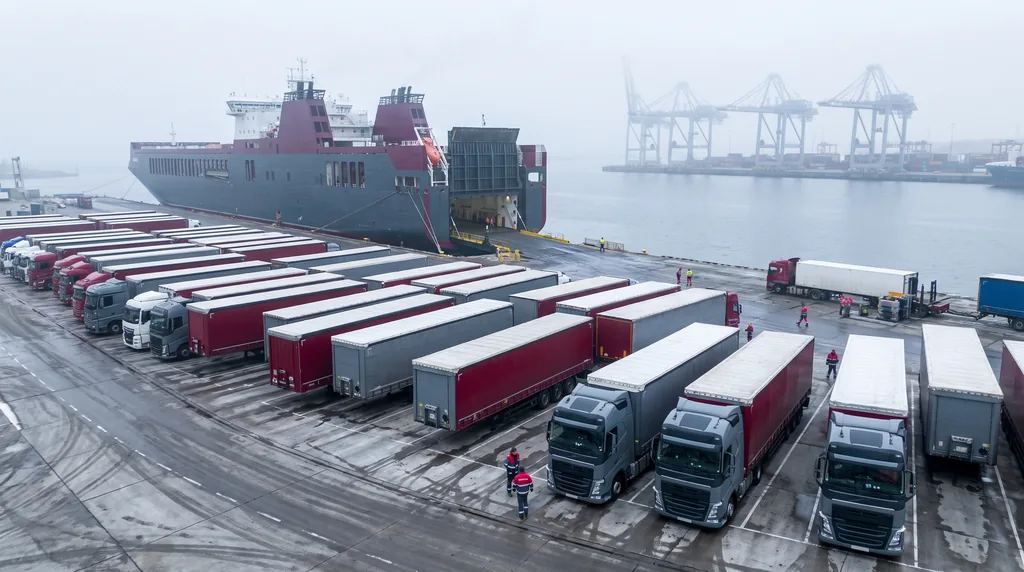
- delivery to the hall in the build-up slot set by the organiser, allowing for the marshalling area and vehicle queuing;
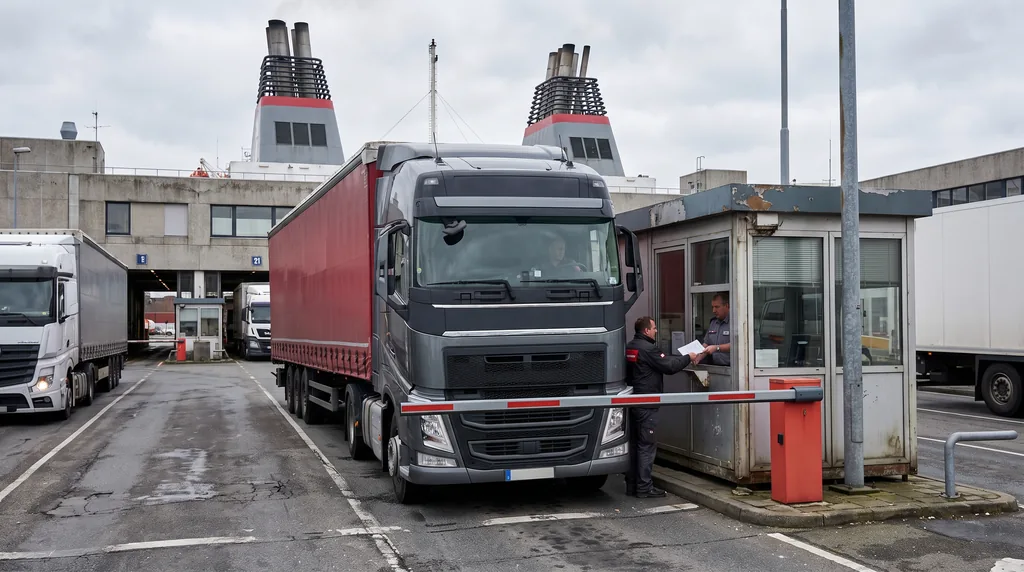
- booking-in and vehicle pass according to the exhibitor manual: registration number, driver details, stand number, arrival time;
- ATA carnet or temporary admission for venues outside the customs union: United Kingdom, Switzerland, Norway;
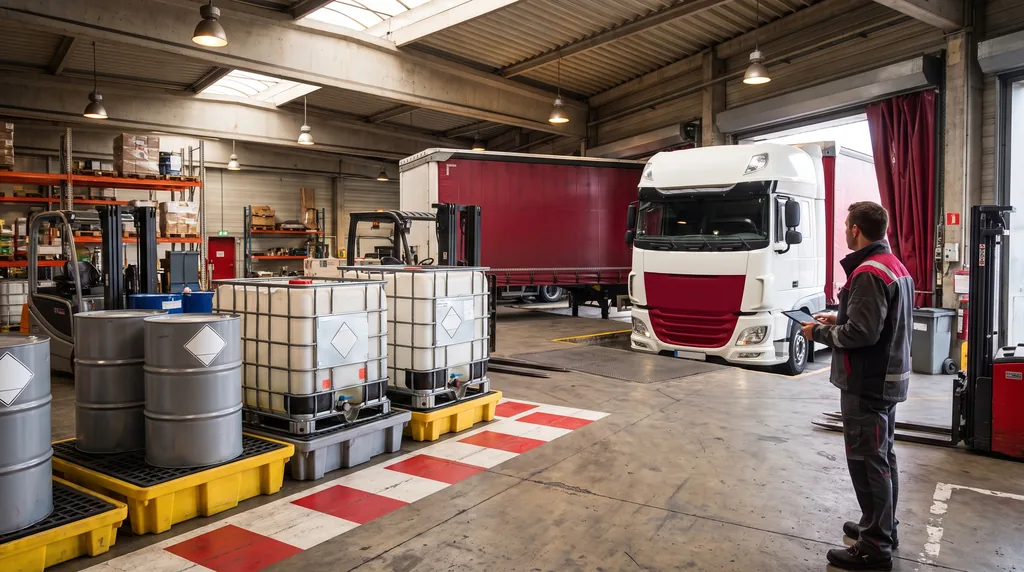
- a warehouse buffer when the vehicle arrives before the slot or when part of the load waits for the second build-up day;
- empty case storage for the duration of the show, with the organiser or in our warehouse;
- collection after breakdown in the exit slot and return to the exhibitor, to the warehouse or onward to the next show.
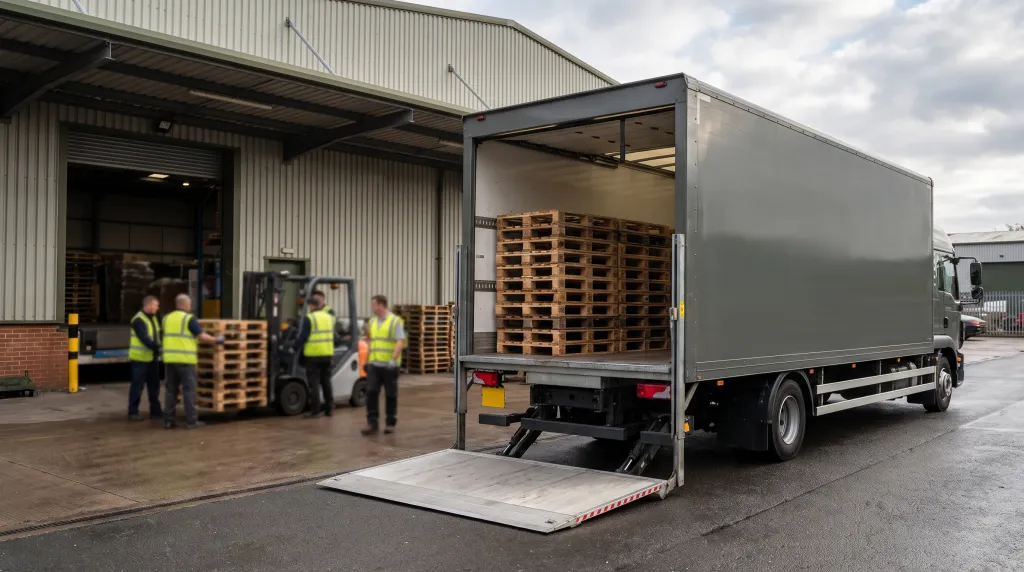
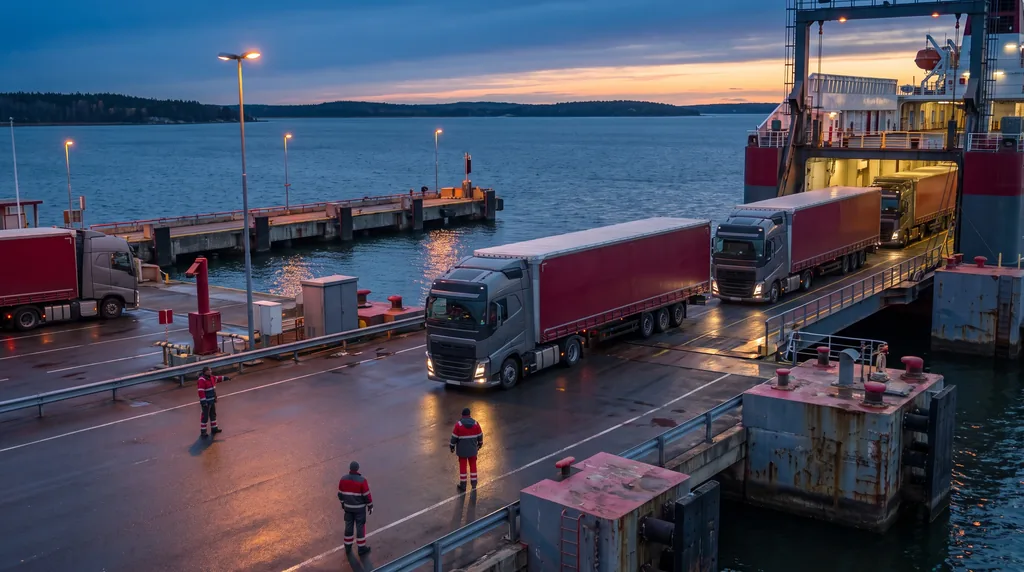
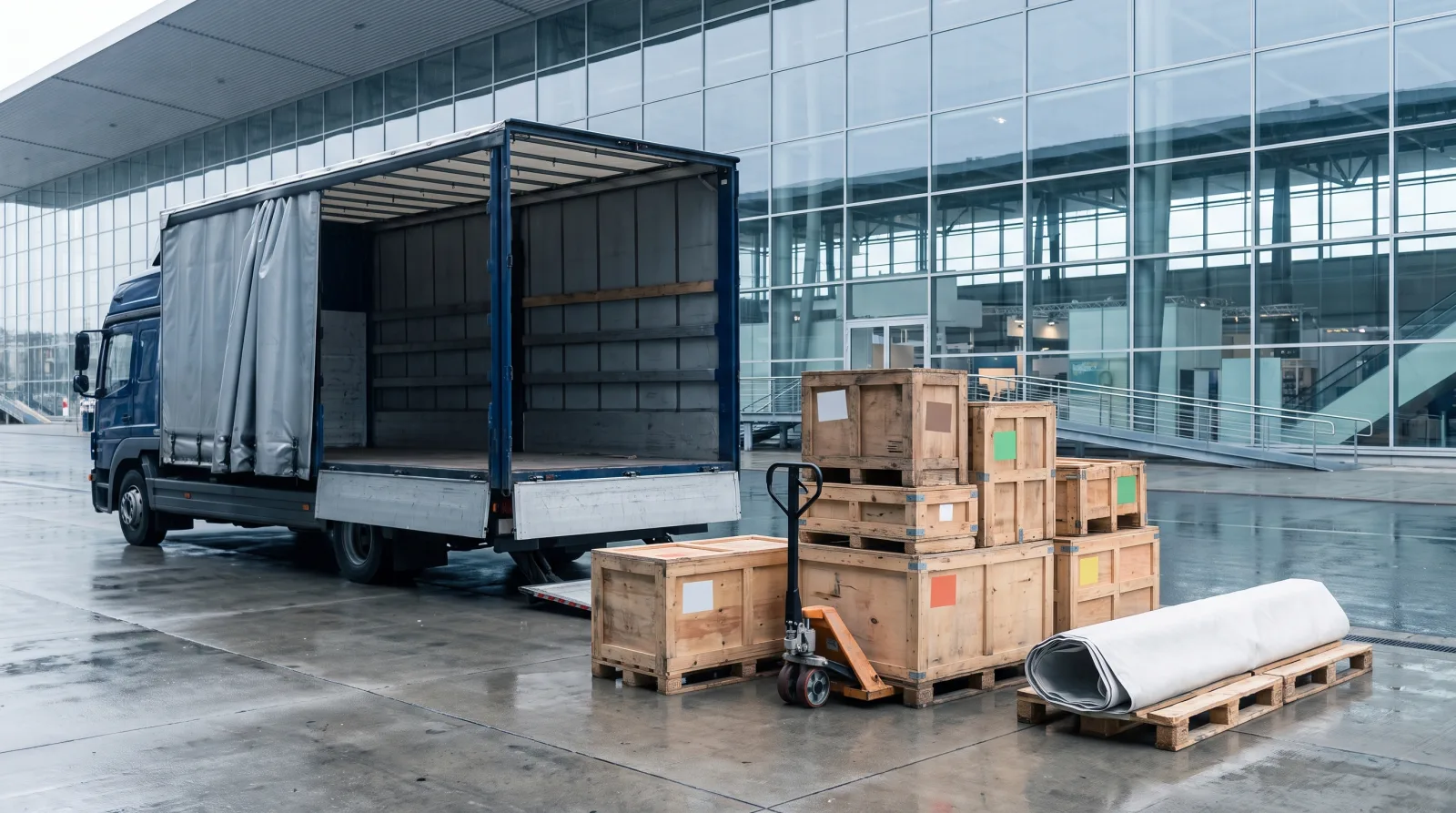
Then there is the vehicle. A small stand of a few pallets travels on a rigid truck with a tail lift, so the driver can unload where there is no dock. Fittings for a dozen pallets and long items go on a curtainsider. A missing part that has to be in the hall tomorrow morning goes by van.
Where we deliver
Four groups of venues make up most of our work:
- United Kingdom: ExCeL London, NEC Birmingham, Olympia London. Our Milton Keynes warehouse is the buffer, and our UK customs agency prepares the declaration and the GMR.
- Targi Kielce: our transshipment base at ul. Batalionów Chłopskich 71 is a few minutes from the halls at ul. Zakładowa 1, so buffer and slot delivery are one operation.
- Other Polish venues: MTP Poznań, EXPO XXI Warsaw, EXPO Kraków.
- Switzerland and Norway: venues outside the customs union, so with an ATA carnet or temporary admission on entry and closure of the procedure on exit.
The rest of Europe, including Germany, Italy, France and the Netherlands, is intra-EU movement with no customs. Venue by venue notes on access rules are collected in the exhibitions hub.
Where our responsibility ends: at the tailboard
Our responsibility for the load ends at the tailboard of the vehicle outside the hall. Handling on the venue grounds, meaning unloading, internal transport to the stand, forklift and crane work, is done by the contractor named by the organiser in the event rules. OTSL is not the official forwarder of any venue and has no exclusivity inside the halls. Who unloads the stand is something we check in the rules before quoting, because in-hall handling can cost more than the freight.
At smaller venues and at events without exclusivity the rules allow self unloading. The driver then lowers the load on the tail lift and places it at the hall door or, where the organiser permits, at the stand. Whether that is allowed at a given show is agreed before departure and written into the order. Insurance follows the same line: the haulier CMR liability covers the load in transit, and from the hall door onwards the party taking over the goods is responsible. For build-up and the show days a separate exhibits policy is worth having.
How a job runs step by step
- Stand and slot data. You give us the venue, hall, stand number, build-up and breakdown slots from the exhibitor manual, and the dimensions and weight of the load.
- Quote and vehicle. Rigid with tail lift, curtainsider or van, depending on volume and whether there is a dock at the hall. We check the venue rules and who unloads.
- Documents. An exhibit list with values and, for the United Kingdom, Switzerland and Norway, an ATA carnet or a temporary admission entry. We advise what to list so the carnet can be discharged without a dispute.
- Booking-in. We register the vehicle and driver with the organiser and receive the pass and arrival time. How booking-in works is described separately.
- Collection and delivery. The load goes straight to the hall or via the buffer if the build-up slot is later than the arrival. The driver reports to the marshalling area at the given time.
- Breakdown and return. After the show we place the vehicle in the exit slot, load the fittings and exhibits, discharge the carnet at the border and take everything back to the exhibitor, to the warehouse or on to the next show.
What OTSL does and does not do
We handle the route, the documents, the buffer and the vehicle being there on time. We do not build stands, do not work inside the hall, do not set venue tariffs and do not negotiate utilities or access charges with the organiser on behalf of the exhibitor. We do not issue the ATA carnet, the chamber of commerce does, but we prepare the list and carry the carnet across the borders.
When an exhibitor attends several shows in a row, we plan one route for several shows with a carnet covering the whole tour. Empty crates and packaging, when the venue has no store of its own, stay in our warehouse; empty case storage has its own article. So does post-show logistics: breakdown, collection and return.
Related services: ATA carnet, rigid truck with tail lift, customs clearance.